
Festivas Artes y Manualidades Navideñas para Niños
Tabla de Contenidos Los Beneficios Indudables de las Manualidades Navideñas para Niños Preparándose para una Sesión de Manualidades Alegre Un Trineo Lleno de Ideas de Artes y Manualidades Navideñas para Niños Fomentando la Comunicación a Través de...
 Por Speech Blubs Team•22 dic 2025•19 min.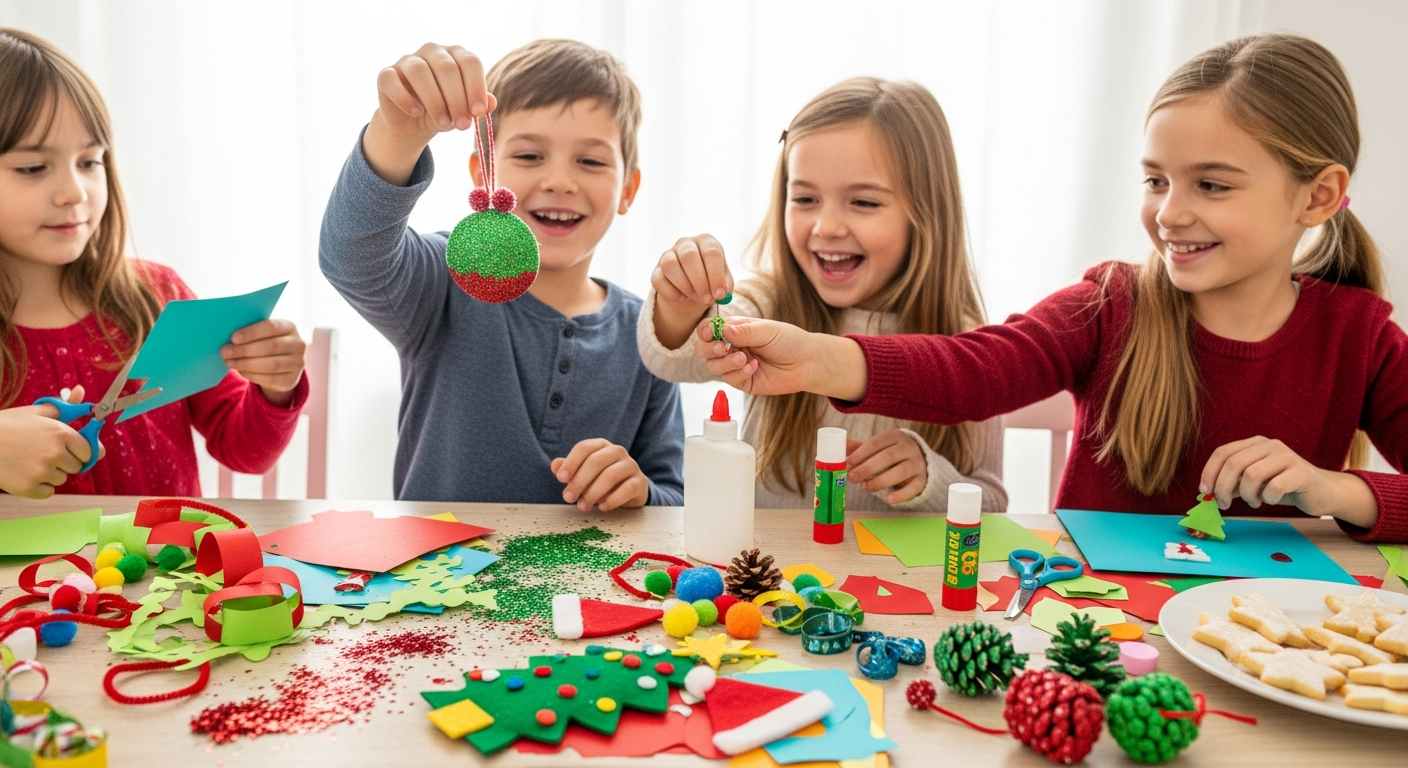
Table of Contents
- The Super Great Reasons Christmas Crafts are Good for Kids
- Getting Ready for Fun Crafting Times
- A Whole Sleigh-Load of Christmas Craft Ideas for Kids
- Talking and Crafting: More Than Just the Basics
- How Speech Blubs Can Help with "Smart Screen Time"
- Help Your Child Be Their Best With Speech Blubs
- Wrapping Up
- Questions You Might Have
For lots of people, the best part of Christmas isn't just the pretty lights or getting presents. It's the time you spend together, the giggles, and the fun of making things. Imagine your kiddo's eyes lighting up as they carefully put glitter on an ornament they made, or when they give a card they painted to Grandma. These aren't just cute; they're really important for helping them grow, getting their imagination going, and making your family stronger.
So, we want you to come explore the fun world of Christmas crafts for kids! This isn't just a list of ideas; it's going to help you understandwhythese crafts are so good, how to really help your child grow with them, and how they help with talking. We'll talk about all the good things that come from doing crafts, give you tons of fun ideas for kids of all ages, and give you tips to make crafting fun and easy. And most importantly, we'll show you how these fun, hands-on crafts go perfectly with what we do atSpeech Blubs: helping kids say what they think and feel, and helping them grow in every way.

The Super Great Reasons Christmas Crafts are Good for Kids
Christmas crafts aren't just about keeping little hands busy. They're full of good things that help kids grow! They're like special places where kids can learn important skills.
Helping Little Hands Get Stronger
From squeezing glue just right to carefully cutting out shapes or decorating a little gingerbread man, crafts are great for helping kids get better at using their hands and fingers. These small movements are super important for things like writing, buttoning clothes, and using forks and spoons. When kids play with craft stuff, they get better at using their hands. And when they put things exactly where they want them, like sticking a pom-pom on a reindeer's nose, that helps them see better too. These things aren't just for crafts; they're important for everything kids do!
Letting Their Imaginations Run Wild
Crafts are a place where kids can really use their imaginations. There's no right or wrong way to make a snowflake or decorate a Christmas tree picture. Kids can show who they are, try out different colors and shapes, and make their ideas real. It's not just about making something; it's about helping them be creative and figure things out. They learn to think in new ways, change things when they don't go as planned, and see all sorts of possibilities.
Helping Their Brains Grow and Solve Problems
Lots of crafts involve following instructions, knowing what comes next, and making choices. Should the star go on top or on the side? What happens if I mix blue and yellow paint? These choices help kids' brains work. They learn what happens when they do something, practice knowing how things fit together, and learn to plan and finish a project. This helps them understand the world better and know how to do things on purpose.
Helping Them Talk and Communicate
This is where crafts and Speech Blubs really come together. Crafts are a fun, easy way to help kids talk. When they're crafting, they can:
- Learn New Words:Talking about "sticky glue," "shiny glitter," "soft paper," "rough pinecones," "red," "green," "round," "square"—there are so many new words to learn!
- Tell Stories and Describe Things:Ask your kids to tell you what they're doing ("I'm cutting the green paper") or what they see ("Look at the shiny star!"). This helps them make sentences and say what they're thinking.
- Listen and Give Directions:"First, we glue the sticks, then we paint them." This helps them listen and know what comes next. Older kids can tell you what to do, which helps them understand and feel more confident.
- Ask and Answer Questions:"What color should we use next?" "Where does this piece go?" Asking questions helps them think more and give better answers.
- Take Turns:Sharing craft stuff and talking about what to do helps kids take turns, which is important for talking to others.
These times together are great for connecting and helping kids say what they think and feel, which is what we're all about at Speech Blubs. We know that every word they say and every question they ask is helping them learn to communicate.

Feeling Good About Themselves
When kids make something with their own hands, even if it's easy, they feel really good about themselves. They're proud of what they made, which makes them feel better and more confident. Crafts also let them show how they feel by using colors, shapes, and textures. When parents like what their kids do, it makes them feel good and want to try new things.
Making Your Family Closer
One of the best things about crafting is spending time with your family. When you sit around a table and make Christmas stuff together, you make memories, get closer, and have fun talking to each other. These fun times together are really important for making kids feel like they belong and for having fun during the holidays.
Getting Ready for Fun Crafting Times
If you want your Christmas crafts to be fun and not stressful, it helps to get ready first.
Getting Your Craft Stuff
Before you start, get all the things you need, like:
- The Basics:Scissors that are safe for kids, glue sticks or liquid glue, construction paper, markers, crayons, paint (that washes off easily!).
- Christmasy Things:Glitter, pipe cleaners, pom-poms, googly eyes, cotton balls, craft sticks, felt, ribbons, buttons.
- Things You Can Recycle:Toilet paper rolls, paper plates, old newspapers, bottle caps, yarn scraps.
- Things from Nature:Pinecones, leaves, small twigs (that you find on a walk!).
When you have everything ready, it's easier to keep crafting and not have to stop and get things.
Setting Up Your Craft Area
Pick a place where you can do crafts. It could be the kitchen table with an old tablecloth or newspapers on it, or a special corner just for crafts. Keep the paint and glue off your table, and make sure there's good light. Have a wet cloth or paper towels nearby for cleaning up. You can even have your child help you set up; that way, they'll be excited and feel like it's their special place.
Knowing What to Expect
Remember, it's not about making things perfect; it's about having fun and trying new things. It's okay if things get messy! Just enjoy the process and like what your child makes, even if it doesn't look exactly like the picture. This is like what we believe at Speech Blubs: we celebrate every sound, every word, and every step your child takes. It's about helping them feel good about themselves and love learning, not about being perfect. Your praise is way more important than making a perfect star.
A Whole Sleigh-Load of Christmas Craft Ideas for Kids
Let's look at some great Christmas craft ideas that are fun, easy, and help kids grow!
Cool Ornaments for the Tree
Ornaments you make yourself are special. They're unique and help you remember fun times.
1. Salt Dough Ornaments
- What you'll need:1 cup flour, ½ cup salt, ½ cup water, cookie cutters, paint, glitter, string or ribbon.
- How to make them:Mix flour, salt, and water until it turns into dough. Knead it for a few minutes until it's smooth. Roll out the dough (about ¼ inch thick) and let kids cut out shapes with cookie cutters. Don't forget to make a hole at the top so you can hang it! Bake it at 250°F (120°C) for 2-3 hours until it's hard. After it cools down, let your child paint it and decorate it.
- Talking Time:Talk about what things feel like ("smooth dough," "grainy salt"), what colors they are ("What color should we paint the star?"), what shapes they are ("Can you find the heart-shaped cutter?"), and what you're doing ("rolling," "cutting," "painting," "baking"). If your child has trouble describing things, talking about the "smooth" dough or the "red" paint helps them learn new words.Speech Blubshas sections like 'Colors' or 'Shapes' that help kids learn in a fun way, using videos of other kids.
2. Popsicle Stick Ornaments
- What you'll need:Popsicle sticks, glue, paint, glitter, small pom-poms, buttons, googly eyes, pipe cleaners.
- How to make them:Kids can glue popsicle sticks together to make shapes like stars, snowflakes, or reindeers. For a reindeer, glue three sticks together to make a triangle for the head, then add two smaller sticks for antlers, googly eyes, and a red pom-pom nose. Paint them Christmas colors and add glitter.
- Talking Time:Practice counting sticks, saying what shapes they are (triangle, star), and saying what animal it is and what sounds it makes.
3. Pinecone Ornaments
- What you'll need:Pinecones (that you find on a walk!), green or white paint, glitter, small pom-poms, glue, string.
- How to make them:This is a fun way to get outside! Go on a "pinecone hunt" with your child. After you find them, let them paint the pinecones (so they look like little Christmas trees!). Add glitter, small pom-poms, or even little beads. Tie a string to the top to hang it.
- Talking Time:Talk about what the pinecones feel like ("bumpy," "prickly"), where you found them ("under the tree!"), and what colors you're using. This helps kids learn about their senses and what they see.
Fun Christmas Decorations
These crafts are great for decorating your home and getting into the Christmas spirit.
1. Paper Plate Wreaths
- What you'll need:Paper plates, green construction paper, scissors that are safe for kids, glue, red pom-poms or buttons, ribbon.
- How to make them:Cut out the middle of a paper plate to make a ring. Help your child cut out green paper leaves or handprints (these make cute wreaths!). Glue the green shapes around the paper plate ring. Decorate with red pom-poms as berries and a ribbon bow.
- Talking Time:Practice cutting, saying what shapes they are (circle, leaves), and counting the leaves or pom-poms. Talk about what a wreath is and where you'll hang it.
2. DIY Snow Globes
- What you'll need:Small, clean glass jars with lids, waterproof figurines (Christmas trees, tiny reindeer, Santa), glitter, distilled water, glycerin (optional, helps glitter fall slower), strong waterproof glue.
- How to make them:Glue the figurine to the inside of the jar lid. Let it dry completely. Fill the jar with distilled water, add a pinch of glitter, and a few drops of glycerin. Screw the lid on tightly, maybe even sealing it with super glue if it's just for decoration. Turn it upside down and watch the snow fall!
- Talking Time:Talk about snow, what the figurines are, and what's happening ("shaking," "falling," "sparkling"). This can help them make up stories.
3. Paper Chain Garlands
- What you'll need:Strips of colored construction paper (red, green, white, gold), glue stick or stapler.
- How to make them:This is a simple but fun craft! Help your child cut paper strips. Then, make a loop with one strip and glue or staple the ends together. Put the next strip through the first loop, make another loop, and glue or staple it. Keep going until you have a long garland.
- Talking Time:Great for practicing colors, counting the loops, talking about patterns, and telling how to do it.
Gifts and Cards Made With Love
Gifts and cards you make yourself mean even more.
1. Handprint/Footprint Cards
- What you'll need:Construction paper, paint that's safe for kids, markers.
- How to make them:Fold a piece of paper in half to make a card. Paint your child's hand green and press it on the paper to make a "Christmas tree." Or paint their foot white and add details to make a "snowman" or "reindeer." Write a Christmas message together.
- Talking Time:Say what body parts they are ("hand," "foot"), what colors they are, and who the card is for. "We're making a card for Grandma! What should we say?" This helps them talk to others and understand how to act.
2. Painted Rocks or Coasters
- What you'll need:Smooth rocks (cleaned), acrylic paints, paintbrushes, clear sealant (optional). For coasters, use plain cork coasters.
- How to make them:Let your child paint Christmas designs on rocks or coasters. They can make snowmen, Santa faces, Christmas trees, or just fun patterns. After they dry, you can seal them to make them last longer.
- Talking Time:Talk about colors, shapes, patterns, and what they're making. "What kind of picture are you drawing?" This helps them be creative and describe things.
Crafts You Can Touch, Smell, and Eat
Use more than one sense with these yummy and fun crafts.
1. Gingerbread House Decorating
- What you'll need:A gingerbread house kit or gingerbread pieces you bought, candies, icing.
- How to make them:This is always a favorite! Set up the gingerbread house and give them lots of colorful candies, sprinkles, and icing. Let your child decorate their yummy house however they want.
- Talking Time:This is great for all the senses and for talking! Talk about what things taste like ("sweet," "spicy"), what they feel like ("crunchy candy," "sticky icing"), what colors they are, and what shapes they are. Practice asking for things and saying where they go ("put the gumdropon top").
2. Christmas Playdough
- What you'll need:Playdough you made (flour, salt, water, cream of tartar, oil, food coloring) or bought, Christmas cookie cutters, little things like plastic snowflakes or beads, cinnamon or peppermint extract for smell.
- How to make them:Make playdough in Christmas colors (red, green, white). Add a drop of cinnamon or peppermint extract to make it smell good. Give them cookie cutters and let them roll, cut, and create.
- Talking Time:Describe what it feels like ("soft," "squishy"), what colors it is, and what it smells like. Help them use their imaginations by asking, "What are you making?"
Talking and Crafting: More Than Just the Basics
To really help your child learn to talk with crafts, you're really important. Here's how you can help them communicate while they're crafting:
Tell Them What They're Doing
Be like a sports announcer for your child! Tell them what they're doing and describe what you see. "You're pouring the glitter now!" "Wow, look at the big, red bow you're making!" This helps them learn new words and know what words go with what they're doing and what things are.
Ask Questions That Make Them Think
Don't just ask questions that they can answer with "yes" or "no." Ask questions that make them say more. "What do you think will happen next?" "Tell me about your snowflake." "How does this feel?" These questions make them think and learn more words.
Say More About What They Say
When your child says, "Red star!" you can say more: "Yes, that's abright red, sparkly star! It's going to look beautiful on our tree." This helps them learn new words and make longer sentences without you telling them they're wrong.
Help Them Make Sounds and Copy You
For younger kids or kids just starting to talk, help them make sounds about the craft. "What sound does the reindeer make?" "Ho ho ho!" "Can you make a 'snip, snip' sound when you cut?" This fun copying helps them learn new words and sounds, like how Speech Blubs uses videos of other kids to help them learn.
Practice Following and Giving Directions
Give them easy directions with two steps: "First, glue the eyes, then add the nose." For older kids, let them giveyoudirections. "Mommy, first you cut the paper, then you give it to me." This helps them understand and say things better.
This is what we do at Speech Blubs. Our founders had trouble talking when they were kids, so they made an app that makes learning to talk fun and easy, using science and play. We think it's good to have something other than just watching TV, and while crafts are good for that, our app can help even more. If you're worried about how your child is talking, you cantake our quick 3-minute checkup. It'll tell you how they're doing and what to do next, and you might even get a free 7-day trial of our app.
How Speech Blubs Can Help with "Smart Screen Time"
We know that doing crafts is great, but we also know that parents today have to deal with computers and phones. That's where "smart screen time" comes in. Our app,Speech Blubs, can help your child grow even more. It's not meant to replace time with your family, but to help them learn.
Our videos help kids learn by watching and copying other kids. This is a natural way to learn new sounds, words, and how to talk. Just like they might learn to glue things together by watching you, they learn to talk by watching other kids. This is science at work! If your child is a "late talker" and loves animals, the 'Animal Kingdom' part of our app is a fun way to practice 'moo' and 'baa' sounds, or learn the names of animals they might see in a Christmas book or craft.
Imagine this: your child is making a paper plate reindeer and can't say "nose." After the craft, you can open Speech Blubs to a part like 'My Body' or 'Colors' and practice saying "nose" or "red" in a fun way with other kids on the screen. This helps them connect what they learned with the craft to talking.
We want to help all kids who need help with talking. Our app is rated really well for how good it is, and it's based onresearch. It's better than just watching TV because it makes screen time active and helps them learn. We don't want to take the place of family crafts, but we want to help your child learn and say what they think and feel. Don't just take our word for it;read stories from other parentswho have seen their kids get better with Speech Blubs.
Help Your Child Be Their Best With Speech Blubs
We want everyone to be able to get help with talking. You canstart with a 7-day free trialto see what Speech Blubs can do. We have two plans to fit your family:
- Monthly Plan:It's $14.99 each month.
- Yearly Plan:We think this is the best choice because it's only $59.99 each year. That's like $4.99 each month, so you save 66%!
The Yearly plan saves you money and also gives you special things to help your child learn even better. With the Yearly plan, you get:
- A 7-day free trialto see all the things we offer.
- The extra Reading Blubs app, which helps with reading.
- To see new things first, so you always have the newest stuff.
- Help within 24 hours, if you have any questions.
The Monthly plan doesn't have these extra things, including the free trial. To see everything we offer and get the 7-day free trial, we think you should choose the Yearly plan when youdownload Speech Blubs on the App Storeorget it on Google Play.
Wrapping Up
This Christmas, let's have fun making crafts with our kids! From the easiest salt dough ornament to the fanciest gingerbread house, these crafts are more than just Christmas traditions; they help kids learn, connect, and talk. They help kids get better at using their hands, let their imaginations run wild, help their brains grow, and make talking fun. Every giggle, every new word, and every bit of praise helps your child learn to "say what they think and feel."
When you're crafting together, remember that the best gift isn't just what you make, but the fun you have doing it. And if you want something to help with that, Speech Blubs is here to help, using science and play to make screen time "smart screen time."
Ready to have fun crafting and help your child learn to talk this Christmas?Download Speech Blubs todayormake an account for a free 7-day trial! Remember to choose the Yearly plan to save money and get extra things like Reading Blubs, early access, and fast support. Let's help your child say what they think and feel this Christmas and always.
Questions You Might Have
Q1: What are the best things about Christmas crafts for kids?
A1: Christmas crafts are great for helping kids use their hands better, see better, be creative, solve problems, and think. They also help them learn to talk, feel good about themselves, and make your family closer during the holidays.
Q2: How can I get my child to talk more during crafts?
A2: To help them talk more, tell them what they're doing ("You're gluing the red pom-pom!"), ask questions that make them think ("What should we make next?"), and say more about what they say ("You said 'star'! Yes, asparkly golden star!"). You can also help them make sounds about the craft or have them tell you what to do.
Q3: What if my child has trouble using their hands for crafting?
A3: If your child has trouble using their hands, choose crafts that are easier to do, like tearing paper instead of cutting, using stampers, or painting with sponges. Focus on having fun, help them when they need it, and praise them for trying. Remember, it takes practice, and even small steps are good.
Q4: How does Speech Blubs help with Christmas crafts?
A4: Speech Blubs helps with Christmas crafts by making screen time "smart screen time" that helps them learn to talk. For example, if your child is learning colors with craft paper, they can practice those colors in the app with videos. The app helps them practice new words, sounds, and how to say things in a fun way that goes along with what they're doing with the craft. It helps them say what they think and feel by giving them fun and easy help with talking.
Sobre el autor