
Manualidades festivas: Adornos navideños atractivos para niños
Tabla de contenido Introducción al maravilloso mundo de las manualidades navideñas La magia de las manualidades navideñas para el desarrollo integral Creación de adornos navideños: Ideas con un toque de desarrollo...
 Por Speech Blubs Team•22 dic 2025•17 min.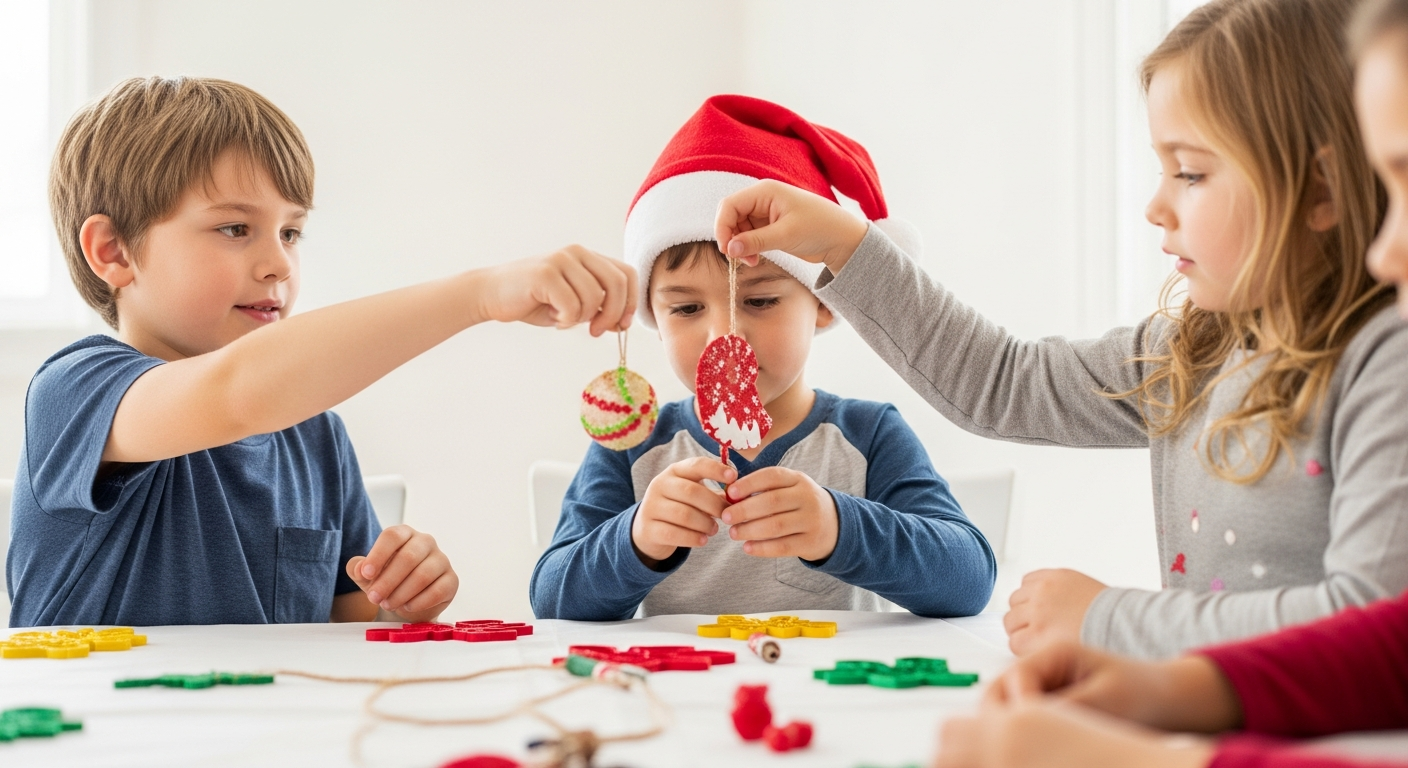
Table of Contents
- Get Crafty This Holiday: A Kid-Friendly Guide
- Why Holiday Crafts Are Great for Your Child's Development
- Christmas Ornament Ideas: Fun and Educational!
- Speech Blubs: Helping Your Child Learn Through Play
- Getting the Most Out of Speech Blubs
- Conclusion: Crafting Fun, Building Bright Futures
- FAQs: Crafting and Your Child's Speech
The holidays are magical, a time for families to connect, create, and celebrate! Seeing little hands reaching for glitter or carefully sticking decorations on an ornament brings so much joy. But it's more than just fun; these simple crafts can really help your child develop, especially their speech and language skills. Making Christmas ornaments isn't just about decorations, it's a hands-on way to encourage talking, improve motor skills, and spark their imagination. In this blog, we'll show you how to turn holiday fun into learning moments, and how Speech Blubs can make it even easier for your child to express themselves.
Get Crafty This Holiday: A Kid-Friendly Guide
Remember how exciting it was to unpack handmade decorations each year? They were like little reminders of Christmases past! Let's create that tradition for our kids, building memories and keepsakes of family time. More than just sentimental, holiday crafts are a fantastic way for kids to learn new skills. From picking out materials to adding the final touch, every step is a chance to learn. This holiday season, let's use crafting to help your little ones grow and develop. We'll share fun ornament ideas, explain how they help your child learn, and show you how to make the most of these moments to boost their language skills.

Why Holiday Crafts Are Great for Your Child's Development
Crafting is more than just a fun activity, it's a great way for kids to learn and grow! When they make Christmas ornaments, they're working on lots of different skills, often without even realizing it.
Developing Fine Motor Skills and Hand-Eye Coordination
Think about everything involved in making ornaments: cutting paper, squeezing glue, threading beads, painting, or picking up small pom-poms. These actions help strengthen the small muscles in their hands and fingers – these are called fine motor skills. These skills are important for things like holding a pencil, buttoning clothes, and learning to write. As kids work with different materials, their hand-eye coordination also gets better, which helps them be more precise and in control.
Sparking Creativity and Helping Them Solve Problems
Crafting lets kids use their imaginations! They get to choose colors, create designs, and figure out how to put things together. This helps them think creatively and solve problems. What if the glue isn't working? How can we make this star shine? These little challenges help kids learn to think for themselves and find solutions, which makes them feel proud and independent.
Boosting Brainpower
Following instructions, understanding what comes next ("first we cut, then we glue"), learning about shapes and colors, and feeling different textures all help your child's brain grow. They might learn about matching sides when decorating a snowflake or learn what happens when they mix paint colors. These little brain exercises get them ready for learning more complicated things at school and beyond.
Helping Them Grow Socially and Emotionally
Crafting together is a great way to socialize. It encourages sharing, taking turns, and working together. It's also a chance for kids to share their feelings and ideas and gives them a way to deal with any frustration. Finishing an ornament can make a child feel really proud, which boosts their confidence. And if your child is having trouble saying a word, crafting can help them relax and make it easier to communicate. This is what we believe in atSpeech Blubs– making learning feel like playtime!

Boosting Speech and Language Skills
This is where the real magic happens, especially for families working on communication skills. Crafting is a fun and easy way to help kids learn and practice language.
- Learning New Words:Saying the names of colors, shapes, materials (glitter, ribbon, cotton), actions (cut, paste, paint, sprinkle, tie), and describing words (shiny, bumpy, soft, sticky).
- Following Directions:"Pick up the red pom-pom." "Put the glue on the star." "Hold the ribbon with two hands." This is important for understanding what people say.
- Expressing Themselves:Encouraging kids to talk about what they are doing, what they see, and what they want. "I want more glue!" "Look at my blue star!"
- Telling Stories:Talking about the steps of the craft ("First, we painted the pinecone. Then, we added glitter."). Making up stories about their finished ornament ("This is a sleepy Santa ready for Christmas Eve!").
- Practicing Sounds:Working on specific sounds as they say the names of objects or actions. For example, the 's' sound in "star" or "scissors," the 'gl' sound in "glue" or "glitter," or the 't' sound in "tree."
- Paying Attention Together:When you and your child both focus on the same thing, it helps them learn to talk.
At Speech Blubs, we know that every moment is a chance to learn, and holiday crafting is no exception. We want to help children "speak their minds," and we believe that fun, hands-on activities combined with speech practice is the best way to do it. Crafting can help kids who are 'late talkers' or who have trouble with certain sounds feel more confident and eager to participate.
Christmas Ornament Ideas: Fun and Educational!
Let's look at some Christmas ornament crafts that are fun to make and also great for helping your child's speech and language development. Remember, the best way to help is to join in and play with them – talk about each step, ask questions, and describe what's happening.
1. Salt Dough Handprint/Footprint Ornaments
These are a great way to remember how small they once were and offer lots of learning opportunities.
- What You'll Need:1 cup salt, 1 cup flour, 1/2 cup water, baking sheet, parchment paper, straw (to make a hole), paints, glitter, ribbon.
- Instructions:
- Mix salt, flour, and water until it forms a dough. Knead it until it's smooth.
- Roll out the dough so it's about 1/4 inch thick.
- Have your child press their hand or foot into the dough to make a print.
- Carefully cut around the print, leaving a little space around it.
- Use a straw to make a small hole at the top for hanging.
- Bake at 250°F (120°C) for 2-3 hours, or until it's hard.
- Once it's cool, let your child paint and decorate their ornament.
- Put a ribbon through the hole so you can hang it up.
- How This Helps Your Child Learn:
- Exploring Senses:Talk about how the dough feels ("sticky," "smooth," "soft," "hard").
- Vocabulary:Body parts ("hand," "foot," "fingers," "toes"), actions ("mix," "roll," "press," "cut," "paint"), colors, shapes.
- Following Instructions:A multi-step process that helps them understand directions. "First, we mix. Then, we roll."
- Describing Things:"My hand is big!" "The paint is sparkly."
- Practicing Sounds:Working on sounds like /h/ in "hand," /f/ in "foot" and "flour," /p/ in "paint" and "press."
- Fine Motor Skills:Kneading the dough, pressing, painting small details.
- How Speech Blubs Can Help:If your child is working on learning body parts or actions, our "When I Grow Up" section has videos of kids showing different actions and expressions. Also, the "Animal Kingdom" section can help them learn words for movements and actions, which goes along with talking about how we "press" and "roll" the dough.
2. Popsicle Stick Christmas Characters (Santa, Reindeer, Elf)
Popsicle sticks are simple, but you can make lots of fun characters with them.
- What You'll Need:Jumbo popsicle sticks, glue, paint, googly eyes, cotton balls, felt pieces, small pom-poms, pipe cleaners.
- Instructions (for Santa):
- Paint three popsicle sticks red and let them dry.
- Glue them together side-by-side.
- Glue a small piece of pink felt at the top for the face.
- Add googly eyes.
- Glue a white cotton ball for the beard and a tiny red pom-pom for the nose.
- Cut a small white triangle of felt for the hat and glue it on.
- Finish with a white pom-pom at the tip of the hat.
- Attach a loop of string for hanging.
- How This Helps Your Child Learn:
- Recognizing Shapes and Colors:Saying the names of "red" sticks, "round" pom-poms, "triangle" felt.
- Counting:"How many sticks do we need?" "How many googly eyes?"
- Understanding Where Things Are:"Put the noseonthe face." "Glue the hatat the top."
- Vocabulary:Character names ("Santa," "reindeer," "elf"), clothing ("hat," "beard"), colors, textures.
- Following Directions:A series of steps to create the character.
- Imagining and Storytelling:Once the character is made, encourage them to make up stories about Santa or Rudolph.
- Practicing Sounds:Working on /s/ in "Santa," /r/ in "reindeer," /p/ in "popsicle."
- How Speech Blubs Can Help:Our app has lots of categories that encourage pretend play and character recognition. The "People" section can help kids learn the names of facial features, and "Toys" can inspire them to create stories like the ones they make up with their popsicle stick characters. If your child likes to copy others, our "Sing Alongs" are a fun way to practice words and rhythms.
3. Pinecone Forest Friends
Pinecones are perfect for making cute woodland creatures or frosty trees.
- What You'll Need:Pinecones (from outside!), glue, small pom-poms, googly eyes, felt scraps, pipe cleaners, glitter, string.
- Instructions (for an owl):
- Find a medium-sized pinecone.
- Glue two googly eyes near the top.
- Cut a small felt triangle for the beak and glue it below the eyes.
- Cut two felt "wings" and glue them to the sides of the pinecone.
- Add a string loop to the top for hanging.
- Alternative (frosted pinecone):Paint the tips of the pinecone white, add glitter, and glue small colored pom-poms for "ornaments."
- How This Helps Your Child Learn:
- Exploring Nature:Talk about where pinecones come from ("tree," "forest"), how they feel ("bumpy," "prickly"), and what they smell like.
- Vocabulary:"Pinecone," "owl," "beak," "wings," "forest," describing words.
- Asking and Answering Questions:"What kind of animal could this be?" "Where does an owl live?"
- Understanding Where Things Are:"On top," "underneath," "side."
- Fine Motor Skills:Gluing small pieces, working with pipe cleaners.
- Practicing Sounds:Sounds like /p/ in "pinecone," /ow/ in "owl," /f/ in "forest."
- How Speech Blubs Can Help:The "Animal Kingdom" section is perfect for this! Kids can watch other kids make animal sounds and learn the names of different animals, which helps them learn about the animals they're creating with their pinecones. It's a great way to connect a hands-on activity with digital practice.
4. Paper Plate Wreaths
This classic craft is great for cutting, gluing, and learning about patterns.
- What You'll Need:Paper plate, green construction paper, scissors, glue, red pom-poms or construction paper "berries," ribbon.
- Instructions:
- Cut out the center of the paper plate, leaving a ring.
- Tear or cut strips of green construction paper.
- Glue the green paper strips onto the paper plate ring, overlapping them to make it look leafy.
- Add red pom-poms or cut-out red circles for berries.
- Tie a ribbon at the top for hanging.
- How This Helps Your Child Learn:
- Using Scissors:Cutting along lines or tearing paper helps strengthen hand muscles.
- Color and Shape:Learning the names of "green" leaves, "red" berries, "round" plate.
- Vocabulary:"Wreath," "leaves," "berries," "ribbon," actions like "cut," "tear," "glue," "overlap."
- Following Instructions:"First, cut the middle, then glue the green paper."
- Recognizing Patterns:Creating patterns with leaves and berries.
- Practicing Sounds:Sounds like /w/ in "wreath," /gr/ in "green," /b/ in "berries."
- How Speech Blubs Can Help:If your child is working on following directions, the activities in Speech Blubs, which use videos to show how to do things, can be really helpful. Also, our "Colors and Shapes" section can help them learn the names of the colors and shapes used in this craft.
5. Glittery Star Ornaments
These sparkly stars are easy to make and great for developing fine motor skills and exploring textures.
- What You'll Need:Cardboard (a cereal box is perfect), star cookie cutter or template, scissors, glue, different colors of glitter, string or ribbon.
- Instructions:
- Trace star shapes onto cardboard and cut them out. (Parents might need to help with cutting, depending on the child's age.)
- Spread glue thinly over one side of the cardboard star.
- Let your child sprinkle glitter all over the glue.
- Shake off the extra glitter.
- Do the same on the other side once the first side is dry.
- Punch a small hole at the top and thread with string for hanging.
- How This Helps Your Child Learn:
- Fine Motor Skills:Holding the star, sprinkling glitter, shaking off extra glitter.
- Exploring Senses:Talk about how the glitter feels ("sparkly," "rough").
- Vocabulary:"Star," "glitter," "shiny," "sparkle," "glue," "cardboard," colors.
- Describing Things:"My star is so bright!" "It's a big, blue star."
- Cause and Effect:"If we put glue, the glitter will stick."
- Practicing Sounds:Sounds like /s/ in "star," "sprinkle," "shiny," /gl/ in "glitter," "glue."
- How Speech Blubs Can Help:If your child is curious about cause and effect or wants to learn descriptive words, Speech Blubs is a great place to explore. Our "My Face" section encourages kids to make different expressions, which can be related to how excited they are about their "shiny" new ornament. Seeing and copying other kids in the videos helps them learn new words and ideas.
Speech Blubs: Helping Your Child Learn Through Play
While hands-on activities like crafting are great, using them with digital resources can really help your child's development. AtSpeech Blubs, we're dedicated to helping the 1 in 4 children who need speech support by providing a fun and effective solution. Our founders, who had speech problems themselves, created the tool they wish they had – a mix of play and learning.
Our "video modeling" method is key to our approach. Kids learn by watching and copying other kids, not cartoons. This helps them stay engaged and learn from each other. After you make a glittery star, you can use the app to practice saying "star" or describing the colors and actions you used. This helps them remember new words and sounds in a fun way.
Think of it as continuing the language-rich environment you create while crafting. If your child is making an animal ornament, our "Animal Kingdom" section lets them watch and copy other kids making animal sounds, which helps them learn those sounds too. If they're learning colors for their wreath, our "Colors and Shapes" activities provide focused practice.
We know you might be wondering if your child could use a little extra help. That's why we have aquick 3-minute quiz. It only takes 9 simple questions and gives you an assessment and a personalized plan. It's a great way to see how Speech Blubs can help your child's communication skills.
Lots of parents have shared how our app has helped their children's communication skills and confidence. You canread their storiesto see how our approach works in real life. Our method isn't just based on stories; it's also supported byresearch, which makes us one of the best speech apps in the world.
Getting the Most Out of Speech Blubs
To get the most out of Speech Blubs, it's important for you to be involved. Just like you help your child while crafting, working with them during app use makes learning even better. Point to things on the screen, repeat words, and celebrate their efforts. This makes learning a fun adventure together.
We encourage you to explore the app with your child and find categories that they like and that fit their needs. Whether they love animals, vehicles, or everyday objects, Speech Blubs has lots of content designed to make learning language fun and effective.
Conclusion: Crafting Fun, Building Bright Futures
The holidays are a special time for making memories, and crafting Christmas ornaments with your kids is a fun way to do that while also helping them learn and grow. These activities help develop fine motor skills, thinking skills, emotional skills, and speech and language skills. Every cut, glue, and sprinkle is a chance to learn new words, follow directions, tell stories, and practice sounds.
We at Speech Blubs are here to help you along the way, with a fun, scientifically-backed approach to speech development that works well with these hands-on activities. Our goal is to help children "speak their minds," and we do that by combining fun play with smart tools.
Ready to help your child communicate confidently this holiday season and beyond? Get started today! We offer a 7-day free trial so you can see how Speech Blubs works for yourself. To get the free trial and access to all of our features, including the extra Reading Blubs app, early access to updates, and 24-hour support, be sure to choose the Yearly plan. It's our best deal at just $59.99 per year, which is only $4.99 per month – a savings of 66% compared to the Monthly plan at $14.99 per month, which doesn't include these extra benefits.
Give your child the gift of confident communication!Download Speech Blubs on the App StoreorGoogle Play Storeand start your free trial with the Yearly plan today. You can alsocreate your account on our websiteto begin. Let's make this holiday season a time of fun creation and great growth for your family!
FAQs: Crafting and Your Child's Speech
Q1: How old should my child be to start crafting Christmas ornaments for speech development?
A1:Even very young children (12-18 months) can benefit from simple crafts led by a parent, focusing on feeling different textures and learning basic words. As they get older, you can add more complicated steps like cutting, gluing, and following instructions. The important thing is to make sure the craft is safe and appropriate for your child's age. Parents should always be involved to help them learn new words.
Q2: What if my child isn't interested in crafting? How can I encourage them to participate?
A2:If your child doesn't seem interested, try focusing on what they already love. Do they love animals? Make an animal ornament. Do they have a favorite color? Let them choose materials in that color. Keep it short, let them lead, and don't worry about making it perfect. Sometimes just watching you craft can make them curious. Remember, the process is more important than the finished product. Connect the craft to something exciting, like decorating a special part of the house or making a gift for someone they love.
Q3: How can I best incorporate language learning into crafting without making it feel like a lesson?
A3:The best way is to talk about what you're doing, ask questions, and add to what they say. Describe what you're doing ("I'm putting theglueon theredpaper"), ask questions ("What color glitter should we use next?"), and expand on what they say ("You said 'star!' Yes, a beautifulsparklystar!"). Don't quiz them or correct them too much. The goal is to make it fun and relaxed so they can communicate naturally. Using tools like Speech Blubs along with these activities can provide structured practice without taking away the fun.
Q4: My child has a speech delay. Can crafting really help, and how does Speech Blubs fit in?
A4:Yes, it can! Crafting is a fun way to practice speech and language skills in a natural setting. It provides real objects to name, actions to describe, and chances to follow and give instructions. For a child with a speech delay, this hands-on approach can be less intimidating than asking them questions directly. Speech Blubs helps by providing focused practice through our video modeling method. After making a "snowman," your child can practice saying "snowman" or "white" by copying kids in our app, which helps them remember the sounds and words they learned while playing. It connects everyday experiences with focused speech practice, making learning fun.
Sobre el autor