
Manualidades Navideñas con Papel: ¡Diversión Navideña para Niños!
Tabla de Contenidos Introducción La Magia de las Manualidades con Papel para el Desarrollo Infantil Materiales Esenciales para Tu Kit de Manualidades Navideñas con Papel Manualidades Navideñas Encantadoras para Niños (Edades 2-10+)...
 Por Speech Blubs Team•22 dic 2025•18 min.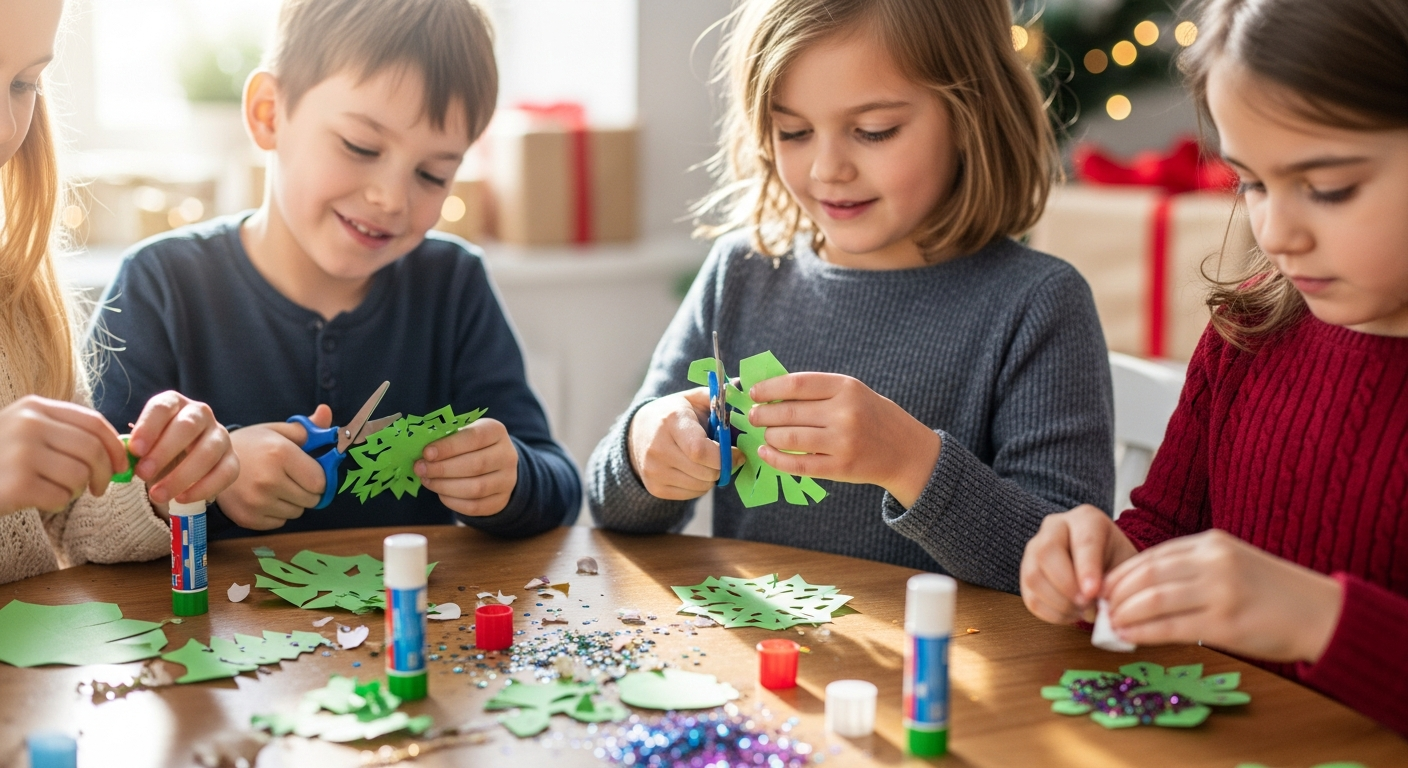
Table of Contents
- Introduction
- The Magic of Paper Crafts for Your Child's Growth
- Must-Have Christmas Paper Craft Supplies
- Fun Christmas Paper Crafts for Kids (Ages 2-10+)
- Adding Speech Blubs to Your Family's Holiday Fun
- Tips for Parents to Make the Most of It
- Conclusion
- Frequently Asked Questions
Introduction
As the days get shorter and the holidays get closer, families everywhere are looking forward to some holiday magic. While kids dream of sugar plums, the season is often a whirlwind of activities, some fun, some a little stressful. But what if there was a simple, cozy activity that sparks creativity *and* helps your child grow, especially when it comes to talking? That's Christmas paper crafting! It's not just a way to keep busy; it's full of benefits, from improving little hands to learning new words and making memories together. In this post, we'll explore Christmas paper crafts for kids, with easy projects and tips on how they help your child learn to speak their mind, maybe even with a little help from Speech Blubs.
The Magic of Paper Crafts for Your Child's Growth
Paper crafts aren't just a fun holiday tradition – they're a great way for kids to learn and grow. When kids fold, cut, glue, and decorate, they're not just making something pretty; they're building important skills for their brains, bodies, and language.

Fine Motor Skill Boost
Paper crafts are like exercise for little hands. Holding scissors, working with small pieces of paper, drawing lines, and carefully using glue all take focus and control. These actions make the small muscles in their fingers and hands stronger, which helps with things like writing, buttoning clothes, and feeding themselves. If your child has trouble holding a pencil or using their hands, crafting can be a fun and easy way to practice. When a child carefully cuts out a paper snowflake, they're also learning to use their hands together and improving their hand-eye coordination.
Unleashing Creativity and Imagination
A plain piece of paper is full of possibilities. Give kids some paper, glitter, and glue, and they'll turn it into snowmen, reindeer, Santa hats – whatever they can imagine! This helps them think creatively, solve problems (how do I make this stand up?), and show who they are. There's no "right" way to make a paper chain, and every child will make something unique. This kind of freedom helps them feel confident and proud of what they do.
Brainpower and Problem-Solving
Following instructions, understanding what comes next ("first we fold, then we cut"), recognizing shapes, and planning what to make all help a child's brain grow. Simple crafts can teach things like symmetry, patterns, and cause and effect (what happens if I cut here?). For example, making a paper chain teaches about repetition and how things fit together. These are important skills for school and everyday life.
Time to Talk!
One of the best things about crafting is that it gets kids talking! As they make things, they'll hear and use lots of different words. Think about it: "fold," "cut," "glue," "red," "green," "sparkly," "star," "tree," "round," "square," "big," "small," "under," "over," "sticky," "smooth," "rough." Parents can talk about what they're doing, ask questions, and describe colors and textures, turning craft time into a fun speech lesson.
If your child is a late talker or has trouble with certain sounds, crafting is a relaxed and fun way to practice. If they're making a paper Santa and struggling with the "s" sound, you can gently encourage them to say "Santa," "sticky tape," or "scissors" as you work together. If they love making animal crafts but don't know the animal sounds or names, our "Animal Kingdom" section in Speech Blubs is a fun way to practice "moo," "baa," "roar," and more, by watching other kids say them. This kind of practice, along with talking during crafts, is a great way to learn.

At Speech Blubs, we want every child to be able to speak their mind, and we know what families go through. Our founders had speech problems themselves, so they created the fun and helpful tool they wish they had. We want to help the 1 in 4 kids who need help with their speech, by using fun games and science to create "smart screen time." We believe in offering a better alternative to just watching cartoons, and a great way to connect as a family, just like crafting. To learn more about our methods and how we use things like video modeling to help kids learn, check out ourresearch page.
Must-Have Christmas Paper Craft Supplies
Before we get started with the crafts, let's gather our supplies. You probably already have most of these, and you can use them for lots of projects, making paper crafting a budget-friendly and eco-friendly holiday activity.
- Construction Paper:Lots of colors, especially red, green, white, gold, and silver.
- Cardstock:Thick paper for things like cards or ornaments that need to last longer.
- Safety Scissors:Scissors made for kids are a must for little hands.
- Glue Sticks and Liquid Glue:Glue sticks are less messy, but liquid glue is better for adding heavier decorations.
- Crayons, Markers, Colored Pencils:For drawing and adding details.
- Glitter and Glitter Glue:A holiday must-have!
- Cotton Balls:For fluffy snow or Santa's beard.
- Ribbon, Yarn, String:For hanging ornaments or adding decorations.
- Googly Eyes:Always fun for bringing characters to life.
- Stickers:Christmas stickers add instant holiday cheer.
- Popsicle Sticks:For making puppets or adding support.
- Paper Plates:Great for round crafts.
With these supplies on hand, you're always ready for a spur-of-the-moment craft session, turning a potential meltdown into a chance for creative play and talking.
Fun Christmas Paper Crafts for Kids (Ages 2-10+)
Here are some fun Christmas paper crafts, from easy projects for toddlers to more involved ones for older kids, all with their own benefits for learning and talking.
1. Paper Plate Santa Claus
Age Group:2-6 yearsSkills Developed:Following directions, recognizing shapes (circle), gluing, exploring textures (cotton balls), identifying colors.Language Focus:"Red," "white," "circle," "cut," "glue," "fuzzy," "beard," "hat," "face," "eyes," "nose," "mouth."
How to Make:
- Start with a plain paper plate. This is Santa's face.
- Help your child paint or color the top half of the plate red for Santa's hat.
- Cut out a triangle from red construction paper and glue it to the top of the plate as the hat.
- Glue cotton balls along the bottom edge of the hat and on the tip.
- Glue cotton balls around the bottom half of the plate to create Santa’s beard.
- Add googly eyes and draw a nose and mouth.
- Speech Blubs Connection:As you work, talk about each step. "First, we need theredhat." "Now, let's put thefuzzycotton on for Santa'sbeard." If your child is working on sounds like /f/ or /b/, saying "fuzzy" and "beard" a few times will help. For kids learning new words, practice words like "red," "white," "cut," and "glue" while you work. Our "Early Words" section can help by showing kids doing these actions.
2. Handprint Reindeer Cards
Age Group:2-8 yearsSkills Developed:Tracing, cutting, gluing, hand-eye coordination, expressing themselves.Language Focus:"Brown," "hand," "print," "finger," "antlers," "nose," "eyes," "card," "gift," "love," "family."
How to Make:
- Fold a piece of cardstock in half to make a card.
- Help your child trace their hand on brown construction paper twice. These are the reindeer's antlers.
- Cut out the handprints.
- Glue the two handprints onto the front of the card, a little angled upwards, to look like antlers.
- Draw a reindeer face between the antlers, adding googly eyes and a bright red nose (you can use a pom-pom or paper).
- Write a holiday message inside the card.
- Speech Blubs Connection:This craft is great for talking about body parts ("hand," "fingers") and actions ("trace," "cut," "glue"). When making the card for someone, talk about who will get it. "Grandma will love thisreindeercard!" If your child learns by watching others, our "Actions" section in Speech Blubs can help them practice words like "trace" or "cut" by watching videos.
3. Paper Chain Countdown
Age Group:3-10+ yearsSkills Developed:Fine motor skills, counting, sequencing, recognizing colors, creating patterns.Language Focus:"Link," "chain," "strip," "long," "short," "count," "day," "Christmas," "glue," "tape," numbers (one, two, three...).
How to Make:
- Cut strips of construction paper (about 1 inch wide and 8-10 inches long) in different Christmas colors.
- Make the first strip into a loop and glue or tape the ends together.
- Put the next strip through the first loop, make another loop, and glue/tape it.
- Keep going until you have a chain with one link for each day until Christmas (like 24 links for December 1st to 24th).
- Hang the chain and take off one link each day to count down.
- Speech Blubs Connection:This activity is perfect for practicing numbers and counting. "How many more links do we need? Let'scountthem!" "What color link should we addnext?" If your child has trouble with sequencing or numbers, this chain makes it easier to understand. Our "Numbers" section can help before or after the activity to practice recognizing numbers and counting. If your child is a "late talker" and likes doing the same thing over and over, making links is a great way to practice simple words like "link" or "glue" with your help.
4. Paper Snowflakes
Age Group:4-10+ years (younger kids will need help)Skills Developed:Fine motor skills, symmetry, spatial reasoning, creativity.Language Focus:"Fold," "cut," "triangle," "square," "pattern," "symmetrical," "snowflake," "design," "open," "surprise."
How to Make:
- Start with a square piece of paper.
- Fold it in half diagonally to make a triangle.
- Fold the triangle in half again.
- Fold it into thirds (this can be tricky, so an adult might need to help).
- Cut different shapes and patterns into the folded edges.
- Carefully unfold it to see your unique snowflake!
- Speech Blubs Connection:Talk about what you're doing: "We need tofoldthe paperagain." "What kind ofshapeshould wecut?" The "surprise" of seeing the snowflake is a great time to talk. If your child is learning to follow directions, break down the steps into simple instructions ("Fold it once," "Now cut a little piece off"). Speech Blubs’ "Actions" section, where kids copy movements and words, can help them understand verbs like "fold" and "cut."
5. Toilet Paper Roll Reindeer
Age Group:3-8 yearsSkills Developed:Recycling, cutting, gluing, decorating, using their imagination.Language Focus:"Roll," "brown," "antlers," "nose," "googly eyes," "pipe cleaner," "stick," "stand," "Santa," "sleigh."
How to Make:
- Paint or color a toilet paper roll brown.
- Glue googly eyes onto the roll.
- Add a red pom-pom or a small red circle of paper for the nose.
- Cut out small antler shapes from brown construction paper and glue them to the top inside of the roll, or use pipe cleaners.
- You can add a small jingle bell or ribbon.
- Speech Blubs Connection:This craft helps with describing things ("brown," "round," "shiny" for the eyes) and body parts ("nose," "antlers," "ears"). Make a few reindeer and give them names to encourage imaginative play and storytelling. "This is Rudolph! What does Rudolph say?" If your child likes playing with characters, our "What Am I?" section or "Animals" activities can help them learn new words and sounds for their paper reindeer.
6. Paper Bag Puppets (Christmas Characters)
Age Group:3-7 yearsSkills Developed:Storytelling, imaginative play, fine motor skills, creating characters.Language Focus:Character names (Santa, Elf, Reindeer), actions ("talk," "sing," "jump"), emotions, describing words.
How to Make:
- Get some plain paper bags (lunch bag size).
- Let the kids pick a Christmas character (Santa, elf, reindeer, snowman).
- Provide construction paper, cotton balls, googly eyes, markers, and other decorations.
- Help them cut out shapes and glue them onto the bag to make their character. The bottom flap of the bag can be the mouth, so it's a puppet.
- Speech Blubs Connection:Once the puppets are ready, encourage the kids to put on a "show." This is a great way to practice talking, telling stories, and taking turns in a conversation. If your 3-year-old "late talker" loves animals, making a reindeer puppet is a great chance to practice animal sounds and names. If your child has trouble starting conversations or talking about feelings, the puppets can be a safe way to practice. Speech Blubs’ "Guess the Word" or "My Face" sections can help kids practice words for facial features and emotions, which they can then use for their puppets.
7. Christmas Tree Cone
Age Group:4-8 yearsSkills Developed:Geometric shapes (cone), decorating, spatial awareness, sequencing.Language Focus:"Cone," "green," "decorate," "star," "ornament," "glitter," "pointy," "tall," "bottom," "top."
How to Make:
- Cut a large semicircle from green cardstock.
- Roll the semicircle into a cone shape and glue the edges together.
- Provide small decorations: glitter, sequins, small paper cutouts (stars, circles), pom-poms.
- Let the child glue these "ornaments" onto their paper tree.
- Cut out a star for the top.
- Speech Blubs Connection:This craft is full of descriptive words and directions. "Let's put thestaron thetop!" "Can you find aroundornament?" If your child needs to practice using prepositions, this is a great activity. Our "In-On-Under" activity in Speech Blubs helps kids learn these prepositions by watching videos, and then you can practice them while crafting as they put decorations "on" or "under" the tree.
Adding Speech Blubs to Your Family's Holiday Fun
While these crafts are great for learning language naturally, sometimes kids need a little extra help, or a more structured, but still fun, way to learn. That's where Speech Blubs comes in as a helpful tool during the holidays and beyond.
Imagine your child is making a Christmas paper craft and struggling with certain sounds or words. Instead of getting frustrated, you can easily switch to a Speech Blubs activity. For example:
- Trouble with Action Words:If your child is cutting and gluing but can't say "cut" or "fold," you can go to the "Actions" section in Speech Blubs. They can watch other kids do these actions and copy them, which helps them understand and say the words in a fun way.
- Learning Holiday Words:Christmas crafts introduce new words like "ornament," "sleigh," "gingerbread." Our app has sections like "Early Words" or holiday content (when available) that can help them learn these words through games and copying other kids. This is great for kids who learn by seeing.
- Making Friends and Talking to Others:Holiday gatherings mean talking to family. Making puppets or cards is a great way to practice greetings or simple questions. Speech Blubs also has activities for social situations and emotions, which can help kids feel confident talking to others, so they can "speak their minds and hearts" with everyone they meet during the holidays.
We believe our approach, which comes from our founders' own experiences with speech problems, is a great resource. We offer a fun and helpful solution for the 1 in 4 kids who need speech support, with "smart screen time" that combines science and play. We focus on talking, not just watching, making it a great way to connect as a family, like when you're crafting. Our unique "video modeling" method, where kids learn by watching and copying other kids, is based on research and makes us one of the best speech apps in the world. You can readstories from other parentsto learn more about how we help families every day.
Not sure if Speech Blubs is right for your child? It's easy to find out. Take ourquick 3-minute quiz. It has 9 simple questions and gives you an instant assessment and plan. This is a great way to see how your child is developing and how Speech Blubs can help, plus you get a free 7-day trial.
Tips for Parents to Make the Most of It
- Don't Expect Perfection:Not every craft will be perfect, and that's okay! Focus on having fun together, not on making something perfect. The point is to have fun and learn, not to create perfect art.
- Play Music:Put on some Christmas music to create a festive mood. Music can also help everyone feel good and have more energy, making crafting more fun.
- Talk and Ask Questions:Be a good example for your child. Talk about what you're doing, what they're doing, and ask questions: "What color paper do you want?" "How does the glitter feel?" "Tell me about your reindeer."
- Let Them Choose:Offer choices and let your child make decisions about their craft. This helps them feel independent and creative.
- Show Off Their Work:Be proud of their creations! This helps them feel good about themselves and shows them that you appreciate their efforts. Hang their ornaments on the tree, tape their snowflakes to a window, or put their cards on the mantel.
- Clean Up Together:Involve your child in cleaning up, teaching them to be responsible and organized. Use this time to practice language: "Let's put thescissorsaway." "Time to wipe up theglue."
Conclusion
Christmas paper crafts are a great way to have fun and help your child learn. From improving their hands and sparking their creativity to building confidence and helping them learn to talk, these simple projects create memories and help them grow. As you get your paper and glue this holiday season, remember that every cut, fold, and stick helps your child express themselves.
If you want to give your child an extra boost with their talking, Speech Blubs is here to help. We're committed to providing a fun and helpful solution that's based on science and designed to make learning to speak fun. Ready to help your child speak their mind?
Unlock a world of fun learning and help your child talk with confidence.Download Speech Blubs on the App Storeorget it on Google Playtoday!
For the best deal and all our features, choose our Yearly plan. At just $59.99 per year, you save 66% compared to the Monthly plan ($14.99/month), which is only $4.99/month. The Yearly plan also includes a 7-day free trial, our extra Reading Blubs app, early access to new updates, and 24-hour support. The Monthly plan doesn't have these benefits. Help your child learn to talk and have fun by choosing the Yearly plan and starting your7-day free trial today!
Frequently Asked Questions
Q1: What ages are Christmas paper crafts good for?
Christmas paper crafts are great for almost any age! Simple crafts like tearing paper or gluing cotton balls are good for toddlers (ages 2-3). Preschoolers (ages 3-5) can do basic cutting and gluing. School-aged children (6-10+) can follow more complex instructions, use scissors better, and make detailed designs like snowflakes or cards. The key is to pick projects that are right for your child's age and to help them as needed.
Q2: How do Christmas paper crafts help with talking?
Paper crafts create a great environment for learning language. Kids hear new words (like "fold," "cut," "sparkly," "tree," "snowflake"), action words, and descriptive words. Parents can talk about the steps, ask questions, and encourage kids to describe what they're making. This helps them understand language, express themselves, and take turns talking. For kids working on certain sounds or words, crafts make it fun to practice. For example, making a paper reindeer is a good way to practice the "r" sound in "reindeer" or "red."
Q3: What if my child doesn't like crafting?
It's normal for kids to have different interests. If your child isn't excited about crafting, try to keep it short, simple, and let them choose what to do. Offer a choice of materials or just one small step to start. Focus on having fun, not on the finished product. Sometimes, adding things they love, like their favorite characters or colors, can make it more interesting. If they prefer other activities, that's fine too; the goal is to find fun ways to connect and help them grow. Remember that talking and interacting duringanyactivity is what really helps their language skills.
Q4: Is Speech Blubs a substitute for speech therapy?
Speech Blubs is a fun and effective tool that can help your child's speech and language development, but it's not meant to replace speech therapy. We offer a fun and helpful solution for families, with "smart screen time" that's based on videos and play. For kids with speech delays or disorders, it's important to see a speech therapist. Speech Blubs can be a great resource to use along with therapy, to practice skills and have fun at home. You can start with ourquizto get an idea of how your child is doing and what to do next.
Sobre el autor