
Recognizing the Early Signs of Speech Delay in Toddlers
 Por Speech Blubs Team•9 mar 2026•13 min.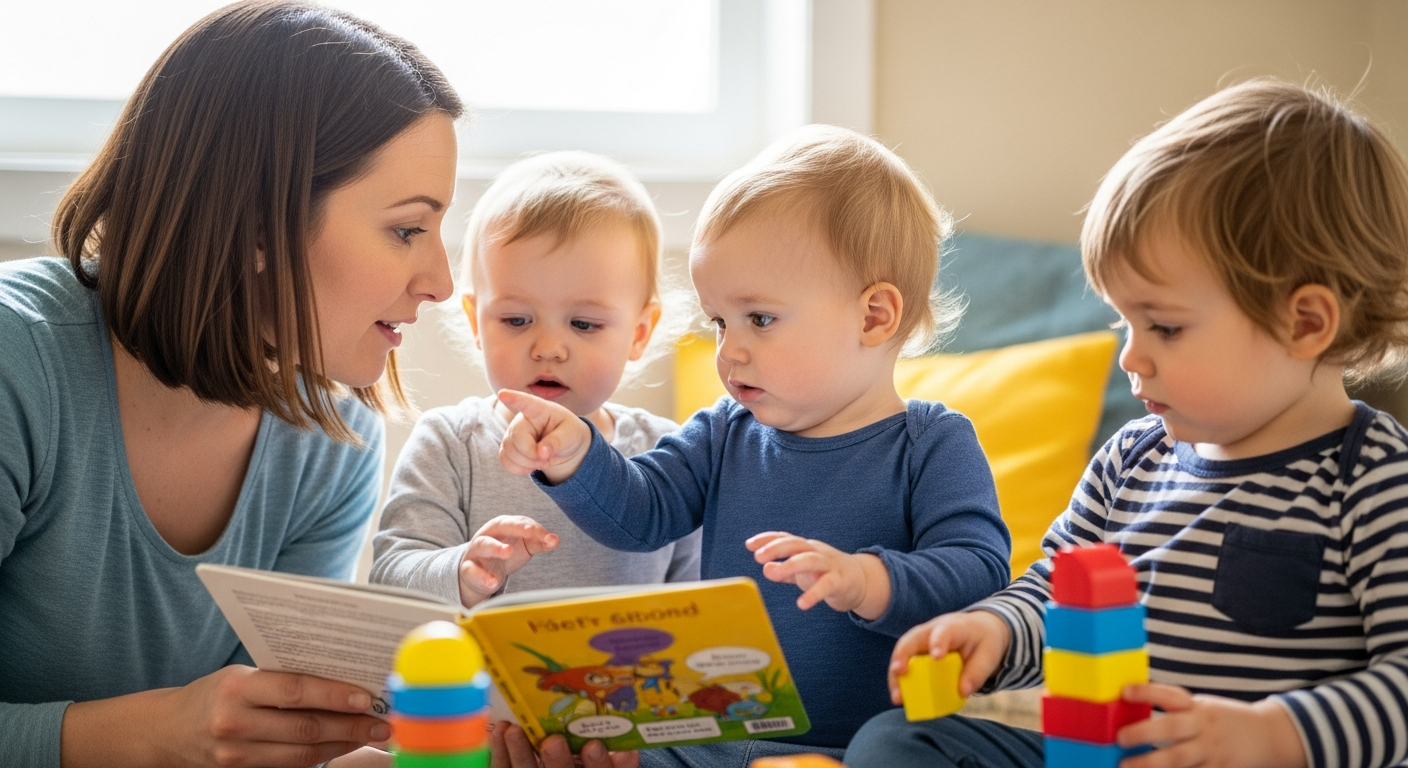
Table of Contents
- Introduction
- Understanding the Difference: Speech vs. Language
- Identifying the Early Signs of Speech Delay by Age
- Common Causes of Speech and Language Delays
- The Speech Blubs Approach: Scientific Methodology Meets Play
- Practical Strategies for Home Support
- Choosing the Right Path: Speech Blubs Pricing and Plans
- Setting Realistic Expectations
- Frequently Asked Questions
- Conclusion: Taking the First Step Toward Communication
Introduction
Did you know that approximately one in four children will face challenges with speech and language development at some point in their early years? For a parent, noticing that your little one isn't quite meeting the same communication milestones as their playgroup peers can be a source of significant anxiety. You might find yourself late-night scrolling, wondering if that lack of babbling or the preference for pointing over talking is just a "phase" or something that requires professional attention.
At Speech Blubs, we understand this journey deeply. Our mission is to empower every child to "speak their minds and hearts," a goal born from the personal experiences of our founders who navigated their own speech hurdles as children. They created the very tool they wished they had—a joyful, scientifically-backed bridge between silence and expression.

In this comprehensive guide, we will explore the early signs of speech delay, the critical differences between speech and language, and the common causes behind these developmental lags. We will also provide practical strategies for home support and explain how our unique "smart screen time" approach can turn frustration into family connection. Our goal is not to provide a clinical diagnosis—only a professional can do that—but to equip you with the knowledge and confidence to take the next best steps for your child’s future.
Understanding the Difference: Speech vs. Language
Before diving into the red flags, it is essential to distinguish between two terms that are often used interchangeably: speech and language. While they are closely linked, they represent different neurological and physical processes.
What is Speech?
Speech is the physical act of producing sounds. it involves the precise coordination of the tongue, lips, jaw, and vocal tract to articulate words. When we talk about a "speech delay," we are often referring to difficulties with:
- Articulation: The ability to form specific sounds (like the "p" in "pop" or the "s" in "sun").
- Fluency: The flow of speech, which can be disrupted by stuttering.
- Voice: The use of the vocal folds and breath to produce sound (volume, pitch, and quality).
What is Language?
Language is a broader system of communication. It is how we give and receive information through shared rules. Language is divided into two categories:
- Receptive Language: The ability to understand what others are saying. This includes following directions, identifying objects, and understanding "who, what, and where" questions.
- Expressive Language: The ability to use words, gestures, and sentences to convey thoughts, needs, and feelings.
A child might have a language delay where they can pronounce words perfectly but only use a handful of them, or they might have a speech delay where they have a massive vocabulary but are very difficult for others to understand. Recognizing which area your child struggles with is the first step toward effective support.

Identifying the Early Signs of Speech Delay by Age
Communication development is a spectrum, and every child moves at their own pace. However, there are established milestones that help us identify when a child might need a little extra help. If you are ever unsure about where your child stands, we recommend taking our quick 3-minute preliminary screener, which consists of nine simple questions to help you assess their current progress.
Birth to 12 Months: The Foundation of Sound
In the first year, children are laying the groundwork for verbal communication.
- By 6-9 months: You should hear plenty of babbling (strings of sounds like "ba-ba-ba" or "da-da-da").
- By 12 months: Most infants begin using non-verbal gestures. This includes waving "bye-bye," pointing at a toy they want, or shaking their head for "no."
- Red Flags: A total lack of babbling by 9 months or an absence of gestures by the first birthday are significant early signs of speech delay.
12 to 18 Months: Expanding the Vocabulary
This is the "explosion" phase for many toddlers.
- Milestones: By 18 months, most children have a vocabulary of 10 to 20 words. They should also be able to follow simple, one-step commands like "Give me the ball" or "Touch your nose."
- Red Flags: If your child prefers using gestures exclusively rather than attempting sounds, or if they have stopped vocalizing altogether, it is time to consult a pediatrician. Another concern is the inability to imitate sounds or words by 18 months.
18 to 24 Months: Putting it Together
The second birthday is a major milestone for language development.
- Milestones: By age two, the "average" toddler can say about 50 words and is beginning to combine them into two-word phrases (e.g., "More milk," "Doggy bark," "Mama go").
- Red Flags: If a child is only imitating speech rather than producing words spontaneously, or if they cannot follow simple directions, these are indicators of a potential delay. Additionally, if parents can only understand about half of what their two-year-old says, it’s worth investigating further.
3 to 4 Years: The Social Communicator
By this age, children should be communicating more complex ideas.
- Milestones: A three-year-old should be understood by familiar adults about 75% of the time. By age four, even strangers should be able to understand the vast majority of what a child says.
- Red Flags: Persistent stuttering that causes the child frustration, an unusual tone of voice (sounding very nasal or raspy), or an inability to form simple sentences are signs that the child may benefit from professional speech therapy.
Common Causes of Speech and Language Delays
Understanding why a delay is happening can help demystify the process and point toward the right solution.
Oral-Motor and Physical Issues
Sometimes the delay is mechanical. Many children with speech delays have oral-motor problems, meaning the areas of the brain that coordinate the muscles for speech are not communicating effectively with the lips, tongue, and jaw. This can result in:
- Apraxia of Speech: A condition where the brain struggles to plan the movements necessary for speech.
- Dysarthria: A weakness in the muscles used for speaking.
- Physical Impairments: A short frenulum (tongue-tie) or a cleft palate can also physically restrict the ability to form certain sounds.
Hearing Loss
Speech is learned by imitation. If a child cannot hear clearly, they cannot reproduce sounds accurately. Even chronic ear infections during the critical window of language development can lead to temporary hearing loss that results in a speech lag. It is standard practice for an audiologist to test a child's hearing whenever a speech concern is raised.
Neurodevelopmental Disorders
Speech and language delays are often the first signs of other developmental conditions. For example, children on the Autism Spectrum may have difficulty with social communication, eye contact, and non-verbal gestures. Similarly, children with ADHD or global developmental delays may reach language milestones later than their peers.
Environmental Factors and Screen Time
In today's world, we must address the "digital elephant" in the room. Research suggests that excessive "passive" screen time (like mindlessly watching cartoons) can actually hinder language development because it replaces the back-and-forth social interaction necessary for learning. However, not all screen time is created equal. At Speech Blubs, we focus on "smart screen time," which is active, participatory, and designed to trigger vocalization.
The Speech Blubs Approach: Scientific Methodology Meets Play
When we built the Speech Blubs app, we didn't just want to create a game; we wanted to create a clinical tool disguised as fun. Our methodology is rooted in the science of Video Modeling.
The Power of Video Modeling
Children are biologically wired to learn from their peers. This is due to "mirror neurons" in the brain, which fire both when a person acts and when they observe the same action performed by another. In our app, children watch videos of other children (our "Blubbers") making sounds, saying words, and performing facial exercises.
When a child sees another child successfully say "Banana" or make a "Moo" sound, they are much more likely to try it themselves than if they were prompted by an adult or a cartoon character. This peer-to-peer connection reduces the pressure to "perform" and transforms learning into a joyful imitation game.
Beyond the App: Family Connection
We believe that no app should replace a parent. Speech Blubs is designed to be a tool for co-play. We encourage parents to sit with their children, mirror the "Blubbers" together, and celebrate every sound produced. This builds confidence and reduces the frustration that often accompanies a speech delay. Our scientific methodology is highly rated on the MARS scale, ensuring that your child is engaging with one of the most effective tools available globally.
Practical Strategies for Home Support
While professional therapy is invaluable, the most significant progress often happens during the 23 hours a day your child is not in a clinic. Here is how you can support their development:
1. Narrate Your Life
Talk through everything you are doing. "Now I am putting on my blue socks. One sock, two socks! Now we are walking to the kitchen." This constant exposure to language in context helps build their receptive vocabulary.
2. The "Out of Reach" Technique
If your child is a "pointer," give them a reason to use their words. Place a favorite toy on a shelf where they can see it but not reach it. When they point, wait a few seconds and gently prompt them: "Oh, you want the car? Can you say 'car'?" Even if they only make a "C" sound, celebrate it wildly!
3. Read and Sing
Reading isn't just about the story; it's about the interaction. Use board books with simple pictures. Point to a cow and wait. Use the "Animal Kingdom" section of Speech Blubs to practice the "Moo" sound beforehand, then see if they can produce it while looking at the book. Singing songs like "The Wheels on the Bus" encourages the use of repetitive sounds and rhythm.
4. Create Joyful Moments
Frustration is the enemy of progress. If a child feels pressured to speak, they may shut down. Focus on making communication fun. If they are obsessed with dinosaurs, use that! For a child who loves animals, practicing "roar" or "hiss" sounds is much more motivating than practicing "S" or "R" in isolation. You can read many parent success stories on our website to see how other families have turned these daily struggles into victories.
Choosing the Right Path: Speech Blubs Pricing and Plans
We are committed to providing an immediate and effective solution for the 1 in 4 children who need support. To make our "smart screen time" accessible while ensuring we can continue to innovate and support our community, we offer two primary plans.
The Yearly Plan: Our Best Value
We highly recommend the Yearly plan for families committed to seeing long-term progress.
- Price: $59.99 per year (which breaks down to just $4.99 per month).
- 7-Day Free Trial: Experience the full power of the app risk-free.
- Reading Blubs Included: Access our companion app designed to bridge the gap between speech and literacy.
- Exclusive Benefits: Early access to new updates and a 24-hour support response time.
The Monthly Plan
For those who prefer a short-term commitment, we offer a monthly option.
- Price: $14.99 per month.
- Note: This plan does not include the 7-day free trial, the Reading Blubs app, or priority support.
By choosing the Yearly plan, you save 66% compared to the monthly rate and unlock the full suite of tools your child needs to thrive. You can create your account on our website today to get started.
Setting Realistic Expectations
It is important to remember that every child's journey is unique. We do not promise that your child will be reciting poetry in a month. However, we do focus on building the foundational skills: fostering a love for communication, building the confidence to try new sounds, and reducing the daily frustration felt by both child and parent.
Speech Blubs is a powerful supplement to overall development and professional therapy. It provides a screen-free alternative to passive viewing and a structured, joyful way for families to connect. Whether your child is a "late talker" or has a diagnosed delay, the goal is consistent, joyful progress.
Frequently Asked Questions
1. Is a speech delay the same thing as Autism?
No. While a speech delay can be a symptom of Autism Spectrum Disorder (ASD), they are not the same. Many children with speech delays are neurotypical but may have oral-motor challenges or hearing issues. If you have concerns about social interaction or repetitive behaviors alongside a speech delay, consult a specialist.
2. Can children "outgrow" a speech delay on their own?
Some "late talkers" do eventually catch up to their peers. However, "waiting and seeing" can be risky. Early intervention (before age 3) is significantly more effective because the brain is at its most adaptable. It is always better to provide support early than to try and catch up later in elementary school.
3. Does using a tablet make a speech delay worse?
Passive screen time (watching videos) can contribute to delays if it replaces human interaction. However, "smart screen time" like Speech Blubs is designed to be interactive. It encourages the child to speak back to the screen and involves the parent in the process, making it a tool for growth rather than a distraction.
4. How long should my child use Speech Blubs each day?
We recommend short, frequent sessions of about 10 to 15 minutes. This keeps the child engaged without causing "digital fatigue." The key is consistency and ensuring that an adult is present to participate and encourage the child.
Conclusion: Taking the First Step Toward Communication
Recognizing the early signs of speech delay is not about labeling your child; it is about opening doors for them. Communication is the key to social connection, academic success, and emotional well-being. By staying informed and proactive, you are giving your child the best possible start.
At Speech Blubs, we are honored to be a part of your family's journey. From our founders' personal struggles to our scientifically validated peer-modeling approach, everything we do is designed to help your child find their voice.
Ready to begin? Download Speech Blubs on the App Store or Google Play Store to start your journey today. We strongly encourage you to select the Yearly plan to take advantage of our 7-day free trial, the Reading Blubs app, and the best overall value for your child's development. Let's work together to help your little one speak their mind and heart.
To start your journey now, download Speech Blubs for Android and witness the joy of communication first-hand.
Sobre el autor