
Cariñosos regalos navideños hechos a mano por niños: Creando recuerdos y más
Tabla de contenido Introducción La magia de los regalos hechos a mano por pequeñas manos Maravillas del desarrollo al hacer manualidades navideñas Ideas de manualidades para cada edad y etapa Convirtiendo el tiempo de manualidades en tiempo de habla y lenguaje...
 Por Speech Blubs Team•22 dic 2025•15 min.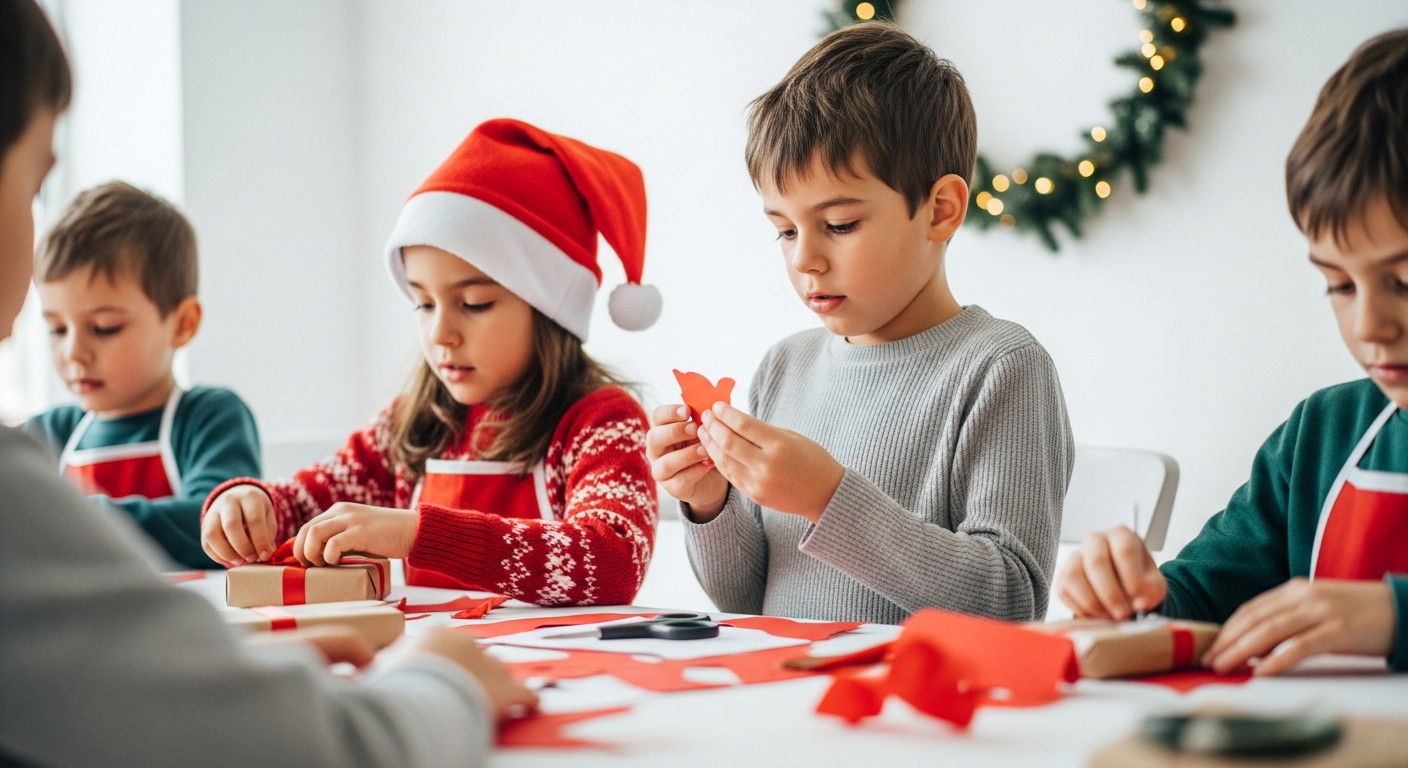
Table of Contents
- Introduction
- The Magic of Handmade Gifts from Little Hands
- Christmas Crafting: Developmental Wonders
- Craft Ideas for Every Age and Stage
- Turning Craft Time into Speech & Language Time
- Speech Blubs: Smart Screen Time for Smart Kids
- Choosing Your Speech Blubs Plan: Helping Your Child Shine
- Conclusion
- FAQ
Introduction
The holidays sparkle with excitement, especially in a child's eyes. Store-bought toys are popular, but there's a special magic in a small, slightly imperfect, handmade gift. It's more than a present; it's a piece of your child's heart, showing their effort and love. As parents, we treasure these homemade gifts more than anything from a store. And, beyond the sweet memories, Christmas crafting is great for your child's development, especially their communication skills.
In this post, we'll dive into the wonderful world of kids' Christmas crafts, with ideas for all ages. We'll also show how these activities help your child's development, particularly their speech and language. Crafting can be a fun, hands-on speech therapy session, building confidence and a love for talking, all while making special family memories. Join us as we see how simple crafts can become powerful tools for growth, making this holiday season extra special.

The Magic of Handmade Gifts from Little Hands
In a world of so many store-bought things, a handmade gift from a child is a beautiful expression of love. These gifts aren't just things; they show thought, effort, and care. When a child picks colors, glues a pom-pom, or shares a drawing, they're giving a piece of themselves. This helps them learn empathy, and the joy of making something special for someone else.
When someone gets a gift from a child, it has a special meaning that a store-bought gift can't match. It's a memory caught in glitter and paint. Grandparents, aunts, uncles, and even parents often keep these gifts for years, knowing the love that went into them. It connects families, creating stories and memories. The uneven lines, smudged fingerprints, and fun color choices are what make it special, making each gift one-of-a-kind. It reminds us that the best gifts aren't always under the tree, but come from the heart.
Christmas Crafting: Developmental Wonders
Christmas crafting isn't just about making pretty things; it helps your child's overall development. From the moment they touch the materials to when they share their gift, children are learning and growing.
Fine Motor Skills
Crafting is wonderful for fine motor skills, which help with writing, drawing, and even feeding themselves. When children cut, glue, tear paper, paint, string beads, or mold clay, they're using the small muscles in their hands and fingers. These movements improve hand-eye coordination and help them control objects. The more crafts they do, the better they get at these skills, which are important for school and life.
Cognitive Development
Crafting also helps a child's thinking skills. Following instructions helps them remember steps. They learn to problem-solve when things don't go as planned. Crafting encourages planning – thinking about what they need and in what order. Making choices, like which color to use, helps them make decisions. They also learn about space and how shapes fit together.

Creativity and Imagination
Crafting is great for creativity and imagination. With art supplies, children can explore their ideas and try new things. There's no right or wrong way to be creative, which helps them express themselves. This kind of play is important for innovative thinking, helping children think outside the box, which is useful throughout life.
Emotional Growth
Crafting helps children grow emotionally. It teaches them to be patient, as some projects take time. It builds perseverance, encouraging them to keep trying even when it's hard. Finishing a craft, especially a gift, gives them a sense of pride, boosting their self-esteem. Creating something for someone else teaches them kindness, as they think about what the other person will like. It’s a great way to teach children about giving.
Speech and Language Development
At Speech Blubs, we know that crafting is a great way to help speech and language development. Every step can be a chance to learn. Children can:
- Describe: "This paper isredandshiny." "The glue issticky." "My ornament issparkly."
- Narrate: "First, I cut the circle. Then, I glued the glitter. Last, I added the string."
- Follow and Give Instructions: "Pick up the blue crayon." "Can you hand me the scissors?" "Now, put the star on top."
- Label and Identify: Name colors, shapes, materials, and tools.
- Ask and Answer Questions: "What should I make next?" "Where does this go?" "Is this for Grandma?"
- Express Feelings: "I love this!" "This is hard." "I'm so proud!"
- Develop Vocabulary: Learn new words about tools, textures, actions, and Christmas.
- Engage in Conversational Turn-Taking: Talk about ideas, work together on steps, and talk about the gift.
These moments turn craft time into a natural language lesson. For parents whose children are slower to talk, these activities provide a relaxed way to practice. We believe in using these everyday moments to build communication skills.
Craft Ideas for Every Age and Stage
Christmas crafting can be made for every child's level, so everyone has fun. Remember, adults helping and playing along is part of these activities, making them chances for bonding and learning.
Toddlers (1-3 years): Simple & Sensory
Toddlers learn through touching and simple actions. The goal is to try new textures, colors, and words.
Handprint/Footprint Ornaments or Cards
- Materials: Non-toxic paint, paper or salt dough, glitter (optional), ribbon.
- Activity: Help your toddler press their hand or foot into paint and onto paper or dough. Decorate a little.
- Speech & Language Opportunities:
- Labeling: Name body parts ("hand," "foot," "fingers," "toes"), colors ("red paint," "green paper"), and actions ("press," "stamp," "paint").
- Sensory Vocabulary: "Wet paint," "soft paper," "sticky glue."
- Early Commands: "Touch," "press," "more paint."
- Engagement: Ask "Whose hand is this?" "What color is this?"
- Speech Blubs Connection: If your toddler is learning new words, the "First Words" section in Speech Blubs makes it fun, like naming colors while crafting. Our app uses videos of children, which encourages your child to copy and learn. This "smart screen time" helps with hands-on learning.Download Speech Blubs on the App StoreorGoogle Playto start your child's communication journey.
Pom-Pom Christmas Trees
- Materials: Paper cones, colored pom-poms, non-toxic glue.
- Activity: Toddlers glue pom-poms onto the cone to make a textured tree.
- Speech & Language Opportunities:
- Color Identification: "Give me theredpom-pom." "Where is thegreenone?"
- Counting: Count pom-poms as you put them on.
- Positional Concepts: "Put itonthe cone," "Put itnextto the blue one."
- Action Verbs: "Glue," "stick," "push."
- Requests: Child can ask for "more glue" or "another pom-pom."
Preschoolers (3-5 years): More Complex & Imaginative
Preschoolers can do more steps and love expressing themselves. They understand making a gift for someone.
Painted Rock Art (Paperweights/Decor)
- Materials: Smooth rocks, acrylic paints, brushes, sealant.
- Activity: Children paint rocks with designs or characters.
- Speech & Language Opportunities:
- Storytelling: Encourage them to tell a story about their painting ("This is Santa flying to the moon!").
- Description: "My rock isbumpyandsmooth." "I usedsparklyblue paint."
- Prediction: "What do you think Grandma will say when she sees this?"
- Sequencing: "First, we paint the base, then we add the details."
- Speech Blubs Connection: If your child has trouble with sequences or describing, our app's activities can help. Our videos help children learn by watching and copying others, building their communication skills.Learn more about the scientific research behind our methods.
Salt Dough Ornaments
- Materials: Salt, flour, water, cookie cutters, paint, glitter, ribbon.
- Activity: Mix dough, roll it out, cut shapes, bake, then paint.
- Speech & Language Opportunities:
- Vocabulary: "Dough," "flour," "salty," "roll," "cut," "bake."
- Action Verbs: "Mix," "knead," "press," "paint," "hang."
- Following Multi-Step Directions: "First, mix the flour and salt. Then add water. Next, roll it out."
- Making Choices: "Which cookie cutter should we use?" "What color should this star be?"
Early Elementary (6-8 years): Skill-Building & Practical
At this age, children can follow longer instructions and like making gifts that are useful.
DIY Coasters (Tile/Cork)
- Materials: Plain tiles or cork squares, acrylic paints, brushes, sealant, felt pads.
- Activity: Children paint designs on the tiles. When dry, seal and add felt pads.
- Speech & Language Opportunities:
- Spatial Concepts: "Put the stripeacrossthe middle." "The dots goaroundthe edge."
- Explaining Process: Encourage them to explainhowthey made the design.
- Negotiation/Collaboration: If making a set, talk about designs ("Let's make two with stripes and two with polka dots.").
- Problem-solving Discussions: "What should we do if the paint smudges?"
- Speech Blubs Connection: For children working on sentences and stories, talking about crafts can be helped by Speech Blubs, which encourages sentence building. Our goal is to help children speak confidently.Unsure if your child could benefit from Speech Blubs? Take our quick 3-minute preliminary screener to get a simple assessment and a free 7-day trial.
Personalized Bookmarks
- Materials: Cardstock, markers, colored pencils, stickers, ribbon.
- Activity: Design and decorate bookmarks, writing the person's name.
- Speech & Language Opportunities:
- Writing/Reading Connection: Talk about favorite books.
- Descriptive Language: "I want to draw amagicalunicorn for Aunt Carol."
- Asking for Clarification: "What does 'bibliophile' mean?"
- Expressing Intent: "I'm making this for Uncle Mike because he loves reading mysteries."
Older Kids (9-12 years): Independent & Detailed
Older children can do more on their own, learning new skills.
Handmade Soaps/Bath Bombs
- Materials: Soap-making kit or bath bomb ingredients.
- Activity: Follow a recipe to make soaps or bath bombs.
- Speech & Language Opportunities:
- Procedural Language: Explain the recipe to someone else.
- Vocabulary: Learn words like "emulsify," "fragrance," "mold," "ingredients."
- Safety Discussions: Talk about following instructions and handling materials safely.
- Cause and Effect: "If we add too much water, the bath bomb won't fizz."
- Speech Blubs Connection: As kids get older, they learn to explain things. Speech Blubs helps children "speak their minds," helping them share these new skills confidently. We help the 1 in 4 children who need speech help.See what other parents are saying about their child's success with Speech Blubs.
Upcycled Jar Lanterns/Vases
- Materials: Clean jars, tissue paper, glue, paint, glitter, fairy lights.
- Activity: Decorate jars with tissue paper to make lanterns or vases.
- Speech & Language Opportunities:
- Creative Problem Solving: "How can we make this jar look like a snowy forest?"
- Justifying Choices: "I chose blue and silver because it reminds me of winter."
- Discussing Aesthetics: "Do you think this looks good?" "What could make it even better?"
- Planning and Design: Think about the final look before starting.
Turning Craft Time into Speech & Language Time
The real magic is when we add language to crafting. It’s about talkingthroughthe craft.
Pre-Crafting: Planning and Preparation
Before you get out the glue, you can build language skills.
- Choose the Craft: Talk about what to make. "Who are we making a gift for?" This encourages planning.
- Gather Materials: "We need scissors. Can you find theredscissors?" This reinforces colors.sparklypaper?" This reinforces object identification, colors, and prepositions.
- Discuss Steps: Briefly talk about the plan. "First, we get the paper. Next, we cut. Then, we glue."
During Crafting: Active Communication
This is where the language learning happens.
- Describe Actions: "I amcuttingthe paper." "You aregluingthe stars." This builds action words.
- Label Objects and Attributes: "This is asmoothrock." "The paint iswet." "That pom-pom issoft."
- Follow and Give Instructions: Give simple commands. "Put the caponthe glue." This practices language.cutthe string." This practices receptive and expressive language.
- Ask Open-Ended Questions: "What do you want to draw next?" "How does that feel?"
- Narrate Progress: "Oh, you're making a tree! What are you putting on top?" This encourages talking.
- Relatable Scenario: If your 3-year-old loves animals, and you're making a reindeer, talk about "deer," "antlers," "nose," and animal sounds. The "Animal Kingdom" section in Speech Blubs is a fun way to practice "moo," "baa," "roar," and "oink." Our videos help children copy others, building confidence. You can practice in the app and then craft!
- Ready to get started? Create your account and begin your 7-day free trial today.
Post-Crafting: Reflection and Sharing
Even after the glue is dry, you can still learn.
- Describe the Finished Product: "Look at yoursparklystar! Tell me about it."
- Explain the Process: "How did you make this? What did you do first?"
- Discuss Feelings: "How do you feel about your gift?" This encourages emotional words.
- Practice Giving the Gift: Practice giving the gift and saying "Merry Christmas."
Crafting is a great way to learn. If you think your child could use help, we are here.Unsure if your child could benefit from dedicated speech support? Take our quick 3-minute preliminary screener to get a simple assessment and a personalized next-steps plan, along with a free 7-day trial.It's a great way to gain insight and explore valuable resources.
Speech Blubs: Smart Screen Time for Smart Kids
At Speech Blubs, we know it's hard when children need help with talking. Our founders had speech problems and wanted to create the tool they wish they had. We want to help children "speak their minds," helping the 1 in 4 children who need speech help.
We use science and play to make "smart screen time." Unlike cartoons, Speech Blubs is active and fun. We use "video modeling," where children learn by watching other children. This makes learning sounds and words natural. When children see others talking, they want to join in.
Speech Blubs helps a child's learning and therapy. It helps families connect, turning screen time into learning time. We help build confidence and create joyful moments, and our goal is to help children love to communicate.Our method is based on science, making us one of the best speech apps.
Choosing Your Speech Blubs Plan: Helping Your Child Shine
We believe every child should talk confidently. We've made Speech Blubs easy to use and full of features. Here are our subscription options.
We offer two main plans:
- Monthly Plan: This plan is $14.99 per month. It gives you access to our main features, so your child can start their learning.
- Yearly Plan: This plan is $59.99 per year, which is $4.99 per month. Yousave 66%compared to the monthly plan!
The Yearly Plan saves money and unlocks features to help your child:
- 7-Day Free Trial: Only with the Yearly Plan do you get a full 7-day free trial, allowing you and your child to explore all the app's features and see the magic of video modeling firsthand before making a commitment.
- The Extra Reading Blubs App: With the Yearly Plan, our Reading Blubs app helps build reading skills, which helps with speech.
- Early Access to New Updates: Yearly Plan members get early access to new content.
- 24-Hour Support Response Time: We help Yearly Plan members quickly.
The Monthly Plan doesnotinclude these benefits. We suggest the Yearly Plan to use all our features, including the free trial.
Conclusion
This holiday season, let's enjoy making Christmas crafts with kids. These gifts help with skills, thinking, creativity, and speech. From a handprint ornament to handmade soap, each craft is a chance for children to describe, ask questions, and share.
By playing with our children during craft time, we turn it into a language-building session. We help them practice words, follow instructions, and build confidence. And when you need a tool to help your child's speech, remember Speech Blubs.
Ready to help your child learn and speak confidently? Start with us today.Download Speech Blubs on the App StoreorGoogle Playto help your child communicate confidently. For the best deal, choose our Yearly Plan.You can also create your account and begin your 7-day free trial directly on our website.Give the gift of talking confidently this Christmas – it lasts a lifetime.
FAQ
Q1: What age is best for Christmas crafts?
A1: Christmas crafts are great for children of all ages. Choose crafts that match their skills. Toddlers like simple activities like handprint art, while older children can learn new skills like making soaps. Adult help is important, so everyone has a good experience.
Q2: How can I make craft time more educational?
A2: Help your child by talking about what you're doing, asking questions, and encouraging them to share their ideas. Use words about colors, shapes, textures, and actions. This turns craft time into a chance to learn language.
Q3: My child gets frustrated with crafts. What can I do?
A3: If your child is frustrated, make the craft easier. Praise their effort. Sometimes, it's hard for them to talk about what's wrong. Using clear instructions can help. Apps like Speech Blubs can help them express themselves, which helps them feel more confident during crafts.
Q4: How does Speech Blubs help with crafting?
A4: Speech Blubs helps children practice their speech in a fun way. While crafting helps with language, Speech Blubs uses videos to help children learn to talk by copying others. This helps them say their thoughts and feelings.
Sobre el autor