
The Best Toddler Activity Subscription for Development
 Por Speech Blubs Team•18 mar 2026•13 min.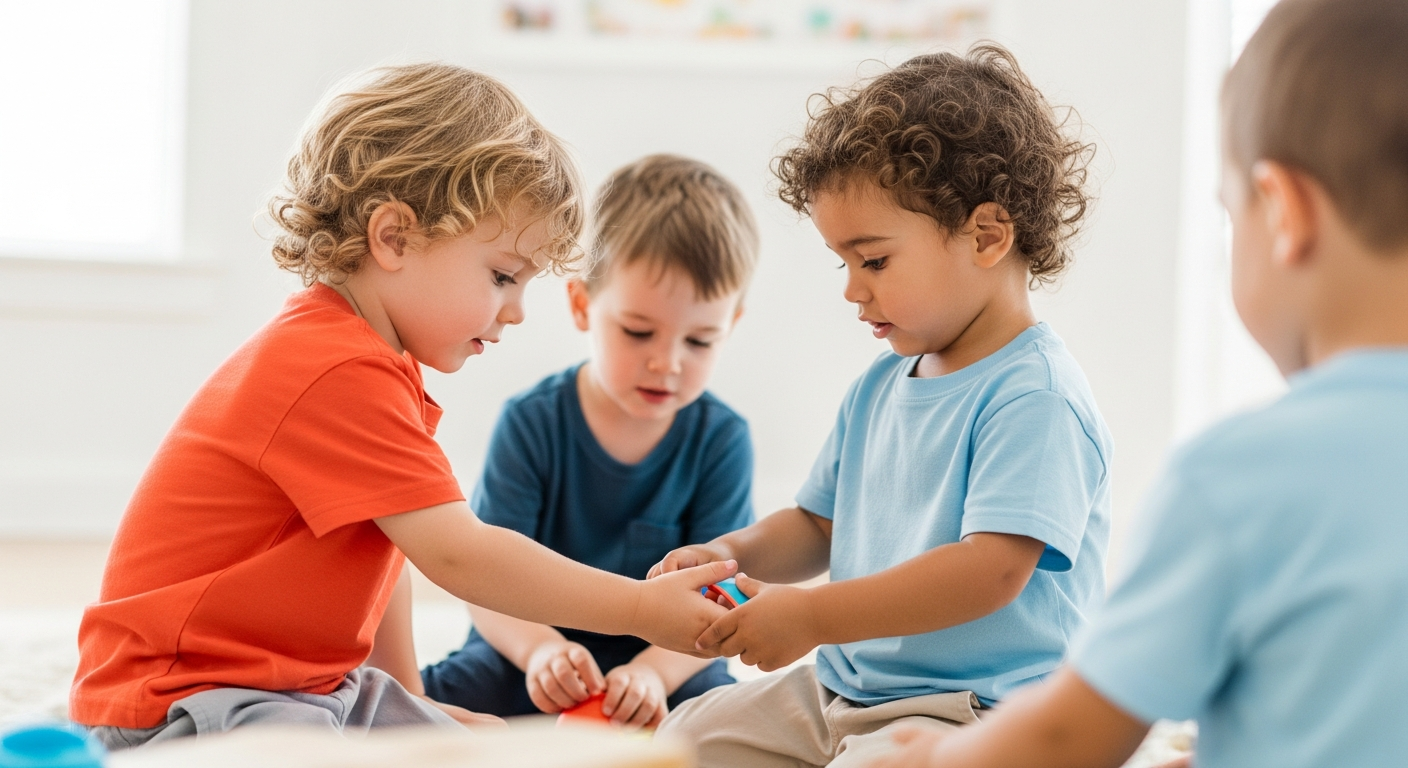
Table of Contents
- Introduction
- Understanding the Value of Early Childhood Subscriptions
- Physical vs. Digital: Finding the Right Balance
- The Science of Peer-to-Peer Learning
- Making the Most of Your Subscription: Practical Scenarios
- Our Mission and Why We Care
- Realistic Expectations for Your Child’s Journey
- Choosing the Best Plan for Your Family
- Fostering a Love for Learning at Home
- Conclusion
- Frequently Asked Questions
Introduction
Did you know that approximately one in four children experience some form of speech or language delay during their early development? For a parent, this statistic isn’t just a number; it represents the quiet anxiety felt when a toddler isn't hitting milestones at the same time as their peers. You might find yourself searching for the right tools—the perfect puzzle, the most engaging book, or a comprehensive toddler activity subscription—hoping to bridge the gap and help your child find their voice.
The purpose of this post is to guide you through the landscape of early childhood resources, specifically focusing on how a well-chosen subscription can transform passive time into active learning. We will explore the differences between physical and digital tools, the science behind effective communication development, and how to select a path that balances "smart screen time" with hands-on play. At Speech Blubs, we believe that the right resources can empower children to speak their minds and hearts, turning frustration into a joyful journey of discovery.

The following sections will dive deep into the criteria for selecting a high-quality subscription, the unique methodology of peer-led learning, and practical ways you can support your child’s growth from home. Ultimately, the best toddler activity subscription is one that fosters a love for communication while building the foundational skills necessary for a lifetime of confidence.
Understanding the Value of Early Childhood Subscriptions
In recent years, the concept of a subscription for toddlers has evolved far beyond simple toy deliveries. Parents today are looking for curated experiences that remove the guesswork from early education. With so many options available, it’s important to understand why this model has become so popular and how it can benefit your child’s development.
Convenience and Consistency
One of the biggest hurdles in early childhood education is the "mental load" placed on parents. Researching activities, buying supplies, and ensuring they are age-appropriate takes time that many families simply don't have. A subscription service provides a consistent rhythm of learning. Whether it is a monthly physical box or a digital learning platform, these tools ensure that your child is regularly exposed to new concepts and skills without requiring you to reinvent the wheel every weekend.
Scaffolding and Skill Building
Quality subscriptions are designed with a "scaffolding" approach. This means the activities start with foundational skills and gradually increase in complexity as your child grows. For example, a child might start by identifying simple animal sounds and eventually move on to forming full sentences or understanding complex emotions. This structured progression is vital for children who might need a little extra support, as it builds confidence at every step.
If you are unsure where your child currently stands in their development, taking a quick 3-minute preliminary screener can provide a helpful assessment. This tool involves nine simple questions and offers a next-steps plan to help you tailor your child's activities to their specific needs.

Physical vs. Digital: Finding the Right Balance
When parents hear the phrase "toddler activity subscription," they often think of physical boxes filled with wooden toys or craft supplies. While these are excellent for fine motor skills, there is a growing recognition of the role "smart screen time" plays in modern development.
The Role of Physical Play
Physical activities—like sorting shapes, painting, or stacking blocks—are essential for sensory processing and motor development. These hands-on experiences help toddlers understand spatial relationships and cause-and-effect. Many parents find success by pairing these physical kits with digital tools that focus on the cognitive and linguistic aspects of development.
What is Smart Screen Time?
At Speech Blubs, we advocate for a screen-free alternative to passive viewing. Unlike cartoons or "unboxing" videos where a child sits and watches without interacting, smart screen time requires active participation. It is an experience designed to be shared between a parent and a child, fostering connection rather than isolation.
Our approach is built on the belief that technology should be a tool for engagement, not a digital babysitter. By using a "smart" platform, you can access specialized learning techniques—like video modeling—that are difficult to replicate with physical toys alone. To see the impact this approach has had on families worldwide, you can read through our collection of parent testimonials.
The Science of Peer-to-Peer Learning
The heart of our methodology lies in a powerful scientific principle known as video modeling. This is a primary reason why many parents choose our digital platform as their preferred toddler activity subscription.
Watching and Imitating
Children are biologically programmed to learn from their peers. When a toddler sees another child performing an action or making a sound, their "mirror neurons" fire, creating a blueprint for that same behavior in their own brain. This peer-to-peer approach is often more effective than an adult teaching a child, as children view their peers as more relatable and motivating.
Building Confidence Through Observation
For a child who struggles with speech, being told to "say this" by an adult can sometimes feel pressuring or frustrating. However, watching a fun, energetic child on a screen make a "B" sound or a "Moo" sound makes the process feel like play. This reduces the child's anxiety and encourages them to try, fail, and try again in a safe environment. You can learn more about the scientific research that supports this methodology on our dedicated research page.
Making the Most of Your Subscription: Practical Scenarios
To help you visualize how a toddler activity subscription fits into your daily life, let’s look at some real-world scenarios. These examples show how specific features can be used to tackle common developmental challenges.
Scenario 1: Encouraging First Words with Animals
Imagine you have a 2-year-old who is a "late talker." He loves animals and gets excited when he sees a dog in the park, but he hasn't started using words yet. In this situation, the "Animal Kingdom" section of our app provides a perfect bridge. Instead of just looking at a picture of a cow in a book, your child can watch another child make the "Moo" sound while wearing a fun digital cow filter.
Because the app uses peer-to-peer modeling, your toddler is more likely to mimic the peer on the screen. This turns a practice session into a game. You can sit with him, mimic the sound yourself, and celebrate every small attempt he makes. To get started with these activities, you can download Speech Blubs on the Apple App Store or Google Play Store.
Scenario 2: Building a Daily Routine
Consistency is key to learning. For a parent whose 3-year-old struggles with transitions—like getting dressed or brushing teeth—using the "Daily Routines" section can be a lifesaver. By watching other children perform these tasks and learning the words associated with them (e.g., "brush," "shirt," "shoes"), your child gains a sense of predictability and control. You can incorporate these digital activities into your physical routine, reinforcing the language throughout the day.
Scenario 3: Identifying and Expressing Emotions
Toddlers often experience big feelings but lack the vocabulary to express them, leading to tantrums. A subscription that includes social-emotional learning can help. By using activities that focus on "Faces and Feelings," your child can learn to recognize what a happy, sad, or frustrated face looks like on another child. This foundational skill helps reduce frustration because the child eventually learns to use words to describe their internal state instead of relying on outbursts.
Our Mission and Why We Care
Every feature we build and every activity we design comes from a place of deep empathy and personal experience. Speech Blubs was born from the lived experiences of our founders, who all grew up with speech problems. They understood firsthand the frustration of not being able to communicate and the impact it can have on a child’s self-esteem.
They set out to create the tool they wished they had when they were younger—an immediate, effective, and joyful solution for the 1 in 4 children who need speech support. Our mission is to blend scientific principles with the power of play to create one-of-a-kind experiences. We aren't just an app company; we are a team dedicated to helping your child find their voice and connect more deeply with the world around them.
Realistic Expectations for Your Child’s Journey
While we are incredibly proud of the progress children make using our tools, it is important to maintain realistic expectations. Developmental growth is rarely a straight line; it is a series of leaps, plateaus, and small victories.
It’s a Supplement, Not a Magic Wand
We do not suggest that your child will be giving public speeches in a month. Instead, we focus on the benefits of the process: fostering a love for communication, building confidence, reducing frustration, and creating joyful family learning moments. Use our platform as a powerful supplement to your child's overall development plan and, if necessary, professional therapy.
The Importance of Adult Co-Play
While our app is engaging for children, the magic really happens when you join in. Co-play—where an adult interacts with the child during the activity—is one of the strongest predictors of success. By being there to cheer, repeat sounds, and connect the screen activity to the real world, you are doubling the educational value of the experience.
Choosing the Best Plan for Your Family
We believe in being transparent and providing the best possible value for families. When choosing your toddler activity subscription with us, we offer two main paths.
Monthly Plan: Flexibility for Your Needs
Our Monthly plan is priced at $14.99 per month. This is a great option if you want to test the waters and see how your child responds to the video modeling methodology. However, please note that the Monthly plan is a basic package and does not include some of our most valuable features.
Yearly Plan: The Superior Choice for Growth
The Yearly plan is designed for families committed to long-term progress. It costs $59.99 per year, which breaks down to just $4.99 per month—a saving of 66% compared to the monthly rate.
More importantly, the Yearly plan includes exclusive, high-value features that help your child excel:
- 7-Day Free Trial: Try the full experience risk-free before committing.
- Reading Blubs App: Access to our additional app focused on pre-literacy and reading skills, which is not included in the monthly plan.
- Early Access: Be the first to try new updates and content releases.
- Priority Support: Enjoy a 24-hour support response time for any questions or technical needs.
For families looking for a comprehensive toddler activity subscription, the Yearly plan provides the most robust toolkit for success. You can sign up and create your account on our website to begin your journey.
Fostering a Love for Learning at Home
Beyond subscriptions and apps, creating a language-rich environment at home is the best thing you can do for your toddler. Here are a few simple strategies to use alongside your chosen activities:
- Narrate Your Day: Talk about what you are doing as you do it. "I am pouring the milk into the blue cup. It's cold!" This constant stream of language helps children connect words to actions.
- Wait for a Response: When you ask a question or make a sound, give your child at least 5 to 10 seconds to respond. Their brains process information slower than ours, and giving them space to speak builds their confidence.
- Read Together Daily: Even if your child just wants to look at the pictures or flip the pages quickly, the act of sitting together with a book builds positive associations with language and literacy.
- Use Positive Reinforcement: Focus on the effort, not just the result. If your child tries to say a word but doesn't get it quite right, say, "I love how you tried to say 'apple'! You're working so hard!"
Conclusion
Finding the right toddler activity subscription is about more than just finding a way to pass the time; it’s about choosing a partner in your child’s developmental journey. Whether you choose physical boxes, digital platforms, or a mix of both, the goal remains the same: to foster curiosity, build essential skills, and strengthen the bond between you and your little one.
At Speech Blubs, we are honored to be a part of that journey for millions of families. Our peer-led video modeling, combined with a heart-centered mission, provides a unique and effective way to support your child’s communication skills. By choosing "smart screen time" and engaging in active play, you are giving your child the tools they need to express their thoughts, their feelings, and their dreams.
Are you ready to see your child blossom? Start your 7-day free trial today by downloading the app or signing up on our website. We highly recommend selecting the Yearly plan to unlock the best value, including the Reading Blubs app and priority support.
Key Takeaway: Early intervention and consistent, joyful play are the keys to overcoming speech delays. A subscription that uses peer-to-peer modeling can significantly reduce frustration and build the confidence your child needs to find their voice.
Download Speech Blubs now on the Apple App Store or Google Play Store and start your journey today!
Frequently Asked Questions
1. How does a digital toddler activity subscription differ from regular cartoons?
Unlike passive cartoons, a digital subscription like Speech Blubs is designed for "smart screen time." It requires the child to interact, mimic sounds, and participate in activities led by their peers. It is intended to be used with a parent to facilitate real-world connection and language practice, rather than simply sitting and watching.
2. Is the 7-day free trial available on all plans?
The 7-day free trial is an exclusive benefit of the Yearly plan. This allows you to explore all features, including the Reading Blubs app, before your subscription officially begins. The Monthly plan does not offer a free trial period.
3. Can Speech Blubs replace professional speech therapy?
Speech Blubs is a powerful supplement to a child’s overall development and can be a fantastic tool to use alongside professional therapy. However, it is not a replacement for medical diagnosis or the personalized care provided by a certified Speech-Language Pathologist (SLP). Always consult with a professional if you have serious concerns about your child's milestones.
4. What age group is best suited for these activities?
Our activities are specifically designed for toddlers and preschoolers, generally between the ages of 1 and 5. The content is tailored to early language learners, focusing on foundational sounds, first words, and basic social-emotional concepts that are critical during these formative years.
Sobre el autor