
Top Toddler Outdoor Activity Ideas for Learning and Play
 Por Speech Blubs Team•18 mar 2026•17 min.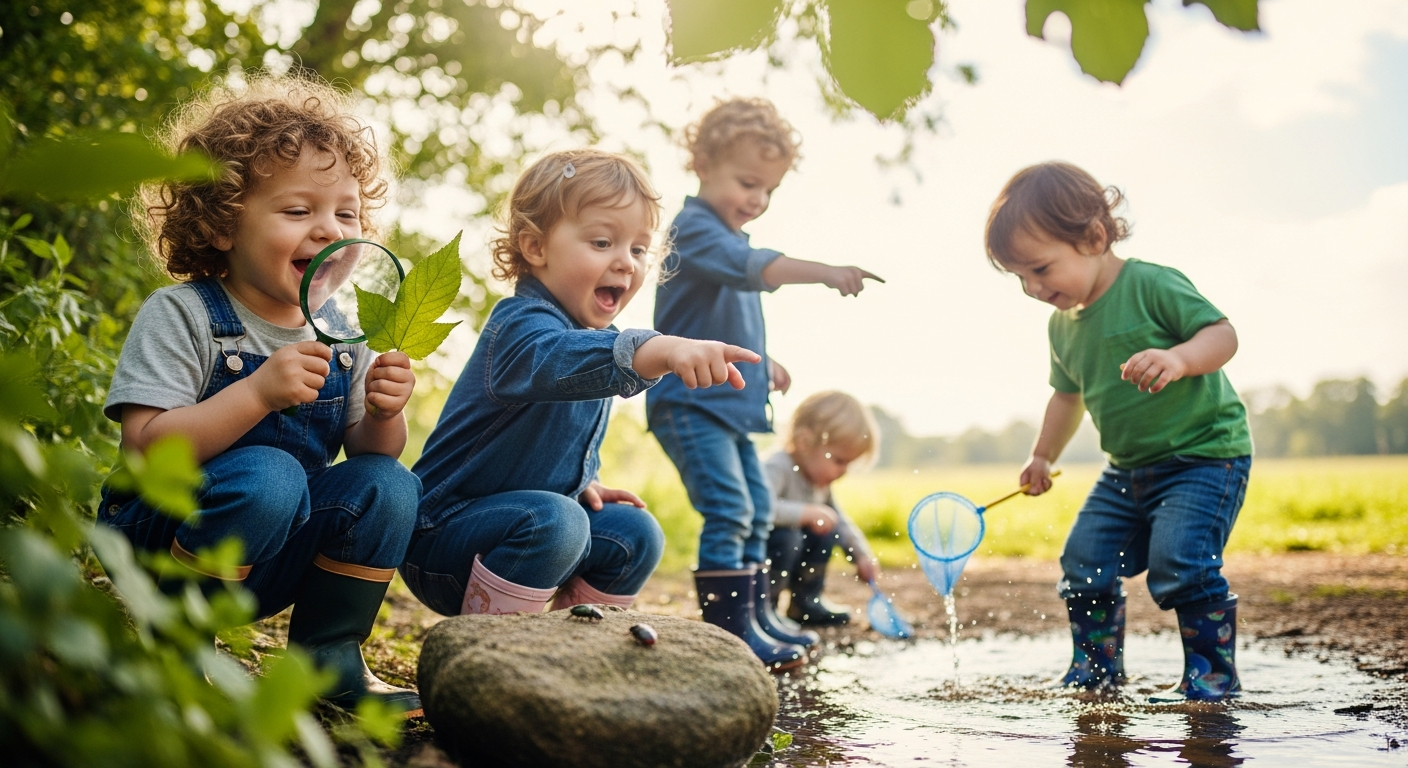
Table of Contents
- Introduction
- The Developmental Magic of Outdoor Play
- Physical Development and Gross Motor Skills
- Sensory Exploration: Nature's Classroom
- Building Language Skills in the Great Outdoors
- Creative Arts and Messy Play
- STEM and Discovery: Encouraging the Mini-Scientist
- Connecting Screens to the Sun: The Speech Blubs Approach
- Setting Realistic Expectations
- Accessible and Transparent Pricing
- Low-Prep Activities for Busy Days
- Social-Emotional Growth through Outdoor Play
- Detailed Activity List Continued
- FAQ: Frequently Asked Questions
- Conclusion
Introduction
Did you know that children who spend more time playing outdoors often show more advanced speech and language development than those who primarily engage in passive indoor activities? It might seem simple, but a muddy puddle or a trail of ants can be a more effective classroom than the most expensive electronic toy. For a toddler, the world is a giant laboratory waiting to be explored with all five senses.
At Speech Blubs, we believe that learning should be a joyful, active experience that empowers children to "speak their minds and hearts." We understand that for many parents, finding the right balance between screen time and active play can be a challenge. That is why we have created this comprehensive look at how a simple toddler outdoor activity can transform into a profound learning moment. In this post, we will explore over 50 engaging outdoor ideas, discuss the science behind play-based learning, and show you how to bridge the gap between "smart screen time" and real-world exploration. Our mission is to provide you with the tools to foster a love for communication and build your child’s confidence through the power of play.

The Developmental Magic of Outdoor Play
Stepping outside changes the way a toddler’s brain processes information. Indoors, the environment is often controlled and predictable. Outdoors, everything is dynamic. The wind changes, the light shifts, and textures vary from the crunch of dry leaves to the silkiness of a flower petal. This sensory variety is the fuel for cognitive growth.
When we talk about a toddler outdoor activity, we aren't just talking about burning off energy—though that is certainly a benefit! We are talking about the foundation of gross motor skills, sensory integration, and, most importantly, language. Every time your child points to a bird or describes the coldness of an ice cube, they are practicing essential communication skills.
For parents who feel their child might be a "late talker," the outdoors offers a low-pressure environment to practice sounds and words. If you are curious about where your child stands in their development, you can take our quick 3-minute preliminary screener. It involves 9 simple questions and provides you with an assessment and a next-steps plan to support your little one.
Physical Development and Gross Motor Skills
Gross motor skills involve the large muscles of the body used for running, jumping, and climbing. These skills are the building blocks for physical confidence.
1. The Classic Obstacle Course
You don’t need fancy equipment to create a challenge. Use sidewalk chalk to draw "lily pads" to jump on, a "tightrope" line to walk across, and arrows to follow. This activity teaches direction-following and coordination.
2. Animal Movement Races
Encourage your child to move like different animals. "Can you hop like a frog? Can you waddle like a penguin?" This is a perfect example of how our work at Speech Blubs translates to the real world. In our "Animal Kingdom" section, children watch peers make animal sounds and movements. Taking that practice outside to a park helps solidify those motor patterns and vocalizations.
3. Kick and Chase
A simple beach ball is one of the best tools for a toddler. It’s light, slow-moving, and easy to track. Playing "toss" or "kick" builds hand-eye coordination and introduces the concept of "my turn, your turn," which is foundational for conversation.

4. Tree Climbing and Balancing
Under close supervision, let your child explore low-hanging branches or walk along a sturdy fallen log. These activities build core strength and help children learn to trust their own physical limits.
Key Takeaway: Physical play isn't just exercise; it’s a way for toddlers to understand their bodies in space, which reduces frustration and builds the confidence needed to try new things—including new words.
Sensory Exploration: Nature's Classroom
Toddlers are "sensory seekers." They learn by touching, smelling, and even occasionally tasting (with a watchful eye from you!) their environment.
5. The Ultimate Mud Kitchen
Water and dirt are all you need. Provide some old spoons, plastic bowls, and a muffin tin. "Cooking" with mud encourages imaginative play and provides intense tactile feedback. As they "stir" and "pour," narrate their actions: "You are stirring the thick mud!"
6. Sand Castle Construction
Whether at the beach or in a backyard sandbox, sand is a masterclass in textures. Building a castle involves fine motor control and spatial reasoning. For a child who is particularly motivated by building, use this time to practice words like "up," "down," "more," and "big."
7. Water Table Wonders
A simple plastic bin filled with water can keep a toddler occupied for an hour. Add funnels, sponges, and cups. This is a great way to introduce basic science concepts like "sink vs. float."
8. Barefoot Sensory Path
Let your child walk barefoot on grass, then sand, then smooth stones, and then a splash of water. Ask them how each one feels. Is it "bumpy," "soft," or "cold"? This descriptive language builds their vocabulary in a meaningful way.
Building Language Skills in the Great Outdoors
Communication is at the heart of everything we do. At Speech Blubs, our founders grew up with speech challenges themselves, which is why we are so passionate about creating joyful solutions for the 1 in 4 children who need speech support.
9. Nature Scavenger Hunt
Create a simple visual list of things to find: a yellow flower, a round rock, a brown leaf, and a feathered friend. As your child finds each item, celebrate with enthusiastic praise. This reinforces the connection between the object and its name.
10. The Naming Game
Walk through your neighborhood and point to everything. "Look, a blue car!" "See the tall tree?" Use simple, clear language. If your child is using our app, they are already familiar with our video modeling methodology. They see other children—their peers—modeling sounds and words. You can mimic this "peer-to-peer" feel by having an older sibling or friend model the names of objects during your walk.
11. I Spy with a Twist
Instead of colors, try spying sounds or actions. "I spy something that goes 'vroom'!" "I spy something that is flying!" This helps children categorize the world around them.
12. Story Walks
Take a favorite book outside and read it under a tree. Or, better yet, make up a story as you walk. "Once upon a time, a little squirrel found a giant acorn..." Encouraging your child to add to the story fosters creative thinking and narrative skills.
Creative Arts and Messy Play
Art doesn't have to be a tabletop activity. In fact, for a toddler, the bigger the canvas, the better.
13. Sidewalk Chalk Murals
Give your child a bucket of chalk and a driveway. Drawing large shapes helps develop the shoulder and arm muscles that will later be used for writing.
14. Nature Collages
Gather leaves, twigs, and flower petals. Use a piece of cardboard and some non-toxic glue to create a "nature person" or a "leaf monster." This activity combines fine motor practice with artistic expression.
15. Painting with Water
If you want to avoid the mess of real paint, give your child a bucket of water and a large paintbrush. They can "paint" the fence or the sidewalk. As the water evaporates, it’s like a magic trick! This is a fantastic way to practice strokes and hand control without any cleanup.
16. Rock Painting
Find smooth stones on a walk and bring them home to paint. These "story stones" can be used later for pretend play.
STEM and Discovery: Encouraging the Mini-Scientist
Toddlers are naturally curious about how the world works. You can foster this curiosity with simple outdoor science activities.
17. Bug Observation
A magnifying glass can turn a simple patch of grass into a jungle. Watch ants carry crumbs or a ladybug crawl up a leaf. This builds focus and patience. It also provides a wonderful opportunity to talk about "fast" and "slow" movements.
18. Shadow Tracing
On a sunny day, have your child stand still while you trace their shadow with chalk. Come back an hour later and see how the shadow has moved! This is a great introduction to the concept of time and the movement of the sun.
19. Weather Watching
Each morning, go outside and "check the weather." Is it "sunny," "windy," or "cloudy"? This daily ritual helps with categorization and understanding patterns.
20. Seed Planting
Give your child a small pot and some seeds. Let them dig the hole, drop the seed, and water it. Watching something grow over time teaches patience and the basic needs of living things.
Connecting Screens to the Sun: The Speech Blubs Approach
You might wonder how a speech therapy app fits into a day of outdoor play. We believe in "smart screen time"—screen time that is active, educational, and serves as a springboard for real-world interaction. Unlike passive cartoons, Speech Blubs is designed to be a co-play experience.
Our app uses video modeling, which is a scientifically proven method where children learn by watching their peers. When a child sees another child in the app making a "moo" sound or stick out their tongue, their mirror neurons fire, making them much more likely to imitate the action.
You can use the app for 10-15 minutes to practice a specific set of sounds, and then immediately take that learning outside. For example:
- Step 1: Watch the "Animal Kingdom" section in Speech Blubs together.
- Step 2: See other kids making bird sounds.
- Step 3: Head outside to the park and listen for real birds.
- Step 4: Encourage your child to "be the bird" they saw in the app.
This creates a powerful loop of learning and application. Many parents have shared how this approach has reduced frustration and brought joy back into learning. You can read some of these heartwarming success stories on our testimonials page.
Setting Realistic Expectations
It is important to remember that every child develops at their own pace. Our goal isn't to turn every toddler into a public speaker overnight. Instead, we focus on:
- Building a love for communication.
- Fostering confidence in their ability to interact with the world.
- Reducing the frustration that comes when a child cannot express their needs.
- Creating joyful family moments that strengthen your bond.
Using Speech Blubs is a powerful supplement to your child's overall development plan. While many see significant progress, it should be viewed as a tool to support your child’s journey, often alongside professional therapy if needed.
Accessible and Transparent Pricing
We want to be a partner in your child’s growth, which is why we offer flexible and transparent pricing options to suit every family's needs.
- Monthly Plan: $14.99 per month. This is a great way to try the app and see how your child responds to the video modeling sessions.
- Yearly Plan: $59.99 per year. This is our best value option, breaking down to just $4.99 per month.
When you choose the Yearly plan, you receive exclusive benefits that are not included in the monthly subscription:
- A 7-day free trial so you can explore everything we have to offer risk-free.
- Access to the Reading Blubs app, which helps transition your child from speech to early literacy.
- Early access to new updates and features.
- Priority 24-hour support response time from our dedicated team.
Create your account and begin your 7-day free trial today to see the difference smart screen time can make.
Low-Prep Activities for Busy Days
We know that parents are often short on time. These activities require almost zero setup but offer maximum engagement.
21. Follow the Leader
The rules are simple: you do something, and they copy you. Jump, spin, or touch your toes. This reinforces the "imitation" skill that is so vital for language development.
22. Bubble Chasing
Bubbles are magical for toddlers. They encourage "big" movements like jumping and reaching, as well as "fine" movements like trying to pop a bubble with one finger.
23. Cloud Gazing
Lie on your backs in the grass and look at the clouds. What do you see? "I see a bunny!" "I see a car!" This is a calming, meditative activity that encourages imaginative language.
24. Puddle Jumping
If it rained recently, don't shy away from the puddles. Put on some boots and let them splash. It’s a lesson in cause-and-effect that never gets old.
Social-Emotional Growth through Outdoor Play
Playing outside often involves interacting with other children at the park. This is where social-emotional skills are forged.
25. Sharing the Slide
Learning to wait in line for the slide is a major milestone for a toddler. It teaches patience and the social script of public spaces.
26. Cooperative Sand Play
When two toddlers work together to fill a bucket, they are learning teamwork. They may not have the words to negotiate yet, but they are learning the rhythm of working with another person.
27. The "Hello" Game
Encourage your child to wave "hello" to neighbors or other children. This simple gesture is a building block for social communication.
Detailed Activity List Continued
28. Frisbee Toss
Using a soft, toddler-friendly frisbee helps with coordination and the concept of "sending and receiving" objects.
29. Nature Rubbings
Take a piece of paper and a crayon outside. Place the paper over tree bark or a leaf and rub the crayon over it. The texture appears on the paper like magic!
30. Bird Feeder Craft
Coat a pinecone in peanut butter (if no allergies) or sunflower butter, roll it in birdseed, and hang it from a tree. Watching the birds come to eat provides a sense of accomplishment.
31. Backyard Camping
Set up a small tent or even just a blanket fort in the yard. "Camping" out for an hour changes the perspective of their familiar backyard and sparks new pretend-play scenarios.
32. Garden Watering
Give your toddler a small watering can. This "chore" is actually a high-value sensory and motor activity. They learn to control the flow of water and care for something living.
33. Texture Sorting
Gather five different items from the yard and ask your child to sort them. "Put all the scratchy things here and the smooth things there."
34. Color Hunt
Pick a color—let's say red—and see how many red things you can find in the park.
35. Mini Car Wash
Take their plastic toy cars outside with a bucket of soapy water and a sponge. Scrubbing the cars is a great way to build hand strength.
36. Parachute Play
Use an old bedsheet. You hold one end, they hold the other (or get the whole family involved). Shake it fast, shake it slow, and then run underneath!
37. Sidewalk "Letters"
Use chalk to write large letters of their name. Have them "walk" the letters to feel the shapes with their whole bodies.
38. Stone Stacking
Finding flat stones and trying to stack them in a tower is a quiet, focused activity that builds persistence.
39. Leaf "Blowing"
On a windy day, watch where the leaves go. Try to catch one before it hits the ground.
40. Outdoor Tea Party
Bring the plastic tea set outside. Serving "tea" to stuffed animals in the grass adds a new layer to their imaginative play.
41. Hide and Seek (The Simple Version)
Hide behind a tree and let them find you. The "peek-a-boo" element of this game is great for social bonding and joy.
42. Ball Kicking
A classic for a reason. Practice kicking the ball "hard" and "soft."
43. Stick Collection
Toddlers love sticks. Let them collect a "bouquet" of sticks and then help them find a place for their collection.
44. Butterfly Watching
Visit a local garden and see if you can spot any butterflies. Talk about the "pretty colors" and how they "fly high."
45. Outdoor Music Station
Hang some old pots and pans from a low branch and give your child a wooden spoon. It’s loud, it’s messy, and it’s a great way to explore rhythm.
46. Pinecone Rolling
See how far you can roll a pinecone down a small hill.
47. Shadow Tag
Try to step on each other's shadows. It’s a fun way to run around without needing to actually "tag" someone.
48. Collecting "Treasures"
Give your child a small egg carton. Each slot is for a different "treasure" found in nature—a shell, a nut, a pretty leaf.
49. Animal Sound "Echo"
You make an animal sound, and they echo it back. Then they make a sound, and you echo it. This is a direct real-world application of the imitation skills we teach at Speech Blubs.
50. Sunset Watching
As the day ends, sit together and watch the colors of the sky change. It’s a perfect time for quiet reflection and "wind-down" talk.
FAQ: Frequently Asked Questions
1. How long should my toddler spend outside each day? While every family's schedule is different, experts generally suggest at least 60 minutes of active play per day. This doesn't have to be all at once—even 15-minute bursts can make a big difference in their mood and development.
2. What if I don't have a backyard? A backyard isn't necessary! Local parks, community gardens, or even a wide sidewalk can be a great place for a toddler outdoor activity. The key is the change of environment and the exposure to nature.
3. Can outdoor play really help with speech delays? Yes! Outdoor environments are rich with "communication temptations." When a child sees something exciting, like a dog or a big truck, they are naturally motivated to point, label, or make a sound. This natural motivation is often more effective than "forced" practice indoors.
4. How do I balance screen time with being outside? Think of screen time as a tool for "preparation." Use Speech Blubs to learn and practice sounds through video modeling, and then use your outdoor time to put those sounds into action in the real world.
Conclusion
Every toddler outdoor activity is an opportunity for your child to learn more about themselves and the world around them. Whether they are splashing in a puddle, tracing a shadow, or imitating a bird's chirp, they are building the foundational skills for a lifetime of successful communication. Our mission at Speech Blubs is to be your partner in this journey, providing the "smart screen time" that supports and enhances these real-world experiences.
By combining the natural wonders of the outdoors with the scientifically backed video modeling of our app, you are giving your child a joyful, effective, and well-rounded path to development. Remember, the goal is progress, not perfection—and every "moo," "vroom," or pointed finger is a victory worth celebrating.
Ready to take the next step in your child's communication journey? Download Speech Blubs on the App Store or Google Play to begin. For the best experience and the most value, we highly recommend our Yearly plan, which includes a 7-day free trial, the Reading Blubs app, and priority support. Let's help your little one speak their mind and heart today!
Sobre el autor