
What is Delayed Speech? Signs, Causes, and How to Help
 Por Speech Blubs Team•5 mar 2026•14 min.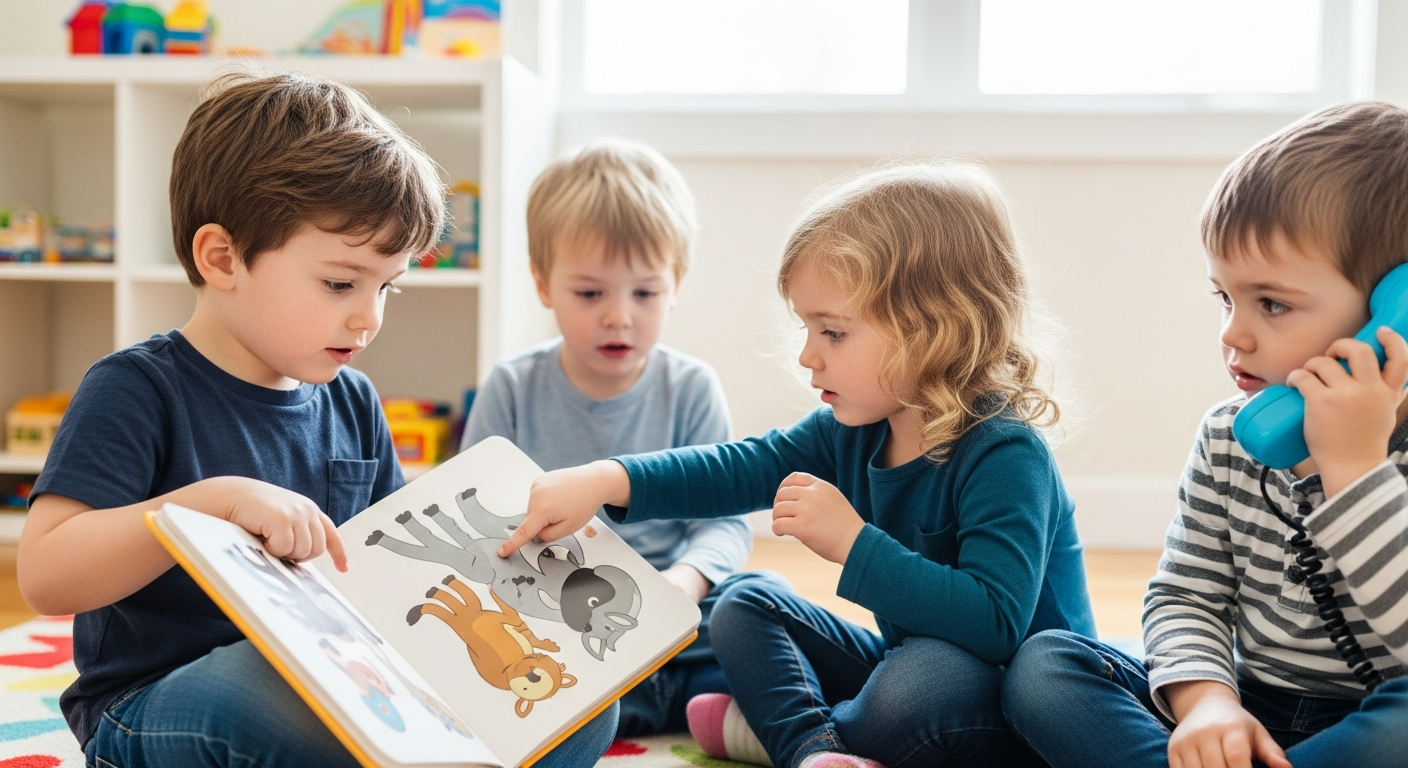
Table of Contents
- Introduction
- Understanding the Basics: Speech vs. Language
- What is Delayed Speech? The Milestones to Watch
- Common Causes of Speech and Language Delays
- The Power of Video Modeling: A Scientific Approach
- Practical Scenarios: Helping Your Child at Home
- Choosing the Right Path: Speech Blubs Plans
- How Does Speech Therapy and Speech Blubs Work Together?
- Building Confidence and Reducing Frustration
- FAQs About Speech Delays
- Conclusion
Introduction
Imagine sitting at a playgroup, watching a circle of toddlers interact. One child points to a ball and shouts, "Ball! Blue ball!" Another child tugs on their parent’s sleeve and asks for a snack. Then, you look at your own little one, who is contentedly playing but hasn't yet uttered more than a few fragmented sounds or the occasional "mama." In that moment, a wave of questions might wash over you. Is this just a phase? Are they just a "late talker"? Or is there something more to it?
Every child is a unique individual who develops at their own pace, and while it is natural to compare, it can also lead to significant anxiety for parents. At Speech Blubs, we understand this journey intimately. Our founders all grew up with speech challenges themselves, and they created this tool because they wanted to provide the immediate, joyful solution they wished they had as children. Our mission is to empower every child to "speak their minds and hearts," moving beyond the frustration of not being understood.

In this post, we are going to dive deep into what is delayed speech, the crucial differences between speech and language, the milestones you should look for, and the various causes that might be behind a delay. We will also explore practical ways you can support your child’s development at home and how our unique "smart screen time" approach can turn learning into a playful family connection. By the end of this article, you will have a clearer understanding of how to navigate these early communication years with confidence and empathy.
Understanding the Basics: Speech vs. Language
Before we define what is delayed speech, we must first clarify two terms that are often used interchangeably but mean very different things in the world of child development: speech and language.
What is Speech?
Speech refers to the actual physical act of making sounds. It involves the coordination of the breath, the vocal cords, the tongue, the lips, and the jaw to produce audible words. When we talk about speech, we are focusing on:
- Articulation: How we form specific sounds (like the "b" in "baby" or the "s" in "sun").
- Voice: Using the vocal folds and breath to produce sound (considering pitch, volume, and quality).
- Fluency: The rhythm and flow of speaking (issues here might include stuttering).
A child with a speech delay might understand everything you say and have a vast internal vocabulary, but they struggle to physically produce the sounds clearly enough for others to understand.
What is Language?
Language is much broader. It is the entire system of giving and receiving information in a meaningful way. It’s about understanding and being understood. Language is divided into two categories:
- Receptive Language: This is what your child understands. Can they follow a simple instruction like "find your shoes"? Do they understand the names of objects?
- Expressive Language: This is how your child communicates their thoughts, needs, and feelings. This can be through words, gestures, facial expressions, or even writing later on.
A child with a language delay might be able to pronounce words perfectly, but they might only be able to put two words together when their peers are using full sentences, or they may have trouble following simple directions.

Understanding this distinction is the first step in identifying how to best support your child. If you are unsure where your child stands, we recommend taking our quick 3-minute preliminary screener. It consists of 9 simple questions and provides an immediate assessment and a next-steps plan to give you peace of mind.
What is Delayed Speech? The Milestones to Watch
While every child follows their own timeline, experts have established general milestones that help us identify when a child might need a little extra support. Recognizing these signs early is not about "labeling" a child, but about providing them with the tools they need to reduce frustration and build confidence.
By 12 Months: The Foundation of Communication
At one year old, communication is often more about gestures and intent than actual words. You should look for:
- Using gestures like waving "bye-bye" or pointing at a toy they want.
- Responding to their name.
- Babbling with different consonant sounds (like "ba-ba" or "da-da").
- Understanding simple words like "no" or "bottle."
By 18 Months: Growing Intent
By this stage, the transition from babbling to words becomes more evident. Concerns may arise if a child:
- Prefers using gestures over vocalizing to communicate their needs.
- Has trouble imitating sounds or simple words.
- Does not follow simple verbal requests (e.g., "Give me the ball").
- Has a vocabulary of fewer than 20 words.
By 24 Months: The "Word Spurt"
This is often the age where parents notice the biggest differences between children. A two-year-old should typically:
- Use at least 50 to 100 words.
- Begin to put two words together (e.g., "More juice," "Doggie go").
- Follow two-step directions without gestures.
- Be understood by primary caregivers at least 50% of the time.
By 3 to 4 Years: Expanding Sentences
As children head toward preschool, their communication becomes much more complex. At this stage:
- A 3-year-old should be understood about 75% of the time by strangers.
- A 4-year-old should be almost entirely understood, even by people who don't know them well.
- They should be using sentences of 4 or more words and describing things that happened during their day.
If your child isn't hitting these markers, don't panic. Many "late talkers" eventually catch up, but "waiting and seeing" isn't always the best strategy. Early intervention is a powerful way to foster a love for communication and prevent future academic or social hurdles.
Common Causes of Speech and Language Delays
When a parent asks "what is delayed speech," the follow-up question is almost always "why is this happening?" There are several reasons why a child might experience a delay, ranging from physical factors to developmental differences.
1. Oral-Motor Issues
In many cases, a speech delay is related to how the brain communicates with the muscles in the mouth. If the brain has trouble coordinating the lips, tongue, and jaw, the child will struggle to produce clear sounds. This is often seen in conditions like:
- Apraxia of speech: Where the child has trouble sequencing the movements necessary for speech.
- Dysarthria: Where the muscles used for speech are weak.
2. Hearing Impairments
This is one of the most common—and often overlooked—causes. If a child cannot hear clearly, they cannot learn to imitate sounds and words properly. Even chronic ear infections can lead to temporary hearing loss that disrupts the critical window for language acquisition. This is why we always suggest that a formal hearing assessment be part of your initial evaluation process.
3. Autism Spectrum Disorder (ASD)
Speech and language delays are frequently associated with autism. However, in these cases, the delay is usually accompanied by other signs, such as challenges with social interaction, repetitive behaviors, or difficulty with non-verbal communication like eye contact and gestures.
4. Environmental Factors
While less common as a primary cause, a lack of verbal stimulation can impact how quickly a child develops language. Children learn by "soaking up" the language around them. If they aren't engaged in frequent "back-and-forth" conversation, their progress might be slower. This is where "smart screen time" can be a game-changer, providing a high-quality, interactive alternative to passive cartoon viewing.
5. Oral Impairments
Physical issues like a cleft palate or a "tongue-tie" (a short frenulum) can limit the movement of the tongue, making it difficult to form certain sounds. Often, these are identified early by a pediatrician or speech-language pathologist (SLP).
The Power of Video Modeling: A Scientific Approach
At Speech Blubs, we don't just create games; we utilize a powerful, scientifically-backed methodology called video modeling. This approach is at the heart of our app and is designed to trigger "mirror neurons" in a child's brain.
When a child watches another child—a peer—performing an action or making a sound, those mirror neurons fire as if the child is doing it themselves. This creates a natural, joyful urge to imitate. Unlike traditional therapy where an adult might hover over a child, video modeling feels like a playdate. Your child watches another kid make a "moo" sound or say "apple," and they think, "If they can do it, I can too!"
Our method is backed by extensive research, which places us in the top tier of speech apps globally. We focus on teaching complex communication skills through imitation, which is the most natural way for children to learn. This doesn't just help with speech; it builds the foundational skills of attention, imitation, and social engagement.
Practical Scenarios: Helping Your Child at Home
Understanding what is delayed speech is the first step; taking action at home is the second. You don't need to be a professional therapist to make a massive impact on your child's progress. Here are some relatable ways to integrate learning into your daily life:
For the Animal Lover
Imagine a parent whose 3-year-old "late talker" is obsessed with the farm. Instead of just pointing at a cow in a book, you can use the "Animal Kingdom" section of the Speech Blubs app. Together, you can watch peer videos of kids making "moo" and "baa" sounds. Then, during your next trip to a petting zoo, you can reinforce those sounds in real life. This transition from digital "smart screen time" to real-world experience is where the magic happens.
The "Life Narrator" Approach
One of the best things you can do is become a "life narrator." As you go about your day, describe what you are doing in simple terms. "I am washing the red apple. Now I am cutting the apple. Crunch, crunch!" This constant exposure to vocabulary in context helps children map words to meanings without the pressure of having to "perform."
Reading for Connection
Reading isn't just about the story; it's about the interaction. Choose board books with large, clear pictures. Instead of reading every word on the page, point to the pictures and ask simple questions. If your child points to a dog, you can expand on it: "Yes, that's a big brown dog! The dog says woof!"
Choosing the Right Path: Speech Blubs Plans
We believe that every child deserves a chance to find their voice, and we want to make that process as accessible and effective as possible. We offer two main paths for families to join our community.
The Monthly Plan: For $14.99 per month, you get full access to the Speech Blubs app's library of over 1,500 activities, face filters, and educational videos. This is a great way to "dip your toes in" and see how your child responds to video modeling.
The Yearly Plan (Best Value): For families committed to their child's long-term growth, our Yearly Plan is the clear choice. At $59.99 per year, it breaks down to just $4.99 per month—a savings of 66% compared to the monthly rate.
But it’s not just about the price. The Yearly Plan includes exclusive, high-value features that are not available on the monthly plan:
- 7-Day Free Trial: Try the full experience before you commit.
- Reading Blubs App: A companion app included at no extra cost to help your child transition from speech to literacy.
- Early Access: Be the first to try our new updates and features.
- Priority Support: Benefit from a 24-hour support response time from our dedicated team.
Ready to get started? Create your account and begin your 7-day free trial today.
How Does Speech Therapy and Speech Blubs Work Together?
It is important to set realistic expectations. While Speech Blubs is a powerful tool, it is designed to be a supplement to, not a replacement for, professional medical advice or therapy when needed. We see our app as a "powerful assistant" that bridges the gap between therapy sessions.
Many parents find that using Speech Blubs for 10–15 minutes a day helps maintain the momentum gained in speech therapy. It provides a joyful, low-pressure environment where children can practice their sounds without the fear of "getting it wrong." Our users often report that their children's frustration levels decrease as their confidence grows. You can read about these journeys in our parent testimonials.
Building Confidence and Reducing Frustration
The most heartbreaking part of a speech delay isn't just the lack of words—it's the frustration that comes when a child can't make themselves understood. This often leads to tantrums or withdrawal. By focusing on joyful, play-based learning, we help turn that frustration into a sense of achievement.
When your child finally mimics a sound or uses a new word to ask for a snack, the look of pride on their face is worth everything. These "small wins" build the foundation for a lifetime of confident communication. We are here to support those joyful family learning moments every step of the way.
FAQs About Speech Delays
1. Is my child a "late talker" or do they have a speech delay?
A "late talker" is typically a toddler (18-30 months) who has a good understanding of language and normal developmental skills in other areas but has a limited spoken vocabulary. A speech delay might involve more significant challenges with articulation or the physical production of speech. If you are unsure, our preliminary screener can help you identify if a professional evaluation is the right next step.
2. Can screen time make speech delays worse?
Passive screen time, like watching cartoons for hours, doesn't provide the "serve and return" interaction children need to learn language. However, "smart screen time"—which is interactive and encourages participation—can be a powerful educational tool. Speech Blubs is designed to be used with a parent, creating a screen-free alternative to passive viewing by encouraging real-world vocalization and interaction.
3. Will my child "grow out of it" on their own?
Some children do catch up on their own, but many do not. Research shows that early intervention leads to much better outcomes. Waiting too long can lead to frustration and potential delays in reading and social skills later in school. It is always better to provide support early than to wait and see.
4. Does being bilingual cause speech delays?
No. While a child in a bilingual home might occasionally mix the two languages or take a little longer to start using one specific language exclusively, bilingualism does not cause speech delays. In fact, it provides significant cognitive benefits in the long run.
Conclusion
Navigating the questions surrounding what is delayed speech can feel overwhelming, but you don't have to do it alone. Whether your child is just starting to babble or is struggling to put sentences together, every step you take to support their communication is a step toward a brighter, more confident future. Remember to focus on the process: fostering a love for communication, building confidence, and creating joyful learning moments together.
We invite you to join the Speech Blubs family and see how our peer-led video modeling can transform your child’s learning experience. By choosing our Yearly Plan, you not only get the best financial value but also gain access to our Reading Blubs app and a full 7-day free trial to ensure it’s the right fit for your family.
Download Speech Blubs on the App Store or get it on Google Play today. Let’s work together to help your child finally speak their mind and heart.
Sobre el autor