
Does Preschool Help Speech Delay? What Parents Need to Know
 By Speech Blubs Team•Mar 9, 2026•14 min.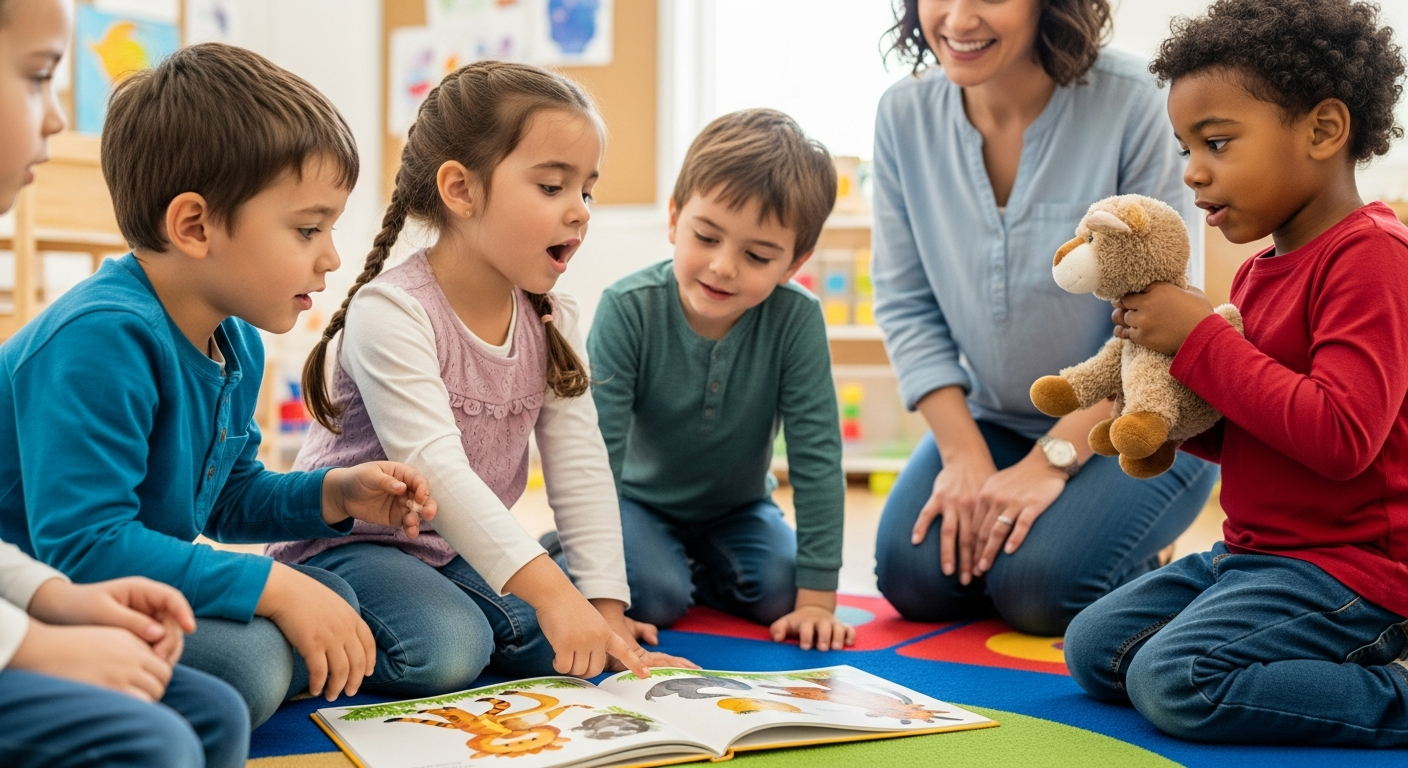
Table of Contents
- Introduction
- The Critical Window: Why the Preschool Years Matter
- How Preschool Environments Boost Language Skills
- The Role of Inclusion: Learning Alongside Typical Peers
- What the Research Says About Late Talkers
- Choosing the Right Preschool for Your Child
- Preparing the Teacher to Support Your Child’s Journey
- How Speech Blubs Supports the Preschool Experience
- Practical Ways to Practice at Home
- Understanding the Investment in Your Child’s Future
- Conclusion
- FAQ
Introduction
Imagine your three-year-old child points to the refrigerator and says "mak." As a parent, you don’t even have to think about it; you know exactly what they want. You pour a glass of milk, hand it over, and the need is met. At home, we are often "mind readers" for our children. We anticipate their desires, understand their unique gestures, and bridge the gaps in their communication without even realizing it. But what happens when that same child enters a preschool classroom? Suddenly, their peers and teachers don’t have that same "insider knowledge." If your child says "mak" to a classmate, the classmate might just stare blankly or walk away to play with someone else.
This moment of "miscommunication" is actually one of the most powerful learning opportunities a child can have. It creates a natural, social "press" to communicate more clearly. This leads many parents to wonder: does preschool help speech delay? The short answer is a resounding yes. Preschool offers a unique, language-rich environment that simply cannot be replicated at home, no matter how dedicated we are as parents.

In this post, we will explore why the preschool years are a critical window for brain development, how social interaction with peers acts as a catalyst for language, and what the latest research says about "late talkers" catching up. We will also discuss how you can choose the right program and how "smart screen time" tools like Speech Blubs can supplement your child’s progress. Our mission at Speech Blubs is to empower children to "speak their minds and hearts," and understanding the role of preschool is a major part of that journey.
The Critical Window: Why the Preschool Years Matter
Research shows that by the time a child turns five, their brain has already developed 90% of its adult capacity. This rapid growth period is often referred to as a "critical window" or "sensitive period" for language acquisition. For children with speech and language delays, this timeframe is especially precious. Every month of early intervention counts because the brain is at its most plastic, meaning it is incredibly receptive to new information and social modeling.
When we talk about whether preschool helps speech delay, we have to look at the intensity of the environment. In a high-quality preschool, a child isn’t just learning ABCs and 123s; they are navigating a complex social web. They are learning to negotiate, to share, to follow multi-step directions, and to express frustration or joy. For a child with a developmental gap, these interactions are the "gym" where they work out their communication muscles.
At Speech Blubs, we advocate for early action. If you are unsure if your child is hitting their milestones, we recommend taking our quick 3-minute preliminary screener. It involves 9 simple questions and provides an immediate assessment and next-steps plan. Addressing these gaps during the preschool years can significantly remove barriers to academic success later in life.
How Preschool Environments Boost Language Skills
Why is preschool so effective? It’s not just the curriculum; it’s the environment. Here are the primary ways a classroom setting supports a child with a speech delay.

Peer Modeling: The Power of Watching Other Kids
One of the most effective ways children learn is through observation. In the world of speech therapy, this is known as "modeling." In a preschool setting, a child is surrounded by "peer models"—other children who are using language to get what they want.
When a child sees a classmate say, "Can I have the blue truck?" and successfully receive the toy, they are seeing a real-world demonstration of how language works. This is the same scientific principle we use in the Speech Blubs app. Our app utilizes "video modeling," where children watch videos of their peers performing speech exercises. This triggers "mirror neurons" in the brain, making the child want to imitate what they see. Preschool provides this peer modeling in real-time, all day long.
Increased Social Motivation to Communicate
At home, communication is often predictable. You know your child's routine. In preschool, nothing is predictable. A teacher might introduce a new craft, or a peer might change the rules of a game in the sandbox. This "unpredictability" is a good thing! It creates a functional need for language.
For example, if a child with a speech delay loves animals and wants to play in the "home living center" where classmates are pretending to be veterinarians, they are motivated to find a way to join in. They might start with simple gestures, then move to single words, and eventually phrases. The desire to belong and play with friends is the strongest motivator for language development that exists.
Structured Language Stimulation
Preschool teachers are trained to use "language-rich" strategies. They narrate what they are doing ("I am pouring the green paint into the cup"), they use repetitive songs and rhymes, and they provide visual schedules. This constant stream of high-quality language input helps children with delays map words to objects and actions more effectively.
The Role of Inclusion: Learning Alongside Typical Peers
When looking for a preschool, many experts suggest focusing on "inclusive" classrooms. An inclusive environment is one where children with developmental delays learn alongside their typically developing peers.
Why is this important? Because typically developing children provide the "target" for language skills. If a child with a speech delay is only ever around other children with the same challenges, they may not hear the variety of sentence structures and vocabulary needed to progress quickly. By being part of a regular education classroom, your child spends their day immersed in the language they are striving to master.
"Inclusive programs value participation for all children and provide the extra support needed for those with disabilities, ensuring that every child feels a sense of belonging."
This sense of belonging is vital. When a child feels safe and included, their frustration levels drop, and their confidence grows. Confidence is often the "secret ingredient" in overcoming a speech delay.
What the Research Says About Late Talkers
It is common for parents to be told that their child is just a "late talker" and will eventually catch up. While many children do, research provides a more nuanced picture. Longitudinal studies, such as those by Dr. Leslie Rescorla and Dr. Donna Ellis Weismer, have tracked "late talkers" from toddlerhood into their school years.
The findings generally show that while the majority of late talkers score within the "normal range" on standardized tests by kindergarten, they often still lag behind their peers in specific areas like grammar, syntax, and narrative complexity. For example, a child might be able to name all the animals in a book but struggle to tell a story about what those animals are doing.
This is why preschool—and supplemental tools—are so important. We don't just want children to "get by"; we want them to thrive. By providing early educational experiences and utilizing evidence-based methods, we can help bridge that gap between "normal range" and "truly proficient."
Choosing the Right Preschool for Your Child
Not all preschools are created equal, especially when it comes to supporting a child with a speech delay. As you tour potential schools, you should feel empowered to ask tough questions.
Questions to Ask Potential Schools
- How do you track children’s growth? Ask specifically how they monitor developmental milestones and what their process is if a child isn't meeting them.
- How do you support children with delays in the classroom? Do they use visual aids? Do they have experience working with Speech-Language Pathologists (SLPs)?
- What professional development is provided for teachers? You want to ensure the staff is trained in early childhood intervention and inclusive practices.
- How often do you communicate with parents? A strong home-to-school connection is essential. You should be partners in your child’s development.
For a parent whose 3-year-old "late talker" loves animals, the "Animal Kingdom" section of our app offers a fun, motivating way to practice "moo" and "baa" sounds. You might ask a teacher, "My child is working on these specific animal sounds at home; can we incorporate them into circle time?" A high-quality preschool will welcome this collaboration.
Preparing the Teacher to Support Your Child’s Journey
Once you’ve selected a school, the next step is building a relationship with the teacher. Remember to keep your initial communication simple but informative.
- Share Interests: Tell the teacher what your child loves. If they are obsessed with dinosaurs or cars, the teacher can use those interests to spark conversation.
- Discuss Triggers: If your child is sensitive to loud noises or becomes frustrated when they aren't understood, let the teacher know. This allows them to prepare and support your child before a meltdown occurs.
- Communicate Goals: Share your dreams and fears. If your goal is for your child to be able to ask for a snack independently, make sure the teacher knows that is a priority.
When parents and teachers are on the same page, the child receives a consistent message: "Your voice matters, and we are here to help you use it."
How Speech Blubs Supports the Preschool Experience
While preschool provides the social environment, you may still want a way to work on specific speech sounds and vocabulary at home in a way that feels like play, not "work." This is where Speech Blubs comes in. We like to think of our app as "smart screen time." Unlike passive cartoons that children watch mindlessly, Speech Blubs is an active, participatory experience.
Bridging the Gap Between Home and School
Preschool is exhausting for many children with speech delays because they are working so hard to keep up. When they come home, they need a "safe space" to practice without the pressure of a large group.
In the Speech Blubs app, we use a peer-led approach. Your child isn't watching an adult or a cartoon; they are watching another child. This creates an immediate connection. If they see a peer on the screen making a "popping" sound with their lips, they are much more likely to try it themselves.
We offer a variety of sections, including:
- Early Sounds: Perfect for children just starting to vocalize.
- Mouth Gym: Exercises to improve the physical coordination needed for speech.
- Animal Kingdom: A favorite for toddlers that uses animal noises to build foundational sounds.
Scientific Methodology: Video Modeling
Our method is backed by science and focuses on the concept of video modeling. This isn't just a gimmick; it’s a proven therapeutic technique. By watching peers, children reduce their anxiety about "getting it wrong" and increase their desire to imitate. You can read more about our research and methodology here. We are proud to be a tool that fosters a love for communication and builds the confidence your child needs to speak up in their preschool classroom.
Practical Ways to Practice at Home
In addition to using the app, you can support your child's preschool progress with simple daily activities. The key is "adult co-play." Language is a social act, and even "smart screen time" is most effective when you are involved.
- Narrate Your Day: Talk about what you are doing as you do it. "I'm putting on my red shoes. Now I'm tying the laces."
- Wait for the Gap: When you know what your child wants, wait a few seconds before giving it to them. This gives them a "window" to attempt a word or a sound.
- Read Repetitive Books: Books with predictable refrains allow children to "fill in the blank," which builds their confidence in their own voice.
- Celebrate Small Wins: If your child says a new sound or uses a gesture they learned at school, make a big deal out of it! Positive reinforcement is the best way to keep them motivated.
Understanding the Investment in Your Child’s Future
We understand that parents are often juggling many costs, from preschool tuition to private therapy. That’s why we strive to make Speech Blubs an accessible and high-value supplement to your child’s development. We want to be transparent about our pricing so you can make the best choice for your family.
Our plans are designed to fit different needs:
- Monthly Plan: $14.99 per month. This is a great way to test the waters.
- Yearly Plan: $59.99 per year.
The Yearly Plan is our most popular and highest-value option for several reasons. It breaks down to just $4.99 per month, saving you 66% compared to the monthly rate. More importantly, the Yearly Plan includes exclusive features that aren't available on the monthly plan:
- A 7-day free trial: You can explore the full library of activities risk-free.
- Reading Blubs: You get access to our sister app designed to help with early literacy—a perfect companion to speech development.
- Priority Support: You receive early access to new updates and a 24-hour support response time.
To give your child the full suite of tools, we encourage you to sign up for the Yearly Plan and start your 7-day free trial today.
Conclusion
So, does preschool help speech delay? Absolutely. By providing a rich social environment, peer modeling, and a structured setting where communication is the key to play, preschool acts as a powerful engine for language growth. It moves a child from the "predictable" environment of home into the dynamic, exciting world of peer interaction.
However, remember that preschool is just one piece of the puzzle. Combining a high-quality preschool program with professional therapy (if needed) and engaging home activities creates the best possible foundation for your child. Our mission at Speech Blubs is to be your partner in this journey. Our founders grew up with speech problems and created the tool they wished they had—a joyful, effective way to help kids find their voices.
Don't wait to see if your child "grows out of it." Use this critical window of brain development to provide them with every advantage. See what other parents are saying about their success stories with Speech Blubs and join our community of over 5 million families.
Ready to see your child's confidence soar? Download Speech Blubs on the App Store or Google Play today. Remember to select the Yearly Plan to take advantage of the 7-day free trial and the Reading Blubs app. Let's work together to help your child speak their mind and heart!
FAQ
1. Is preschool better than one-on-one speech therapy? It’s not necessarily "better," but rather different and complementary. Speech therapy provides targeted, clinical intervention for specific sounds or disorders. Preschool provides the "social laboratory" where a child can practice those skills in a real-world setting. Most experts recommend a combination of both for the best results.
2. What if my child is too overwhelmed by the noise in preschool? Some children with speech delays also have sensory sensitivities. If your child is easily overwhelmed, look for a preschool with smaller class sizes or teachers who use visual schedules and "quiet corners." It’s important to communicate these needs to the teacher early on so they can provide the right support.
3. Will my child pick up "bad" speech habits from other kids in preschool? This is a common concern, but the benefits of social interaction far outweigh the risks. Children are naturally wired to gravitate toward the most effective communication. While they might occasionally imitate a peer’s playful babbling, the overall "language bath" of a classroom helps them move toward more mature speech patterns.
4. How long does it take to see progress once a child starts preschool? Every child is unique, and progress isn't always a straight line. Some parents see a "language explosion" within the first few weeks, while for others, it takes a few months for the child to feel comfortable enough to start vocalizing more. Focus on small victories—like a new word or a more confident interaction—rather than a specific timeline.
About the author