
Helping a 4 Year Old with Delayed Speech
 By Speech Blubs Team•Mar 12, 2026•15 min.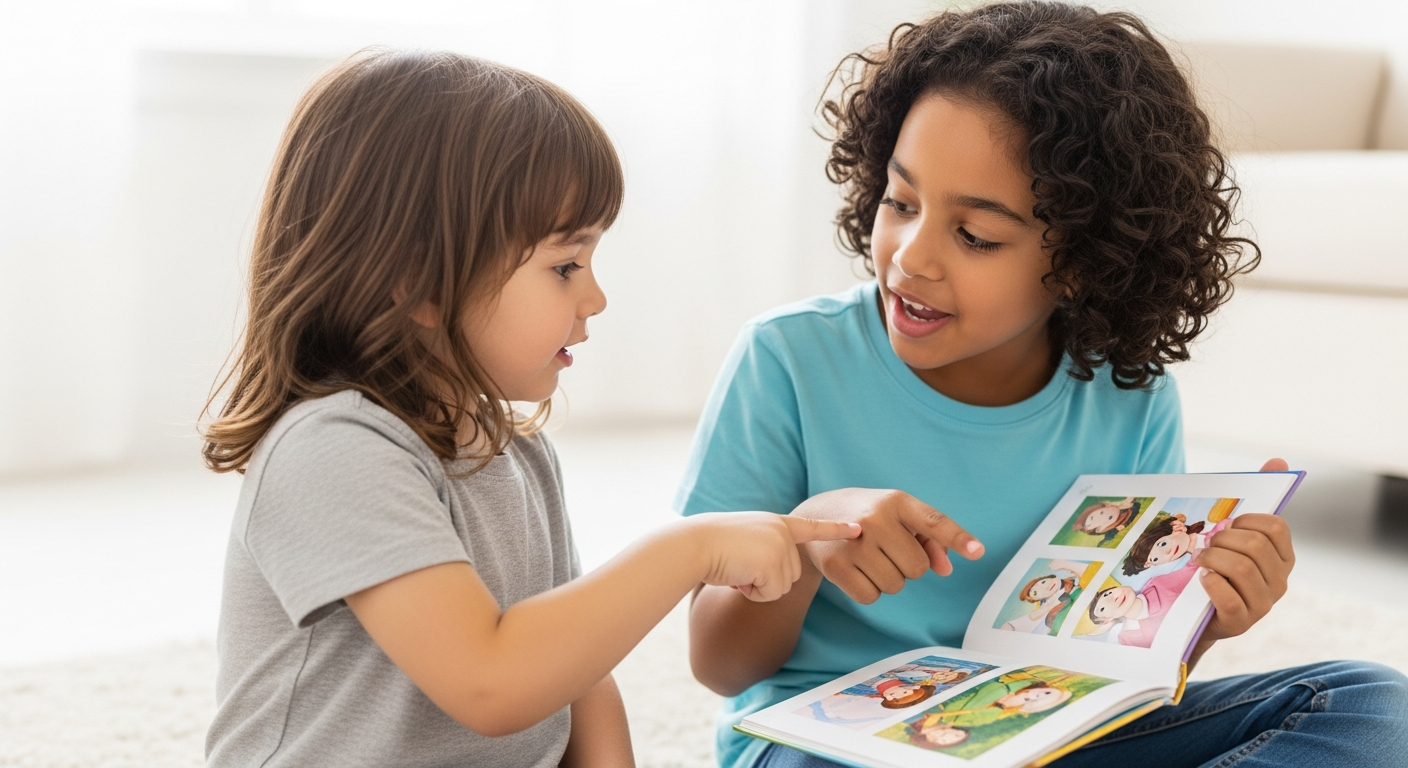
Table of Contents
- Introduction
- Understanding the Difference Between Speech and Language
- Communication Milestones for 4-Year-Olds
- Common Causes of 4 Year Old Delayed Speech
- Recognizing the Signs: When to Seek Help
- The Speech Blubs Approach: Science Meets Play
- Practical Strategies to Help at Home
- Setting Realistic Expectations
- Investing in Your Child’s Future: Pricing and Value
- Frequently Asked Questions (FAQ)
- Conclusion
Introduction
Imagine you are at the park, and your four-year-old child sees a bright red butterfly. They point with excitement, their eyes wide with wonder, but when they try to tell you about it, the words just don't come, or perhaps they come out as a series of frustrated sounds that leave you both feeling disconnected. If you’ve found yourself in this position, wondering why your child isn't chatting away like their peers at preschool, you are certainly not alone. Statistics suggest that roughly one in four children will require some form of speech support during their early years. At Speech Blubs, we believe every child deserves the chance to "speak their minds and hearts," and a delay at age four is simply a signal that it’s time to provide some extra support and joyful learning opportunities.
This blog post is designed to be a supportive resource for parents navigating the complexities of 4 year old delayed speech. We will explore the critical differences between speech and language, outline the milestones your child should be hitting at this age, and discuss the common causes of delays. Most importantly, we will provide you with practical, science-backed strategies to foster communication at home, including how our unique "smart screen time" approach can transform frustration into connection. Our goal is to empower you with the tools to build your child's confidence, reduce daily frustrations, and create a roadmap for a more talkative future.

Understanding the Difference Between Speech and Language
Before diving into the specifics of a 4 year old delayed speech, it is helpful to clarify two terms that are often used interchangeably but mean very different things in the world of child development: speech and language.
What is Speech?
Speech refers to the actual act of making sounds. It involves the coordination of the lips, tongue, jaw, and vocal cords to produce audible words. When a child has a speech delay, they might know exactly what they want to say, but they struggle with "articulation"—the physical formation of the sounds. For example, a four-year-old might say "wabbit" instead of "rabbit" or "tup" instead of "cup." While some of this is a normal part of learning, persistent difficulty making sounds that strangers can understand is a hallmark of a speech delay.
What is Language?
Language is much broader. It is the system we use to share and receive information. It isn’t just about the sounds we make; it’s about the meaning behind them. Language is divided into two categories:
- Receptive Language: This is your child’s ability to understand what is being said to them. Can they follow a two-step instruction like, "Go to your room and bring me your blue shoes"?
- Expressive Language: This is your child’s ability to use words, gestures, and sentences to share their thoughts and needs.
A child might have a language delay if they can pronounce words perfectly but only use one or two words at a time, or if they have trouble following simple directions. Understanding this distinction is the first step in identifying where your child might need the most support.
Communication Milestones for 4-Year-Olds
By the time a child reaches their fourth birthday, their world is expanding rapidly. They are moving from the toddler phase into the "preschooler" phase, where social interaction and storytelling become central to their lives. Here is what typical development usually looks like for a four-year-old:
Expressive Milestones
- Vocabulary Growth: Most four-year-olds have a vocabulary of between 1,000 and 2,000 words. They are constantly "sponge-like," picking up new words from books, conversations, and play.
- Sentence Structure: At this age, children should be speaking in sentences that are four to five words long (or even longer). They are starting to use more complex grammar, though they might still make mistakes like saying "I goed" instead of "I went."
- Storytelling: A four-year-old should be able to tell a simple story with a beginning, middle, and end. They can recount what happened at school or describe a dream they had.
- Clarity: This is a big one. By age four, a child’s speech should be understood by almost everyone, including strangers. While they might still struggle with tricky sounds like "r," "v," or "th," their overall message should be clear.
Receptive and Social Milestones
- Following Directions: They should be able to follow multi-step commands without getting lost.
- Answering "Wh-" Questions: Four-year-olds are famous for the "Why?" phase. They should also be able to answer "who," "what," and "where" questions with relative ease.
- Social Play: They are beginning to play with other children rather than just next to them. This involves negotiating rules, sharing ideas, and using language to engage in "make-believe" scenarios.
If your child is missing several of these markers, it is a good idea to seek a professional opinion. You can start by taking our quick 3-minute preliminary screener, which consists of 9 simple questions to help you get a better assessment of your child's current status and a plan for the next steps.

Common Causes of 4 Year Old Delayed Speech
Understanding "why" a delay is happening can help take the weight of guilt off a parent's shoulders. Speech and language delays are rarely the result of something a parent did or didn't do; they often have underlying physical or developmental roots.
1. Oral-Motor Issues
Some children have difficulty coordinating the muscles in their mouth. This can be caused by an oral impairment like a "tongue-tie" (a short frenulum) or more complex conditions like apraxia, where the brain struggles to send the correct signals to the speech muscles. For a parent whose child has oral-motor challenges, the "Mouth Gym" section in the Speech Blubs app offers a fun, low-pressure way to practice moving the tongue and lips through playful imitation.
2. Hearing Loss
Even a slight hearing impairment can significantly impact speech development. If a child cannot hear the nuances of certain sounds, they cannot learn to replicate them. Chronic ear infections in early childhood are a common culprit. If you have concerns, an audiology appointment is often the first recommendation from a pediatrician.
3. Developmental and Neurological Factors
Speech delays are sometimes early indicators of other developmental conditions, such as Autism Spectrum Disorder (ASD) or a general intellectual disability. In these cases, the delay is usually accompanied by other signs, such as a lack of eye contact, repetitive behaviors, or difficulty with social cues.
4. Environmental Factors
While less common as a primary cause, a lack of verbal interaction can slow progress. Children learn to speak by being "bathed" in language. If a child spends a significant amount of time in front of passive screens (like watching cartoons alone) without interactive conversation, they may not be getting the practice they need. This is why we created Speech Blubs—to turn screen time into an active, conversational experience.
Recognizing the Signs: When to Seek Help
It can be difficult to know when "late talking" turns into a "speech delay." Every child is an individual, but there are certain "red flags" at age four that warrant a conversation with your pediatrician or a Speech-Language Pathologist (SLP).
- Your child is frustrated: If your child frequently cries, screams, or gives up because they cannot make themselves understood, it is time for support. Reducing this frustration is one of our primary missions.
- Strangers can't understand them: If you are the only person who can "translate" for your child, their articulation may be delayed.
- Limited vocabulary: If your four-year-old is still only using a handful of words or isn't putting words together into sentences.
- Lack of social interest: If they prefer to play alone and avoid interacting with peers because they cannot communicate their ideas.
- Echoing words: If they repeat words or phrases they hear on TV but cannot use language spontaneously to express a need.
Early intervention is the "gold standard" for a reason. The earlier a child receives support, the faster they can build the foundational skills needed for school success. If you're ready to take action, you can download Speech Blubs on the App Store or Google Play to begin.
The Speech Blubs Approach: Science Meets Play
At Speech Blubs, our story began with our founders, who all grew up with speech problems themselves. They knew first-hand the frustration of having a voice that didn't work the way they wanted it to. They set out to create the tool they wished they’d had—a solution that blends scientific principles with the joy of play.
The Power of Video Modeling
Our methodology is rooted in "video modeling." Think about how your child learns to dance or use a toy—they watch someone else do it first. In our app, children watch "peers" (real kids, not cartoons) making sounds and saying words. This activates "mirror neurons" in the brain. When a child sees another child performing an action, their brain reacts as if they are doing it themselves, making it much easier to imitate the sound. Our method is backed by science, placing us in the top tier of speech apps worldwide with a high MARS scale rating.
Smart Screen Time
We know parents worry about screen time. That’s why we focus on "smart screen time." Unlike passive viewing, Speech Blubs is designed for co-play. We encourage parents to sit with their children, use the fun filters, and practice the sounds together. It is a powerful tool for family connection, turning a tablet or phone into a bridge for communication rather than a wall. You can see what other parents are saying about their child's success to see the real-world impact of this approach.
Practical Strategies to Help at Home
While professional therapy is invaluable, you are your child's first and most important teacher. Here are some ways to support a 4 year old delayed speech in your daily routine:
1. Narrate Your Day
Think of yourself as a sports commentator for your life. As you go about your day, describe what you are doing. "I am picking up the big red apple. Now I am washing it in the cold water. Crunch! It’s so sweet." This provides a constant stream of vocabulary in context.
2. The Power of "Wait Time"
Parents are often so eager to help that they finish their child's sentences or anticipate their needs before they speak. Give your child "the gift of time." When you ask a question, count to five in your head before prompting them. This gives their brain time to process the language and formulate a response.
3. Read Together—And Not Just the Text
Reading is a cornerstone of language development. With a four-year-old, you don't have to read every word on the page. Point to the pictures and ask questions. "Where is the cat hiding?" or "How do you think the boy feels?" For a child who loves animals, reading books about the zoo and then playing in the "Animal Kingdom" section of our app can reinforce those new words through multiple senses.
4. Expansion and Recasting
If your child says "Car go," you can expand on it by saying, "Yes, the blue car is going very fast!" This validates what they said while modeling a more complex sentence structure without making them feel corrected.
5. Create "Communication Temptations"
Place a favorite toy or snack just out of reach but within sight. This creates a natural "temptation" for your child to use their voice to ask for what they want.
Setting Realistic Expectations
It is important to remember that progress isn't always a straight line. Some weeks your child might suddenly start using five new words, and other weeks they might seem to plateau. This is a normal part of the developmental process.
Our mission is to help children find joy in the process of communication. We don't promise that your child will be giving public speeches in a month; instead, we focus on the small, beautiful wins: a child who finally says "mama" clearly, a preschooler who stops hitting and starts using their words to ask for a toy, or a family that finally feels they can understand their child’s "heart."
Speech Blubs is a powerful supplement to your child's overall development plan and can be used beautifully alongside professional therapy. By fostering a love for communication and building confidence, we reduce frustration for the whole family.
Investing in Your Child’s Future: Pricing and Value
We believe in being transparent about our pricing because we want to build a relationship of trust with our community. We offer two main ways to access the full suite of Speech Blubs tools:
- Monthly Plan: For $14.99 per month, you get full access to the Speech Blubs app.
- Yearly Plan: This is our most popular and highest-value option. At $59.99 per year, the cost breaks down to just $4.99 per month—a 66% saving compared to the monthly rate.
Why the Yearly Plan is the Best Choice
We highly recommend the Yearly plan because it is designed to support long-term growth. Language development is a journey, not a sprint. The Yearly plan includes:
- A 7-day free trial: You can explore everything we have to offer before committing.
- The Reading Blubs App: An extra app specifically designed to help your child transition from speaking to reading.
- Priority Support: You’ll get 24-hour support response times and early access to all our new updates.
The Monthly plan does not include the free trial or these exclusive features. Choosing the Yearly plan ensures your child has consistent, high-quality support throughout their crucial developmental years. Ready to get started? Create your account and begin your 7-day free trial today.
Frequently Asked Questions (FAQ)
1. Is it too late to start speech therapy if my child is already four?
Absolutely not! While "earlier is better," age four is still a fantastic time for intervention. Children at this age are incredibly resilient and their brains are still very "plastic," meaning they can make rapid gains with the right support. Starting now ensures they have the skills they need before they enter the more rigorous environment of kindergarten.
2. How much screen time is okay for a child with a speech delay?
The quality of screen time matters more than the quantity. Passive viewing (watching videos without interaction) should be limited. However, "smart screen time" like Speech Blubs, which requires the child to listen, imitate, and interact, can be a highly effective educational tool. We recommend short, frequent sessions (10-15 minutes) done alongside a parent for the best results.
3. Can Speech Blubs replace a traditional speech therapist?
Speech Blubs is a powerful tool designed to supplement and support your child's development. It is an excellent way to get started at home and provides consistent practice between therapy sessions. However, for a 4 year old delayed speech, we always recommend consulting with a professional Speech-Language Pathologist (SLP) to rule out physical issues and provide a personalized plan.
4. My child understands everything but won't talk. What does this mean?
This usually indicates a gap between "receptive language" (understanding) and "expressive language" (speaking). It is quite common and often means the child has the "blueprint" for language but is struggling with the execution. This is where our video modeling methodology is most effective, as it gives the child a clear, peer-led example to follow.
Conclusion
Navigating 4 year old delayed speech can feel like a daunting journey, but you don't have to walk it alone. Whether your child is struggling with certain sounds, having trouble forming sentences, or simply needs a boost in confidence, there are countless ways to support them. By focusing on joyful communication, utilizing science-backed tools like video modeling, and staying consistent with at-home activities, you are laying the groundwork for a lifetime of successful expression.
At Speech Blubs, we are honored to be a part of your family’s story. Our goal is to help your child find their voice so they can share their unique thoughts, dreams, and feelings with the world. Remember that every small step forward is a victory worth celebrating.
Don’t wait for the frustration to grow. Start your journey today and give your child the tools they need to thrive. Download Speech Blubs on the App Store or Google Play Store to begin your 7-day free trial. For the best value and access to our full suite of features—including the Reading Blubs app and 24-hour support—be sure to select the Yearly plan. Let’s work together to help your child speak their mind and heart!
About the author