
Helping Your Child Overcome a Delay in Speech
 By Speech Blubs Team•Mar 5, 2026•14 min.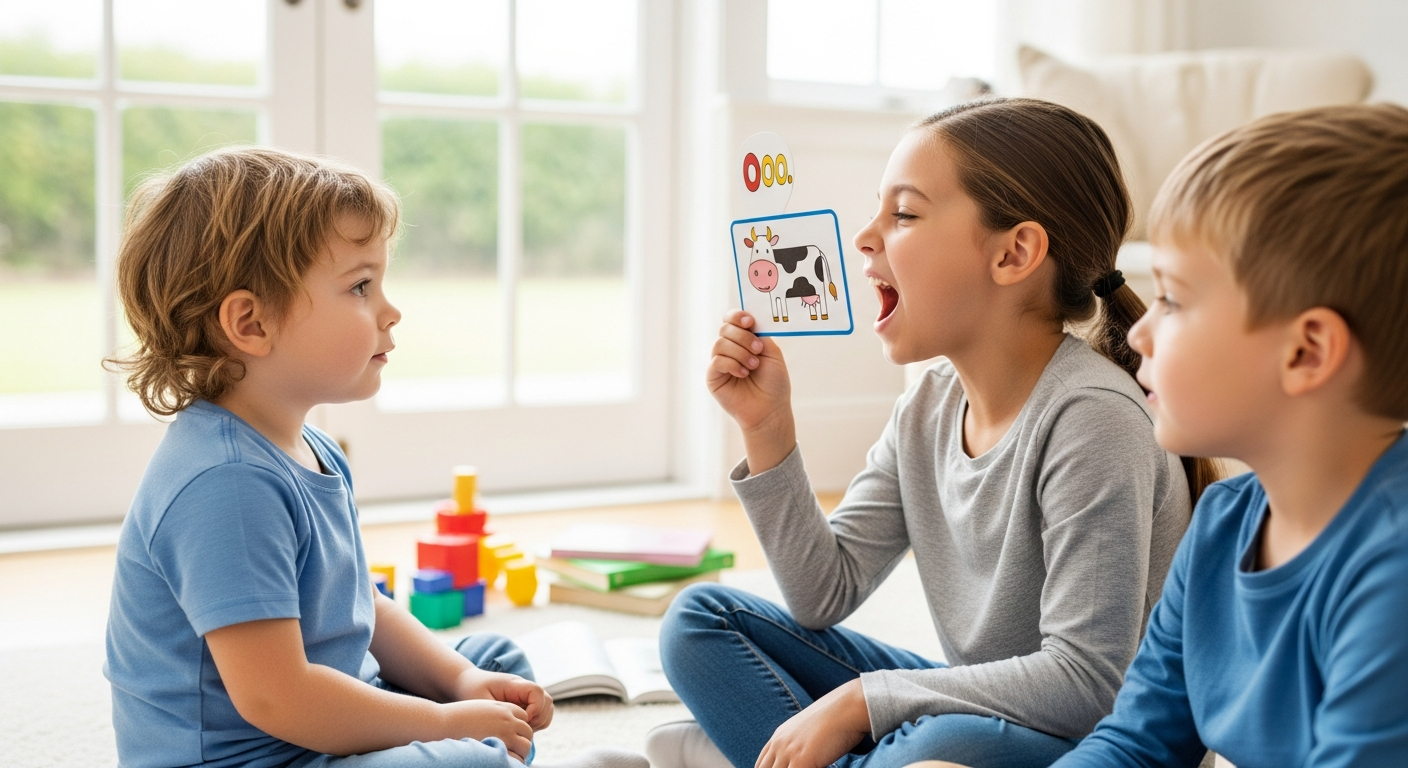
Table of Contents
- Introduction
- Defining the Basics: Speech vs. Language
- Common Signs of a Delay in Speech by Age
- Understanding the Root Causes
- The Role of Screen Time: Passive vs. Active
- How to Support Speech Development at Home
- When to See a Professional
- Speech Blubs: A Science-Backed Solution
- Pricing and Getting Started
- Conclusion
- Frequently Asked Questions (FAQs)
Introduction
The anticipation of a child’s first word is a universal experience for parents, often ranked alongside first steps and first smiles in the ledger of cherished milestones. You might have already imagined that tiny voice calling you "Mama" or "Dada," or perhaps you are waiting for the day they can finally tell you why they are frustrated. But what happens when the silence lingers longer than expected, or when the "baby talk" doesn't transition into clear communication? If you find yourself constantly comparing your toddler’s vocabulary to their peers at the playground, you are not alone. Research suggests that as many as one in four children may experience some form of speech or language challenge during their early years.
At Speech Blubs, we understand the mixture of anxiety and hope that comes with this journey. Our company was born from the personal experiences of our founders, who all grew up with speech problems and eventually created the tool they wished they had as children. We know that a delay in speech isn’t just about missed milestones; it’s about the daily struggle to understand your child’s heart and mind. Our mission is to empower children to "speak their minds and hearts" by providing an immediate, effective, and joyful solution that blends scientific principles with the power of play.

In this comprehensive guide, we will explore the nuances of speech and language development, identify the red flags of a delay in speech, and discuss the various causes that might be at play. We will also provide practical, actionable strategies you can implement at home today to foster a love for communication and build your child's confidence. By the end of this post, you will have a clearer roadmap for supporting your child’s unique path to finding their voice.
Defining the Basics: Speech vs. Language
Before diving into the signs of a delay, it is crucial to understand that "speech" and "language" are not the same thing, though they are often used interchangeably. Understanding the difference helps you more accurately identify where your child might need support.
What is Speech?
Speech refers to the actual physical act of producing sounds. It involves the coordination of the breath, vocal cords, tongue, lips, and jaw. A child with a speech delay might understand everything you say and have a complex inner world, but they struggle with:
- Articulation: Producing specific sounds correctly (e.g., saying "wabbit" instead of "rabbit").
- Fluency: The flow of speech, which can be interrupted by stutters or hesitations.
- Voice: The quality, pitch, and volume of the sounds produced.
What is Language?
Language is much broader. It is the entire system of giving and receiving information. It involves understanding (receptive language) and expressing thoughts (expressive language). A child with a language delay might be able to pronounce words perfectly but struggle with:
- Vocabulary: Knowing the names of objects or actions.
- Grammar: Putting words together in the right order to form a sentence.
- Social Use: Understanding how to use language to greet others, ask for things, or hold a conversation.
A child may have a delay in speech, a delay in language, or both. For example, a toddler might be able to say "I want juice" very clearly (good speech) but cannot follow a simple instruction like "put your shoes in the box" (receptive language delay). Conversely, another child might follow complex directions perfectly but still only communicate using single words at age three (expressive language delay).

Common Signs of a Delay in Speech by Age
While every child develops at their own pace, there are general windows of time when certain skills typically emerge. Recognizing these milestones can help you determine if your child’s development is on track or if a delay in speech might be present.
By 12 Months: The Foundation of Communication
At this age, communication is largely non-verbal, but the foundations are being laid.
- The Milestone: Your baby should be responding to their name, looking at you when you speak, and using gestures.
- Red Flags: If your child is not waving "bye-bye," pointing at objects they want, or making a variety of consonant sounds (like "ba-ba" or "da-da"), it may be time to pay closer attention.
By 18 Months: The Vocabulary Spark
This is often when the first "real" words appear.
- The Milestone: Most toddlers can say several simple words (besides Mama and Dada) and follow one-step directions with a gesture, like "Give me the ball" while you hold out your hand.
- Red Flags: A significant concern arises if a child prefers using gestures exclusively over vocalizing or has extreme difficulty imitating sounds. If your 18-month-old doesn't seem to understand simple requests or hasn't started using at least a few consistent words, a formal check-in is recommended.
By 24 Months (2 Years): The Word Combiner
The second birthday is a major milestone for language.
- The Milestone: By now, children should have a vocabulary of at least 50 words and be starting to put two words together (e.g., "More milk," "Doggy run"). About 50% of what they say should be understandable to you.
- Red Flags: If your child is only imitating what you say rather than producing words spontaneously, or if they can only follow directions if you use a gesture, these are indicators of a delay.
By 36 Months (3 Years): The Conversation Starter
By age three, the "language explosion" has usually occurred.
- The Milestone: A three-year-old should be using three-word sentences and be understood by strangers about 75% of the time. They should be asking "Who?" "What?" and "Where?" questions.
- Red Flags: If your child's speech is mostly unintelligible to people outside the family, or if they are struggling to play with peers because they cannot communicate their needs, intervention can significantly reduce their frustration.
If you are currently feeling unsure about where your child stands, you don't have to guess. Take our quick 3-minute preliminary screener to get a simple assessment and a tailored next-steps plan for your child.
Understanding the Root Causes
A delay in speech is rarely caused by a single factor. Instead, it is often the result of a combination of physical, neurological, or environmental elements.
1. Physical and Oral-Motor Issues
In some cases, the "machinery" for speech is simply not working as it should.
- Oral Impairments: Physical issues like a cleft palate or a short frenulum (tongue-tie) can limit the movement of the tongue, making certain sounds difficult to produce.
- Oral-Motor Problems: This occurs when there is a disconnect between the brain and the muscles used for speech. Conditions like apraxia or dysarthria mean the child’s brain struggles to coordinate the lips, tongue, and jaw. These children often have difficulty with feeding or swallowing as well.
2. Hearing Loss
This is one of the most common—and treatable—causes of a delay in speech. If a child cannot hear speech clearly, they cannot learn to imitate it or understand the nuances of language. Even temporary hearing loss caused by chronic ear infections (otitis media) can create significant setbacks during critical windows of development. We always recommend that an audiologist tests a child's hearing as the very first step when a delay is suspected.
3. Developmental and Neurological Conditions
Sometimes, a delay in speech is a symptom of a broader developmental pattern.
- Autism Spectrum Disorder (ASD): Communication challenges are a hallmark of ASD. Children with autism may have delayed speech, use repetitive language (echolalia), or struggle with the social aspects of communication, such as eye contact and turn-taking.
- Global Developmental Delay: When a child is behind in multiple areas—such as motor skills, social skills, and cognitive abilities—speech is often delayed as well.
4. Environmental Factors
While less common as a primary cause, a child’s environment plays a huge role in their language mastery. Children who are not spoken to often or who are primarily placed in front of a screen for "passive" viewing (like watching cartoons for hours) may not get the interactive practice they need to develop complex communication skills.
The Role of Screen Time: Passive vs. Active
Not all screen time is created equal. In today's world, it's unrealistic to expect a completely screen-free childhood, but as experts, we advocate for a shift from passive consumption to "smart screen time."
Passive Screen Time: This includes watching cartoons or YouTube videos where the child is a silent observer. There is no requirement for the child to respond, imitate, or interact. High amounts of passive screen time have been linked to developmental delays because they replace the social interactions that are vital for brain growth.
Smart Screen Time: At Speech Blubs, we’ve created a "smart screen time" experience that is a screen-free alternative to passive viewing. Our app is designed to be a powerful tool for family connection, requiring the child to be an active participant. We utilize a unique "video modeling" methodology, which is backed by science. In the app, children watch videos of their peers—other kids—making sounds and saying words. This triggers "mirror neurons" in the brain, making the child much more likely to imitate what they see.
By choosing high-quality, interactive tools, you can turn a tablet into a speech therapy assistant that fosters a love for learning rather than a habit of zoning out.
How to Support Speech Development at Home
You are your child's first and most important teacher. While professional therapy is invaluable, the work you do in the "in-between" moments of daily life is what truly solidifies their skills. Here are some practical ways to encourage progress:
Focus on Communication, Not Just Perfection
When a child has a delay in speech, they often feel frustrated. If you constantly correct their pronunciation, they may become discouraged and stop trying. Instead, focus on the intent of their communication. If they point to a banana and say "nana," respond with enthusiasm: "Yes! That is a yellow banana! Do you want a piece?" You are modeling the correct word without making them feel like they failed.
Narrate Your Day
Think of yourself as a sports commentator for your child's life. Explain what you are doing as you do it. "Now Mama is putting on your blue socks. One sock, two socks! Now we are putting on your shoes. Click, clack!" This constant exposure to language in context helps children map words to actions and objects.
The Power of Peer Modeling
Children are naturally drawn to other children. This is why our video modeling approach is so effective. For a parent whose 3-year-old "late talker" loves animals, the "Animal Kingdom" section in our app offers a fun, motivating way to practice "moo" and "baa" sounds. Seeing another child make the sound makes it feel like a game rather than a lesson.
Reading and Singing
Start reading to your child from day one. Choose books with bright pictures and repetitive text. Singing is also a fantastic tool because the rhythm and melody of songs make the words easier to remember. "The Wheels on the Bus" or "Itsy Bitsy Spider" involve gestures that help bridge the gap between physical movement and vocalization.
When to See a Professional
If you’ve been working at home and still feel that your child isn't making progress, it is time to consult a professional. A Speech-Language Pathologist (SLP) is an expert who can perform standardized tests to see exactly where your child stands compared to their peers.
Don't adhere to the "wait and see" approach if your gut is telling you something is wrong. Early identification and treatment of speech and language delays are recommended to avoid long-term negative impacts on social development and school performance. An SLP will check:
- Receptive Language: What the child understands.
- Expressive Language: What the child can say.
- Sound Development: The clarity of their speech.
- Oral-Motor Status: How the muscles in the mouth are working.
See what other parents are saying about how professional support, combined with the right at-home tools, changed their child's life.
Speech Blubs: A Science-Backed Solution
We believe that speech therapy should be joyful, not a chore. That’s why we’ve built Speech Blubs to be the tool we wish our own parents had. We provide an immediate, effective solution for the 1 in 4 children who need speech support, blending scientific principles with play.
Our app doesn't just offer games; it offers a path to confidence. By watching their peers, children learn complex communication skills in a way that feels natural. We aim to foster a love for communication, reduce frustration, and develop key foundational skills that will serve your child for a lifetime. Whether your child is a "late talker," has a diagnosed delay, or is on the autism spectrum, our "smart screen time" experiences are designed to supplement their overall development plan.
Pricing and Getting Started
We are committed to being transparent about our pricing because we want to build a relationship of trust with every family we serve. We offer two main ways to join our community:
- Monthly Plan: For $14.99 per month, you get full access to our library of over 1,500 activities and frequent content updates.
- Yearly Plan: For $59.99 per year, which breaks down to just $4.99 per month.
The Yearly Plan is our best value choice, saving you 66% compared to the monthly subscription. Furthermore, the Yearly plan includes exclusive benefits that are not available on the monthly plan:
- A 7-day free trial: Test everything out before you commit.
- Reading Blubs: Access to our additional app designed to help kids transition from speaking to reading.
- Priority Support: Early access to new updates and a 24-hour support response time.
Ready to begin? Download Speech Blubs on the App Store or get it on Google Play to start your journey today. If you prefer to set up your account on a computer first, you can visit our Web Sign-Up Page.
Conclusion
A delay in speech can feel like a barrier between you and your child, but it is a barrier that can be broken down with patience, the right tools, and early action. Remember that your child’s development is a marathon, not a sprint. Every new sound, every attempted word, and every gesture is a victory worth celebrating. By focusing on joyful family learning moments and fostering a love for communication, you are giving your child the greatest gift possible: the ability to express their heart.
Don't wait for the silence to resolve itself. Start building your child's confidence today. We invite you to choose our Yearly Plan to take advantage of the 7-day free trial and the full suite of features, including Reading Blubs and priority support.
Create your account and begin your journey today. We are honored to be a part of your child’s success story.
Frequently Asked Questions (FAQs)
1. Can a child with a speech delay catch up?
Yes, many children who are "late talkers" do catch up to their peers, especially with early intervention. The key is to provide a language-rich environment and address any underlying physical or hearing issues as early as possible. While we cannot guarantee specific timelines, focusing on building foundational skills and confidence often leads to significant progress.
2. Is a delay in speech a sign of autism?
While a delay in speech is one of the common signs of Autism Spectrum Disorder (ASD), it does not mean every child with a delay is autistic. Autism also involves challenges with social interaction and repetitive behaviors. If you are concerned, a comprehensive evaluation by a specialist is the best way to understand your child's specific needs.
3. Does being bilingual cause a delay in speech?
No. Research shows that children raised in multilingual households may split their vocabulary between two languages, which can make it seem like they know fewer words in one language, but their total "conceptual vocabulary" is usually on track. Bilingualism is a cognitive advantage and does not cause a clinical speech or language disorder.
4. What should I do if my child stops talking after reaching milestones?
If your child shows a regression—meaning they lose skills they previously had, such as words or social engagement—you should contact your pediatrician or a speech-language pathologist immediately. Regression can be a sign of an underlying medical or developmental issue that requires prompt professional attention.
About the author