
Potty Training Your Child with a Speech Delay
 By Speech Blubs Team•Mar 23, 2026•13 min.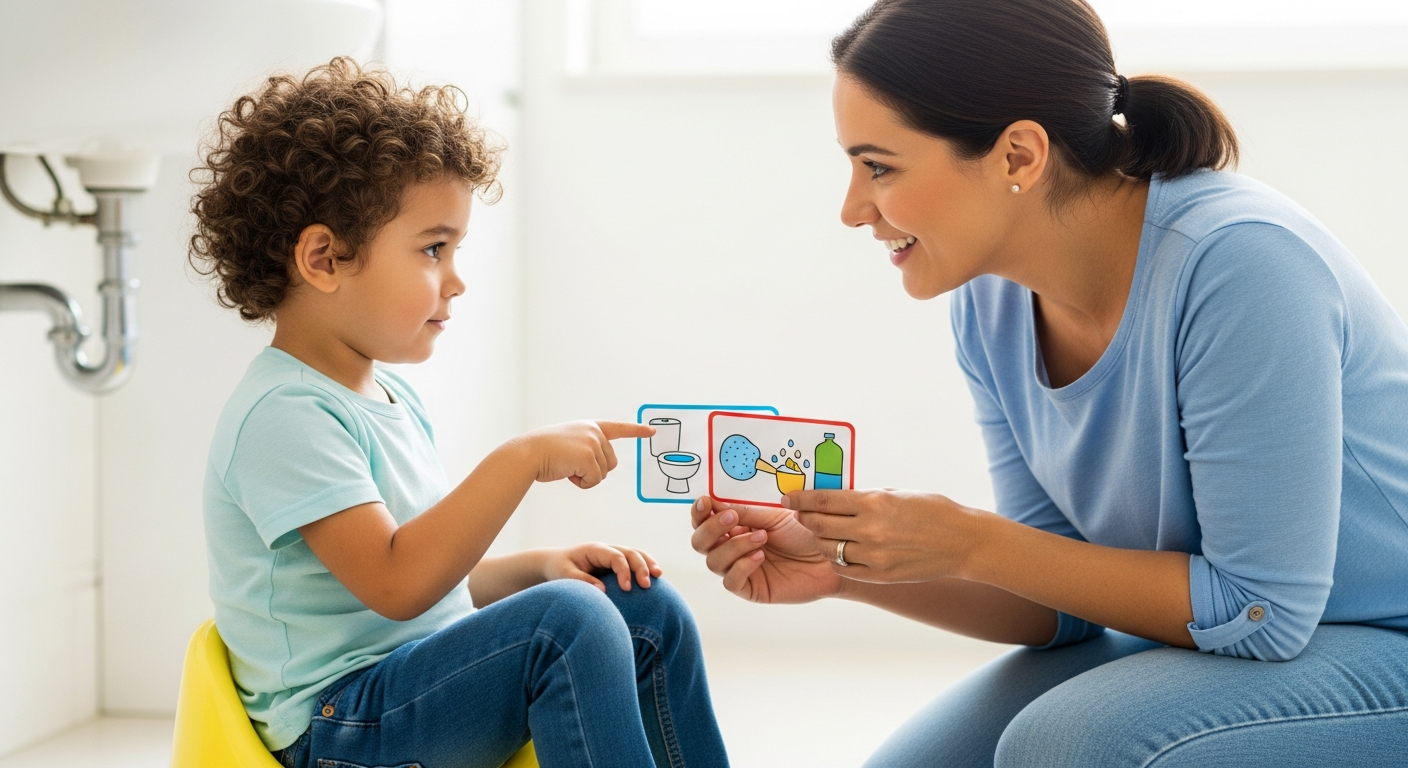
Table of Contents
- Introduction
- Why Potty Training Speech Delay Can Feel Like a Hurdle
- Recognizing Signs of Readiness (Without the Words)
- The Power of Video Modeling in Toileting
- 8 Practical Tips for Potty Training Success
- Smart Screen Time as a Supplement
- Addressing Sensory Sensitivities
- The Journey of Family Connection
- Pricing and Value: Investing in Your Child’s Voice
- Conclusion
- FAQ
Introduction
Did you know that approximately 1 in 4 children require some form of speech and language support during their early years? If you are a parent of one of these children, you already know that everyday milestones—the ones that other parents might take for granted—can feel like climbing a mountain. One of the most common "peaks" we hear about from our community is the challenge of potty training. When your child isn't yet using words to tell you they have a "full belly" or that they’ve had an accident, the process can feel overwhelming, frustrating, and, at times, impossible.
At Speech Blubs, we believe every child deserves the chance to "speak their minds and hearts." Our founders started this journey because they grew up with speech problems themselves and wanted to create the joyful, effective tool they wished they had as kids. We know that potty training a child with a speech delay isn't just about ditching diapers; it’s about building a bridge of communication.

In this blog post, we will explore why potty training and speech delays are often linked, how to identify readiness signs that don’t involve talking, and practical, science-backed strategies to help your little one succeed. We’ll also show you how "smart screen time" through video modeling can be a game-changer in this process. By the end of this article, you’ll have a clearer roadmap for your journey and the confidence to support your child’s development with empathy and joy.
Why Potty Training Speech Delay Can Feel Like a Hurdle
Potty training is, at its core, a complex communication task. It requires a child to recognize an internal physical sensation, translate that sensation into a thought ("I need to go"), and then communicate that thought to an adult before it’s too late. When a child has an expressive language delay, that final step is missing or broken.
However, the challenge often goes deeper than just the "missing words." Children with speech delays may also struggle with:
- Receptive Language: Understanding the instructions or "potty talk" parents use (e.g., "Tell me when you need to go").
- Sensory Processing: Difficulty processing the signals their body is sending them, which is common in neurodivergent children.
- Sequencing: Understanding the many steps involved—walking to the bathroom, pulling down pants, sitting, wiping, flushing, and washing hands.
It is important to remember that a speech delay does not mean a child lacks the intelligence or the physical capability to use the toilet. It simply means we need to adapt our teaching methods to match how they learn best. You can start this journey today by downloading Speech Blubs on the App Store or Google Play to begin building the foundational communication skills your child needs.
Recognizing Signs of Readiness (Without the Words)
A common mistake is waiting for a child to say "I need to go" before starting potty training. If we wait for the words in a child with a speech delay, we might be waiting much longer than necessary. Instead, we look for non-verbal cues of readiness.

Physical Readiness
Does your child have the gross motor skills to walk to the bathroom and sit on a stool or potty? Do they have enough bladder control to stay dry for at least two hours at a time? If you notice their diaper is dry after a nap, their body is physically maturing.
Cognitive and Behavioral Readiness
This is where you’ll see the most significant signs. Does your child:
- Hide in a corner or go to a specific "spot" when they are filling their diaper?
- Tug at a wet or soiled diaper because it feels uncomfortable?
- Show interest in what you are doing in the bathroom?
- Follow simple, one-step instructions like "Get your shoes"?
If you see these behaviors, your child is communicating their awareness, even without speech. To see if your child is hitting other developmental milestones alongside potty readiness, you can take our quick 3-minute preliminary screener to get a simple assessment and a tailored next-steps plan.
The Power of Video Modeling in Toileting
At Speech Blubs, our methodology is rooted in the science of "video modeling." This is the practice of having children watch videos of their peers performing a specific task or saying a word. Research shows that children are more likely to imitate other children than they are to imitate adults. This is partly due to "mirror neurons"—cells in the brain that fire both when we perform an action and when we see someone else perform it.
When it comes to potty training, video modeling can be a powerful tool to demystify the process. Instead of just hearing a parent talk about the toilet, the child sees a peer successfully using it or practicing the routines around it.
Expert Tip: Our approach places us in the top tier of speech apps worldwide, with a high rating on the MARS (Mobile App Rating Scale). You can read more about our research-based method here to understand how we blend play with scientific principles.
For a parent whose 3-year-old "late talker" loves animals, the "Animal Kingdom" section of our app offers a fun, motivating way to practice "moo" and "baa" sounds. While this might seem unrelated to the potty, these imitation skills are exactly what a child needs to eventually imitate the language and actions of using the bathroom. By mastering simple sounds and facial movements, they are building the confidence to tackle more complex life skills.
8 Practical Tips for Potty Training Success
1. Use Visual Reinforcements and AAC
Since your child is struggling with verbal language, give them a different way to speak. Use "visual schedules" or picture cards (often called AAC or Augmentative and Alternative Communication).
- Place a picture of a potty on the bathroom door.
- Create a step-by-step visual guide for the wall: Pants down -> Sit -> Wipe -> Flush -> Wash hands.
- If your child uses a dedicated AAC device, ensure the "Toilet" button is easy to find on the home screen.
2. Embrace Literal Language
Children with speech delays often struggle with metaphors. Avoid saying things like "The potty is your new best friend" or "Let’s catch the toilet train." Instead, use short, direct, and literal phrases:
- "Pants are wet."
- "Time for potty."
- "Sit and try."
- "Dry pants feel good."
3. Be Consistent with Routine, Not Just Requests
Instead of asking "Do you need to go?" (which often results in a reflexive "No"), establish a routine. Take your child to the bathroom every 90 minutes or after specific transitions, like waking up, after lunch, and before leaving the house. Use a "potty timer" to make the transition more predictable. This reduces the pressure on the child to initiate communication and places the focus on the habit.
4. The "Naked" Method or "Bottomless" Time
Many parents of children with speech delays find that the "naked stage" is a breakthrough. When a child is wearing a diaper or even thick pull-ups, the sensation of "going" is absorbed immediately. By allowing for some supervised "bottomless" time at home, the child can actually see and feel what is happening. This helps them connect the internal sensation with the external result, making it easier to attach a word or gesture to the action.
5. Create a "Potty-Only" Special Experience
For some children, the bathroom can be a source of anxiety or sensory overload. Make it a joyful place. Keep a special basket of toys or books that only come out during potty time.
- If your child is a fan of our "Daily Routines" section, you might let them watch a peer-modeling video of another child brushing their teeth or washing their hands while they sit on the potty. This reinforces the bathroom as a place for "big kid" activities.
6. Reward Effort, Not Just Results
In the beginning, your child might sit on the potty for three minutes and do absolutely nothing. Reward that effort. They are learning to follow a routine and tolerate the sensation of sitting. Small, immediate rewards work best. This could be a sticker, a high-five, or a 30-second "dance party" to their favorite song.
7. Avoid the "Shame Game"
Accidents will happen—likely many of them. For a child who already feels the frustration of not being able to communicate their needs, an angry reaction to an accident can cause a major setback. When an accident occurs, stay neutral. Say, "Oh, your pants are wet. Let’s go to the bathroom and get dry ones." Involving them in the cleanup (like putting the wet clothes in the hamper) helps them understand the natural consequences without feeling ashamed.
8. Focus on Sign Language
Even if your child isn't talking, they can likely learn a simple sign. The American Sign Language (ASL) sign for "toilet" (shaking a "T" handshape) is relatively easy for toddlers to master. Consistently use the sign yourself every time you take them to the bathroom. Eventually, they will use it to tell you they need to go.
Smart Screen Time as a Supplement
We know that many parents worry about screen time, especially when dealing with developmental delays. However, there is a massive difference between passive viewing (like watching a cartoon) and "smart screen time."
Speech Blubs is designed to be an interactive, co-play experience. We provide a screen-free alternative to the "zombie stare" of traditional media. When you use the app with your child, you are participating in their learning. You can see what other parents are saying about their child's success to see how our tools have helped families bridge the gap during these critical early milestones.
Addressing Sensory Sensitivities
Many children with speech delays also experience sensory processing issues. The bathroom is a "sensory-rich" environment:
- The Sound: The loud roar of a flushing toilet can be terrifying for some kids.
- The Feel: The cold surface of the toilet seat or the texture of toilet paper might be off-putting.
- The Sight: Bright bathroom lights or the "disappearing" act of waste being flushed away can be confusing.
If your child is sensitive to sound, consider letting them wear noise-canceling headphones in the bathroom or flushing only after they have left the room. If the seat is too cold, a soft, padded potty ring can make a world of difference. Understanding these sensory "roadblocks" is just as important as working on the language side of potty training.
The Journey of Family Connection
At Speech Blubs, we view every developmental challenge as an opportunity for family connection. Potty training is a long process, but it is also a time when you will learn so much about your child’s unique way of viewing the world.
When you celebrate the first time they point to the bathroom or the first time they stay dry all morning, you aren't just celebrating a clean diaper—you’re celebrating their growing confidence. This confidence will spill over into their speech and language development, creating a "virtuous cycle" of learning and growth.
Pricing and Value: Investing in Your Child’s Voice
We are committed to providing an immediate, effective, and joyful solution for families. We offer two main ways to access the full power of Speech Blubs, and we want to be transparent about which option provides the most support for your journey.
- Monthly Plan: For $14.99 per month, you get full access to our speech-boosting activities and video modeling content.
- Yearly Plan (Best Value): For $59.99 per year, which breaks down to just $4.99/month, you receive the most comprehensive support package we offer.
The Yearly plan is the clear choice for families committed to long-term progress. When you choose the Yearly plan, you save 66% compared to the monthly rate. More importantly, the Yearly plan includes exclusive features not available on the monthly plan:
- A 7-day free trial: Test the app with your child risk-free.
- The Reading Blubs App: An additional, high-value tool designed to transition your child from speaking to reading.
- Early Access: Be the first to try our new updates and features.
- Priority Support: A 24-hour support response time to ensure you always have help when you need it.
We encourage you to create your account and begin your 7-day free trial today. Choosing the Yearly plan ensures your child has a consistent, year-long companion on their journey to "speaking their mind and heart."
Conclusion
Potty training a child with a speech delay requires a shift in perspective. It is less about the "toilet" and more about the "talk"—finding ways to communicate needs, sensations, and routines without relying solely on verbal speech. By using visual modeling, maintaining a consistent routine, and leveraging tools like Speech Blubs, you can reduce frustration for both you and your child.
Remember, this is a marathon, not a sprint. There will be dry days and there will be messy days. Through it all, the most important thing is the bond you are building and the confidence your child is gaining. Every "moo," every gesture, and every successful trip to the potty is a win.
Ready to give your child the tools they need to succeed? Download Speech Blubs on the Google Play Store and start your journey today. We recommend selecting the Yearly plan to unlock the 7-day free trial, the Reading Blubs app, and the best long-term value for your family.
FAQ
1. Does a speech delay automatically mean potty training will take longer? Not necessarily. While the communication barrier can make the initial stages more complex, many children with speech delays potty train within the same timeframe as their peers. The key is using non-verbal communication tools like sign language and visual schedules to bridge the gap.
2. Should I wait until my child is talking more before I start potty training? No. If your child is showing physical and behavioral signs of readiness (like staying dry or wanting a change), you can begin. Waiting for verbal speech can sometimes mean missing the optimal window of behavioral readiness.
3. My child is terrified of the toilet flush. How can I help them? This is a common sensory issue. You can try "desensitization" by letting them flush the toilet from outside the room, or use noise-canceling headphones. You can also use a "potty chair" on the floor initially, which doesn't require flushing, and transition to the "big toilet" later.
4. How can the Speech Blubs app specifically help with potty training? Speech Blubs uses video modeling to help children imitate sounds, words, and routines. By using the app to build foundational communication skills and confidence, your child becomes more capable of understanding and following the multi-step instructions required for potty training. Specifically, the "Daily Routines" section helps normalize bathroom-related activities through peer observation.
About the author