
Spotting Signs of Speech Delay in 15 Month Old Toddlers
 By Speech Blubs Team•Mar 12, 2026•15 min.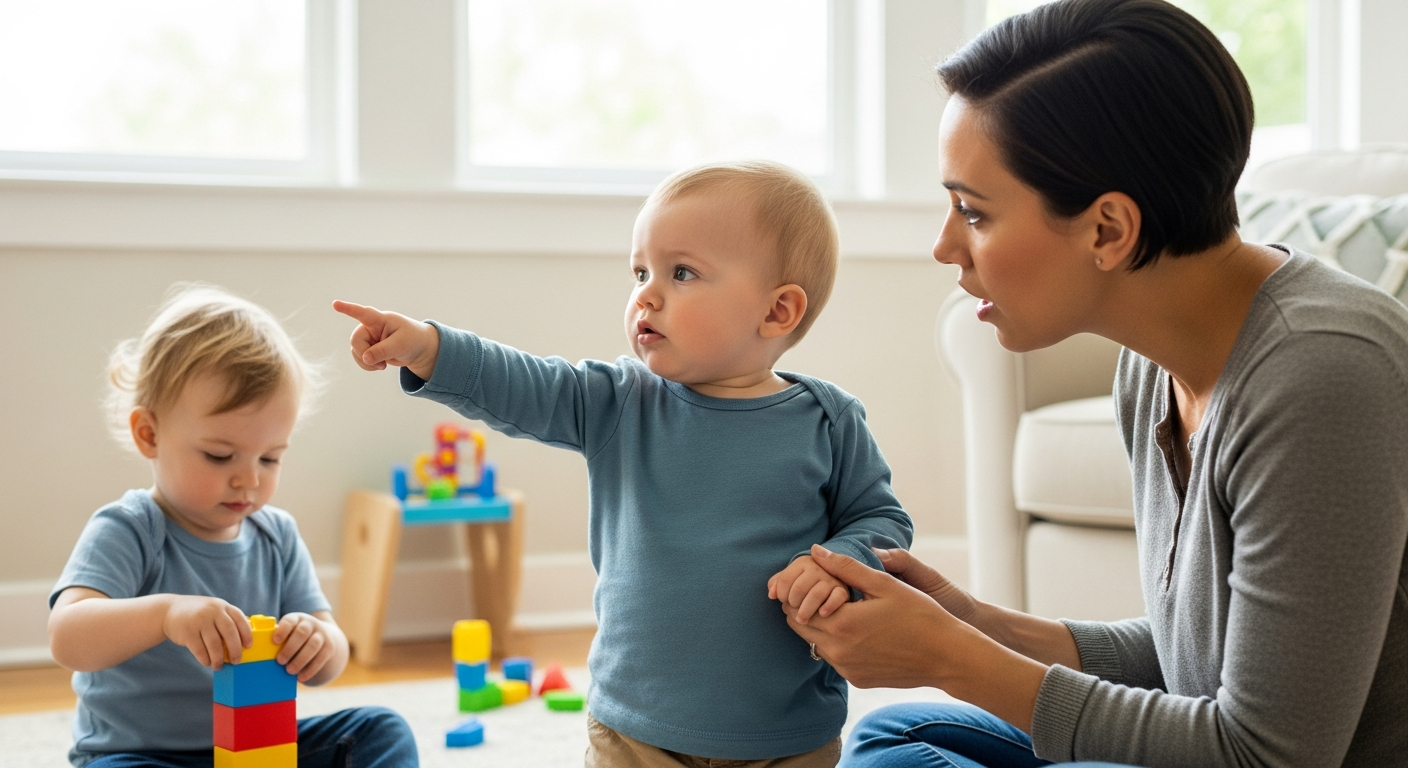
Table of Contents
- Introduction
- Understanding Milestones at 15 Months
- Key Signs of Speech Delay in 15 Month Old Toddlers
- What Causes Speech Delays?
- The Speech Blubs Approach: Scientific Play
- How to Support Your 15-Month-Old at Home
- Choosing the Right Plan for Your Family
- When to Seek Professional Help
- Creating Joyful Learning Moments
- Summary of Key Takeaways
- Conclusion
- Frequently Asked Questions
Introduction
Imagine you are at a playdate. Your friend’s 15-month-old is babbling away, pointing at the "doggie" and shouting a clear "Ball!" while your own little one is content to play silently, perhaps offering a shy smile but no words. In that moment, a tiny seed of worry might start to grow. You find yourself wondering, "Is my child just a late bloomer, or is there something else going on?" Every parent eagerly awaits those magical first words, and it is completely natural to compare milestones when you are surrounded by other growing toddlers.
The truth is that children develop at their own unique pace, but understanding the general timeline can help you replace worry with a plan of action. About 1 in 5 children will experience a speech or language delay at some point. At Speech Blubs, we believe that every child deserves the chance to "speak their minds and hearts," and we are here to help you navigate these early years with confidence and joy.

In this post, we will explore the common signs of speech delay in 15-month-old toddlers, the difference between speech and language, what causes these delays, and how you can support your child’s development through play. We will also introduce you to our unique "smart screen time" approach that turns learning into a fun, family-centered adventure. By the end of this article, you will have a clear understanding of what to look for and how to take the next steps for your child’s communication journey.
Understanding Milestones at 15 Months
When we talk about communication in toddlers, it is helpful to distinguish between speech and language. While they sound like the same thing, they actually represent two different sides of the communication coin. Speech refers to the physical act of forming sounds and words (articulation). Language is much broader; it involves the ability to give and receive information, including understanding what others say (receptive language) and using words or gestures to express needs (expressive language).
By 15 months, most toddlers have reached several key milestones that serve as the foundation for future talking.
What Communication Usually Looks Like
At this age, your child is likely a "communication sponge." They might not be giving speeches yet, but they should be actively engaging with their environment. Typically, a 15-month-old will:
- Use at least 1 to 3 consistent words (like "mama," "dada," or "no").
- Respond to their own name when called.
- Understand simple instructions, such as "Give me the ball" or "Sit down."
- Use gestures like pointing to things they want or waving "bye-bye."
- Shake their head "no" or nod "yes."
- Babble with intent, using different tones that sound like they are having a real conversation.
If your child is hitting these marks, they are likely on a typical trajectory. However, if these milestones seem out of reach, it may be time to look closer at specific signs of speech delay in 15-month-old children.
Key Signs of Speech Delay in 15 Month Old Toddlers
Identifying a delay early is one of the best things you can do for your child. It is not about finding a "label," but about providing the right support at the right time. Here are the red flags that pediatricians and speech-language pathologists look for in a 15-month-old:

1. Lack of Spontaneous Words
While some 15-month-olds have a vocabulary of ten words, the baseline expectation is usually at least one or two clear words used with meaning. If your child is not saying "mama" or "dada" to address you, or hasn't attempted any other labels for objects (like "cup" or "dog"), this is a sign to monitor.
2. Not Responding to Their Name
If you call your child from across the room and they don’t turn their head or acknowledge you, it could indicate a few different things. It might be a hearing issue, or it could be a sign that they aren't yet processing verbal social cues. This is an important milestone because it shows that the child understands that words have specific meanings directed at them.
3. Absence of Gestures
At 15 months, communication is often more about "showing" than "telling." If your child does not point to an airplane in the sky to show you, or doesn't point to the juice they want on the counter, they are missing a vital precursor to speech called "joint attention." Waving bye-bye and reaching up to be picked up are also critical non-verbal markers.
4. Difficulty Following Simple Directions
Receptive language—what a child understands—usually develops before expressive language. If you say, "Go get your shoes," and your child looks at you blankly or doesn't move toward the shoes, they may be struggling to process verbal information.
5. Limited Babbling or "Quiet" Play
Children who are developing speech normally are usually quite "noisy." They experiment with sounds like "ba-ba-ba" or "da-da-da." If your 15-month-old is very quiet during play or doesn't seem to be "practicing" sounds, it could be a sign that they need a little extra encouragement.
Key Takeaway: If your child isn't using gestures or responding to their name by 15 months, it is worth discussing with a professional. Early intervention is the most effective way to help a child catch up.
For parents who are unsure where their child stands, we offer a quick 3-minute preliminary screener. It involves 9 simple questions and provides an assessment and a next-steps plan to help you understand your child’s needs better.
What Causes Speech Delays?
It is important for parents to know that if your child has a speech delay, it is not your fault. There are many reasons why a child might be a "late talker," and most of them have nothing to do with your parenting style.
Physical and Medical Factors
- Hearing Problems: Even temporary hearing loss from frequent ear infections can make it difficult for a toddler to hear sounds clearly, which in turn makes it hard for them to imitate those sounds.
- Oral-Motor Issues: Some children have difficulty coordinating the movements of their lips, tongue, and jaw. This can make it hard to form specific speech sounds.
- Oral Impairments: Physical issues like a "tongue-tie" (a short fold beneath the tongue) can sometimes limit movement, though this is less common as a sole cause of delay.
Developmental and Environmental Factors
- Premature Birth: Children born early often hit milestones according to their "adjusted age," and may take a little longer to catch up in the speech department.
- Lack of Stimulation: While rare in loving homes, a lack of verbal interaction can slow development.
- Global Developmental Delay: Sometimes speech is just one part of a broader delay in motor or cognitive skills.
- Autism Spectrum Disorder (ASD): Speech delay can be an early sign of autism, especially when combined with a lack of social gesturing or eye contact.
Regardless of the cause, our mission at Speech Blubs is to provide an immediate, effective, and joyful solution for the 1 in 4 children who need speech support. Our founders grew up with speech problems themselves and created the tool they wished they had—a way to turn "screen time" into "growth time."
The Speech Blubs Approach: Scientific Play
When you realize your child might need support, the traditional route often involves long waiting lists for specialists. While professional therapy is invaluable, you can start helping your child at home today.
We use a unique "video modeling" methodology. Scientific research shows that children learn best by watching their peers. Our app features videos of real children (not cartoons) performing speech exercises and making sounds. When your toddler sees another child making a "Pop!" sound or saying "Mama," their mirror neurons fire, encouraging them to imitate what they see.
Transforming Screen Time
We know that many parents worry about screen time. However, there is a big difference between passive viewing (like watching mindless cartoons) and "smart screen time." Our app is designed to be an interactive, screen-free alternative in spirit—it requires the child to vocalize, move, and engage back with the device.
For example, imagine a 15-month-old named Leo who isn't talking yet but loves animals. In the "Animal Kingdom" section of our app, Leo watches a peer make a "Moo" sound while wearing a digital cow mask. Leo laughs, sees the other child’s lips moving, and tries to say "Moo" himself. This isn't just a game; it is a foundational building block for communication.
Our approach is backed by science, placing us in the top tier of speech apps worldwide with a high MARS scale rating. We focus on fostering a love for communication and building confidence, rather than just "drilling" words.
How to Support Your 15-Month-Old at Home
Beyond using our tools, there are simple, everyday ways you can encourage your child to speak.
Narrate Your Life
Think of yourself as a sports commentator for your toddler’s life. When you are dressing them, say, "Now we put on the blue shirt. Over your head! One arm, two arms." When you are making lunch, say, "I am cutting the yellow banana. It is sweet!" This constant exposure to language in context helps them connect sounds to meanings.
Use "Self-Talk" and "Parallel Talk"
- Self-Talk: Describe what you are doing ("I am washing the dishes. Scrub, scrub, scrub!").
- Parallel Talk: Describe what your child is doing ("You are pushing the red car. Vroom, vroom!").
Read and Sing Every Day
Books with bright pictures and repetitive text are gold for 15-month-olds. Point to the pictures and wait for them to look. Sing simple songs like "Itsy Bitsy Spider" and leave out the last word of a phrase to see if they try to fill it in.
Choose Quality Resources
Ready to get started? You can download Speech Blubs on the App Store or Google Play to begin your journey. We recommend starting with just 10-15 minutes of co-play per day.
Choosing the Right Plan for Your Family
We want to be transparent about how we can best support your child's long-term success. While we offer different ways to access our tools, we’ve found that consistency over time yields the most joyful results for families.
Our Pricing Options:
- Monthly Plan: $14.99 per month. This is a great way to test the waters if you are curious about how your child will respond.
- Yearly Plan: $59.99 per year. This is the clear best choice for families committed to their child's progress, breaking down to just $4.99/month.
Why the Yearly Plan is the Best Value:
The Yearly plan isn't just about saving 66% compared to the monthly rate; it includes exclusive, high-value features designed to accelerate your child’s development:
- 7-Day Free Trial: You can explore the entire app with your child risk-free for a full week.
- Reading Blubs App: You get access to our sister app, Reading Blubs, which helps transition speech skills into early literacy.
- Early Access: Be the first to try new updates and activities.
- Priority Support: Enjoy a 24-hour support response time from our dedicated team.
Create your account and begin your 7-day free trial today by choosing the Yearly plan to get the full suite of features and the best possible start for your toddler.
When to Seek Professional Help
While "smart screen time" and at-home activities are powerful supplements, they do not replace the expertise of a Speech-Language Pathologist (SLP) if a significant delay is present. If you have noticed multiple signs of speech delay in your 15-month-old, we recommend:
- A Hearing Test: Rule out any physical barriers to sound.
- Pediatrician Consultation: Discuss your concerns and ask for a referral to an SLP.
- Early Intervention Evaluation: Most regions offer free or low-cost evaluations for children under three.
Trust your instincts. You know your child better than anyone else. If your gut tells you that something is "off," it is always better to check than to "wait and see." Many parents find peace of mind simply by taking action. You can read testimonials from other parents who were in your shoes and found success through early intervention and Speech Blubs.
Creating Joyful Learning Moments
At the end of the day, the goal isn't just to get your child to say words—it’s to help them connect with you and the world around them. When a child learns to communicate, their frustration levels drop, their confidence soars, and your bond grows stronger.
We frame every activity in our app with an understanding of adult co-play. Sit with your child, mimic the sounds together, and celebrate every "pop," "ba," and "mama" you hear. These small victories are the building blocks of a lifetime of communication.
Whether your child is a "late bloomer" or needs a little extra push to overcome a delay, we are here to support you every step of the way. Our unique peer-to-peer video modeling is a powerful tool for family connection, offering a way to make learning feel like the play it should be.
Summary of Key Takeaways
To recap what we have covered regarding the signs of speech delay in 15-month-old toddlers:
- Identify the Red Flags: Look for a lack of words, failure to respond to their name, and an absence of pointing or waving.
- Understand the Difference: Speech is about sounds; language is about communication and understanding.
- Start Early: Early intervention is the most effective way to address delays and reduce future frustration.
- Play is the Way: Use techniques like narrating your day, reading, and smart screen time to encourage vocalization.
- Take Action: Use resources like the Speech Blubs screener and consult with your pediatrician.
Conclusion
Watching your child struggle to find their voice can be stressful, but you don't have to navigate this journey alone. By recognizing the signs of speech delay in 15-month-old children early, you are already giving your child a massive head start. Remember that the goal is progress, not perfection. Every new sound is a reason to celebrate.
We invite you to join our community of over 5 million families who have used Speech Blubs to jumpstart their children's communication skills. Our "smart screen time" experiences are designed by experts and inspired by the real struggles of our founders to ensure your child gets the best possible support.
Ready to help your little one find their voice? Download Speech Blubs on the Google Play Store or the Apple App Store today. We highly recommend selecting our Yearly Plan to take advantage of the 7-day free trial, the Reading Blubs app, and our priority support. It’s the best value for your child’s development, costing just $59.99 for the whole year—that's less than a single private therapy session! Start your free trial today and watch your child begin to speak their mind and heart.
Frequently Asked Questions
1. How many words should a 15-month-old be saying?
While every child is different, most 15-month-olds should have a vocabulary of at least 1 to 3 words used consistently and with meaning (like "mama," "dada," or "up"). Some children may have up to 10 words at this stage. If your child has no words at all, it is a good idea to monitor their other communication skills, such as pointing and following directions.
2. My child points but doesn't talk. Is this a speech delay?
Pointing is a fantastic sign of "joint attention," which is a necessary precursor to speech. If your 15-month-old is using gestures but not yet using words, they are likely on the right track but might just need more time or encouragement. However, if they have no words and aren't imitating sounds, it is worth discussing with a professional to see if they could benefit from extra support.
3. Can excessive screen time cause a speech delay?
Passive screen time, where a child just sits and watches cartoons, does not provide the interactive "give-and-take" required for language development. This is why we created Speech Blubs as a "smart screen time" alternative. Our app requires the child to be active, mimic sounds, and engage with the content, turning the device into a tool for learning rather than just a distraction.
4. What is the difference between a late talker and a speech delay?
A "late talker" is typically a child who has a delay in expressive language (talking) but has normal receptive language (understanding), good social skills, and uses plenty of gestures. Many late talkers catch up on their own by age 3. A "speech delay" can be more complex and may involve difficulties in understanding others or using non-verbal communication. A professional evaluation is the only way to be certain which path your child is on.
About the author