
Supporting Your Child with a Speech Delay at 3 Years Old
 By Speech Blubs Team•Mar 9, 2026•16 min.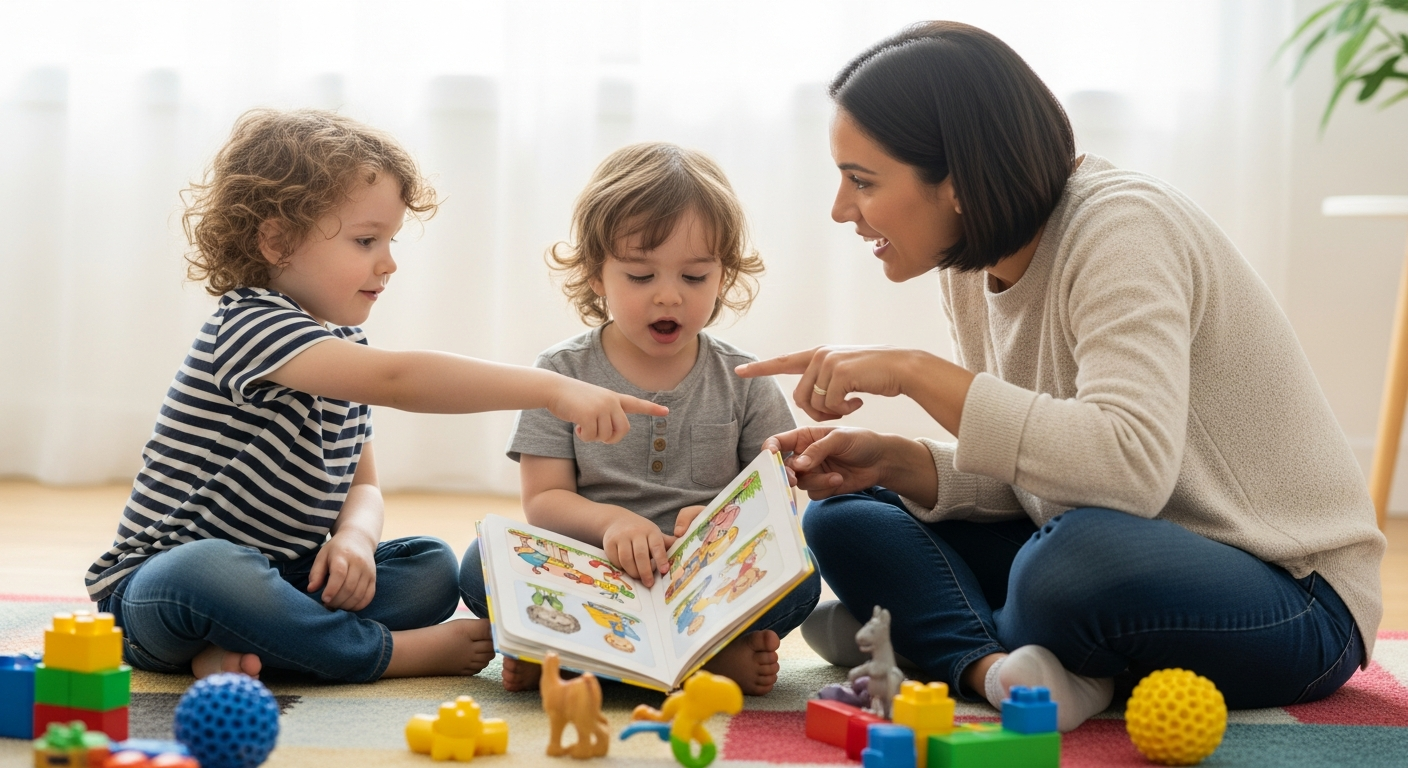
Table of Contents
- Introduction
- Defining Speech Delay vs. Language Delay
- Milestones: What Should a 3-Year-Old Be Doing?
- Recognizing the Red Flags for Speech Delay at 3 Years Old
- Common Causes of Speech and Language Delays
- The Speech Blubs Approach: Scientific Play
- Practical Strategies for Home Support
- Navigating Professional Support
- Choosing the Right Path: Value and Pricing
- The Importance of Early Intervention
- FAQs
- Conclusion
Introduction
Did you know that approximately one in four children will face challenges with speech and language development at some point in their early years? It is a statistic that hits home for many families, especially when you reach that milestone third birthday. By age three, we often expect our little ones to be bursting with stories, asking endless "why" questions, and chatting away with anyone who will listen. When that doesn't happen—when the silence is heavy or the words are jumbled—it can feel incredibly isolating for a parent. At Speech Blubs, we understand this journey because we have lived it. Our company was born from the personal experiences of our founders, who all grew up with speech problems themselves. They created the exact tool they wished they had as children to help bridge the gap between silence and expression.

The purpose of this post is to provide you with a compassionate, expert-backed roadmap for navigating a speech delay at 3 years old. We will explore the vital milestones your child should be hitting, the common causes behind these delays, and practical, joyful strategies you can implement at home today. We will also dive into the science of how we help children find their voice through "smart screen time" and peer-to-peer learning.
Our main message to you is simple: if your child is struggling to communicate, you are not alone, and there is so much you can do to help. By understanding the nuances of speech and language development and utilizing the right tools, you can help your child "speak their minds and hearts" and build the confidence they need to thrive in the world around them.
Defining Speech Delay vs. Language Delay
Before we dive into the specific signs of a speech delay at 3 years old, it is crucial to clarify what we mean by these terms. Parents often use "speech" and "language" interchangeably, but in the world of child development, they represent two different sets of skills.
What is Speech?
Speech refers to the physical act of producing sounds and words. It involves the coordination of the breath, the vocal cords, the tongue, the lips, and the jaw. A child with a speech delay might understand everything you say and have a vast internal vocabulary, but they struggle to physically form the sounds correctly. This can make their talking difficult for others to understand. Think of speech as the "delivery system" for communication.
What is Language?
Language is much broader. It is the system of symbols—words, signs, and gestures—that we use to share meaning. Language is split into two categories:
- Receptive Language: This is what a child understands. Can they follow a two-step direction like "Get your shoes and put them by the door"?
- Expressive Language: This is how a child uses words and gestures to communicate their thoughts, feelings, and needs.
A child might have a speech delay, a language delay, or both. Understanding which area your child is struggling with is the first step toward getting the right support. If you are feeling unsure about where your child stands, we recommend taking our quick 3-minute preliminary screener. It involves 9 simple questions and provides you with an assessment and a next-steps plan to help you move forward with clarity.

Milestones: What Should a 3-Year-Old Be Doing?
By the time a child is three, their world is expanding rapidly. They are moving from simple labels to complex ideas. While every child develops on their own unique timeline, there are certain milestones that experts look for to ensure development is on track.
Communication Milestones
- Vocabulary Growth: A typical three-year-old usually has a vocabulary of about 500 to 1,000 words.
- Sentence Structure: They should be regularly using sentences that are three to four words long (e.g., "I want blue juice" or "Dog is running fast").
- Clarity: By age three, about 75% of what a child says should be understood by "unfamiliar listeners"—people who don't spend all day with them, like a distant relative or a neighbor.
- Grammar: They are beginning to use plurals (cats, dogs), pronouns (I, me, you, we), and some past-tense verbs (jumped, walked).
- Asking Questions: This is the age of "Why?", "Who?", and "Where?". Asking questions is a sign of cognitive and linguistic curiosity.
Social and Cognitive Milestones
- Pretend Play: At three, children should be engaging in imaginative play. They might "feed" a stuffed animal or pretend a cardboard box is a spaceship.
- Following Directions: They should be able to follow multi-step instructions without needing a physical gesture to guide them.
- Storytelling: They might be able to repeat a simple nursery rhyme, sing a song, or tell a very basic "story" about something that happened during their day.
Recognizing the Red Flags for Speech Delay at 3 Years Old
It is important to remember that a "late talker" isn't necessarily a child with a permanent disorder. Some children simply focus on their motor skills (like climbing and running) before their linguistic ones. However, there are specific "red flags" that suggest a child might need professional intervention or extra support at home.
Signs of a Potential Delay
- Limited Vocabulary: If your child is using fewer than 200 words at age three, this is a significant indicator that they may need help.
- Lack of Sentences: If they are still only using single words or two-word phrases (e.g., "More milk") instead of expanding into three- or four-word sentences.
- Intelligibility Issues: If you, as the primary caregiver, still struggle to understand half of what your child is saying, or if strangers cannot understand them at all.
- Regression: One of the most important signs is the loss of previously learned skills. If your child could say several words or phrases and suddenly stops using them, consult your pediatrician immediately.
- Frustration: Children who have a speech delay at 3 years old often experience high levels of frustration because they have complex thoughts but lack the tools to express them. This can lead to frequent tantrums or "acting out."
If any of these signs resonate with you, it is a good idea to seek a professional evaluation. You can also read testimonials from other parents who noticed similar signs and found success through early intervention and the use of our app.
Common Causes of Speech and Language Delays
When a child experiences a speech delay at 3 years old, parents often ask, "Why?" While sometimes there is no clear-cut reason, several common factors can play a role.
1. Oral-Motor Issues
Many children with speech delays have difficulty with the coordination of the muscles in the mouth. This can be caused by:
- Oral-Motor Weakness: The muscles of the tongue, lips, and jaw might be weak, making it hard to form sounds.
- Apraxia of Speech: This is a neurological condition where the brain struggles to plan the movements required for speech. The child knows what they want to say, but the "signal" from the brain to the mouth gets garbled.
- Physical Impairments: A "tongue-tie" (a short fold beneath the tongue) or issues with the palate can physically limit the range of motion needed for certain sounds like "L", "R", or "D".
2. Hearing Problems
If a child cannot hear clearly, they cannot learn to speak clearly. Chronic ear infections are a common culprit. Even if a child passes their newborn hearing screen, they can develop hearing loss later due to fluid buildup or other issues. If your child seems to "tune you out" or only responds to loud sounds, a visit to an audiologist is essential.
3. Developmental and Neurological Conditions
In some cases, a speech delay at 3 years old is a symptom of a broader developmental difference, such as:
- Autism Spectrum Disorder (ASD): Challenges with social communication and repetitive behaviors are hallmarks of ASD. Speech delay is often one of the first signs parents notice.
- Global Developmental Delay: This occurs when a child is delayed in multiple areas, including motor, cognitive, and social skills.
- Cerebral Palsy: This group of disorders affects muscle control and can significantly impact the physical ability to speak.
4. Environmental Factors
While less common as a sole cause, a lack of verbal stimulation can slow a child's progress. Children learn to talk by being immersed in language. If a child spends a large amount of time in front of a TV with "passive" content (like cartoons that don't encourage interaction), they miss out on the back-and-forth "serve and return" communication that builds brain pathways.
The Speech Blubs Approach: Scientific Play
At Speech Blubs, we don't believe in passive screen time. We believe in "smart screen time" that empowers children to "speak their minds and hearts." Our methodology is rooted in the science of video modeling, which is a proven technique where children learn by watching their peers.
How Video Modeling Works
Our app features thousands of videos of real children—not cartoons—performing speech exercises. When your child sees another child their own age making a sound or saying a word, something incredible happens in their brain. Mirror neurons fire. These are the same neurons that fire when we perform an action ourselves. By watching a peer, your child is more motivated to imitate the behavior. This peer-to-peer approach reduces the pressure often felt during traditional therapy and turns learning into a joyful game.
For a parent whose 3-year-old "late talker" loves animals, the "Animal Kingdom" section of our app offers a fun, motivating way to practice "moo" and "baa" sounds. Instead of feeling like they are "working," the child is playing with a friend on the screen. This builds the foundational skills needed to overcome a speech delay at 3 years old. Our approach is backed by research, placing us in the top tier of speech apps worldwide with a high rating on the MARS scale.
Turning Screen Time into Connection
We encourage parents to use the app as a tool for family connection. Sit with your child, mimic the children on the screen together, and celebrate every sound they make. This creates a positive, stress-free environment where your child feels safe to experiment with their voice. You can start this journey today by downloading Speech Blubs on the App Store or finding us on the Google Play Store.
Practical Strategies for Home Support
Beyond using specialized tools, your everyday interactions are the most powerful "therapy" your child receives. Here are some evidence-based strategies to support your child’s development:
1. Narrate Your Day
Think of yourself as a sports commentator for your child's life. Describe everything you are doing as you do it. "Now I am putting on my blue socks. One sock, two socks! They are soft." This constant exposure to vocabulary in context helps your child map words to objects and actions.
2. Follow Their Lead
If your child is interested in a specific toy, talk about that toy. For example, if your 3-year-old is obsessed with trucks, use the "Beep Beep" section in Speech Blubs to learn vehicle sounds, and then bring that learning to life with their toy trucks. When a child is interested in the topic, they are much more likely to attempt communication.
3. Read and Sing Every Day
Books are vocabulary goldmines. When reading, don't just read the text. Point to the pictures and ask simple questions. "Where is the cat? There it is! The cat says...?" Wait for them to fill in the blank. Singing songs with repetitive lyrics and hand gestures (like "The Itsy Bitsy Spider") is also excellent for teaching rhythm and imitation.
4. Create a "Communication Temptation"
Sometimes, we are so good at anticipating our children's needs that they don't need to talk. Try placing a favorite toy slightly out of reach or giving them a snack they love but in a closed container they can't open. This "tempts" them to use a gesture, a sound, or a word to ask for help.
5. Be Patient and Attentive
When your child does attempt to speak, give them your full attention. Do not correct their pronunciation directly. Instead, model the correct way to say the word. If they say, "Wook, a bue wabbit!", you can respond with, "Yes! Look at that blue rabbit! He is hopping." This provides positive reinforcement without making the child feel "wrong."
Navigating Professional Support
While at-home strategies are vital, they are often most effective when used as a supplement to professional care. If you are concerned about a speech delay at 3 years old, here is how to navigate the professional world:
The Speech-Language Pathologist (SLP)
An SLP is a highly trained expert who can evaluate your child’s speech and language skills in depth. They will look at:
- Articulation: How sounds are produced.
- Fluency: The flow of speech.
- Resonance: The quality of the voice.
- Receptive and Expressive Language: Understanding and usage.
Early Intervention Services
In many regions, children under the age of three are eligible for state-funded early intervention programs. Once a child turns three, these services typically transition to the local school district. Even if you don't have a formal diagnosis yet, you can request an evaluation through your school district’s special education department.
Realistic Expectations
It is important to set realistic expectations. Speech therapy is a process, not an overnight fix. Our mission at Speech Blubs is to provide an immediate, effective, and joyful solution for the 1 in 4 children who need support, but the goal is progress, not perfection. We focus on fostering a love for communication and building the confidence that allows a child to eventually catch up to their peers. Ready to take the first step? Create your account and begin your 7-day free trial today.
Choosing the Right Path: Value and Pricing
We are committed to being transparent about how we can help your family. We offer two main plans to suit different needs, but our goal is always to provide the most comprehensive support possible.
- Monthly Plan: For $14.99 per month, you get full access to the Speech Blubs app and its vast library of video-modeling exercises.
- Yearly Plan: This is our most popular and highest-value option. At $59.99 per year, it breaks down to just $4.99 per month—a 66% savings compared to the monthly plan.
Why the Yearly Plan is the Best Choice
We want your child to have every advantage. That’s why the Yearly plan includes exclusive features not found in the monthly subscription:
- A 7-Day Free Trial: You can explore everything we offer risk-free.
- Reading Blubs: This additional app is included for free, helping your child transition from spoken language to early literacy skills.
- Priority Support: You get a 24-hour response time from our support team and early access to all new updates and features.
Investing in your child's communication is one of the most impactful things you can do for their future. By choosing the yearly plan, you ensure they have a consistent, high-quality tool to support their development throughout the year.
The Importance of Early Intervention
We cannot stress enough that the "wait and see" approach is often not the best strategy when it comes to a speech delay at 3 years old. The human brain is at its most "plastic"—or adaptable—during the first five years of life. This is when the foundational pathways for language are being built.
Early intervention does more than just help a child talk; it:
- Reduces Frustration: When a child can express themselves, "behavioral issues" often disappear.
- Builds Social Confidence: Communication is the key to making friends and playing with others.
- Prepares for School: Language skills are the strongest predictor of future reading and writing success.
- Strengthens Family Bonds: Nothing brings more joy than finally hearing your child share their "minds and hearts" with you.
At Speech Blubs, we are here to support you every step of the way. We provide a screen-free alternative to the passive, mindless viewing that dominates so much of children's digital lives. Instead, we offer a "smart" experience designed by experts and loved by kids.
FAQs
1. Is it normal for a 3-year-old to still babble sometimes? While some "jargon" or babbling might still occur during play, a 3-year-old should primarily be using recognizable words and sentences. If babbling is their main form of communication, it is considered a red flag for a speech delay at 3 years old.
2. Can screen time actually help with a speech delay? Not all screen time is created equal. Passive viewing, like watching cartoons, does not encourage speech. However, "smart screen time" using video modeling—like what we offer at Speech Blubs—is an active, evidence-based tool that encourages children to imitate sounds and words.
3. Does my child need an official diagnosis to use Speech Blubs? No! Many parents use our app because they've noticed a slight delay or simply want to boost their child's communication skills. It is a powerful tool for any child, whether they are in professional therapy or just need a little extra nudge.
4. What if my child refuses to imitate the videos? Don't worry! Every child progresses at their own pace. Start by just watching the videos together. Use the fun filters in the app to make them laugh. When the pressure is off and the "fun" is on, they will eventually feel comfortable enough to start making sounds.
Conclusion
Navigating a speech delay at 3 years old can feel like an emotional rollercoaster, but it is a journey you don't have to take alone. By recognizing the signs early, understanding the potential causes, and implementing supportive strategies at home, you are giving your child the greatest gift possible: the gift of voice. Remember that your child is more than their delay; they are a unique individual with a world of thoughts waiting to be shared.
At Speech Blubs, we are dedicated to helping your child find the words they need to connect with you and the world. Whether it's through our peer-led video modeling or our focus on joyful, family-centered learning, we are here to turn frustration into triumph.
Ready to help your child find their voice? Download Speech Blubs on the App Store or Google Play Store today to begin. For the best value and to access exclusive features like Reading Blubs and a 7-day free trial, we highly recommend selecting our Yearly Plan. Let’s start this journey together and help your little one speak their mind and heart.
About the author