
Understanding What is Speech and Language Delays in Kids
 By Speech Blubs Team•Mar 5, 2026•15 min.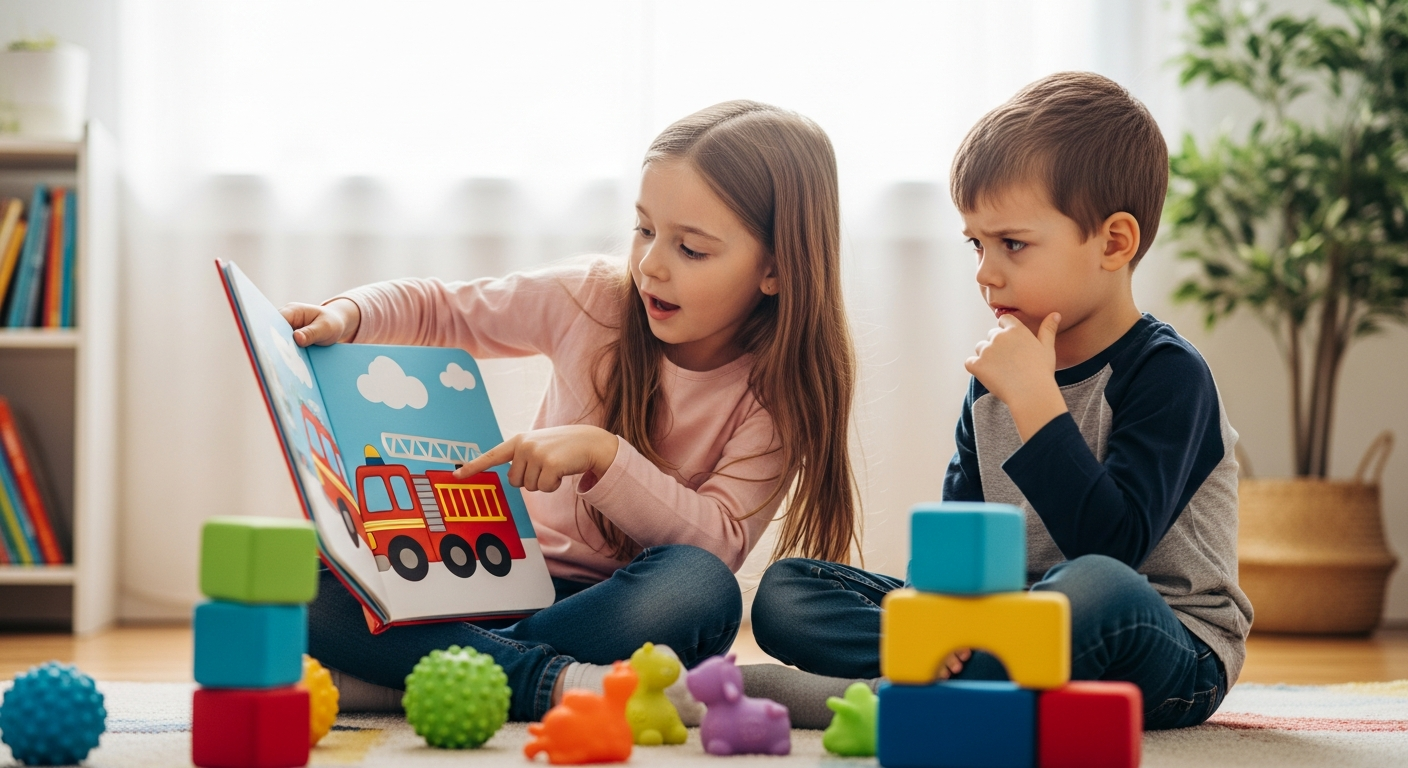
Table of Contents
- Introduction
- What is Speech and Language Delays? Defining the Basics
- The Importance of Early Identification
- Speech and Language Milestones: What to Watch For
- Common Causes of Speech and Language Delays
- The Science of Success: Our Video Modeling Methodology
- How Parents Can Support Development at Home
- Seeking Professional Help: The Role of the SLP
- Choosing the Right Path: Value and Pricing
- The Emotional Journey of Parenting a Child with a Delay
- Setting Realistic Expectations
- Conclusion
- FAQ
Introduction
Did you know that approximately 1 in 4 children will face some form of speech or language challenge during their early development? For a parent, those first words are more than just milestones; they are the keys to your child’s world. When those words don’t come as expected, or when communication feels like a struggle, it’s natural to feel a mix of worry and confusion. You might find yourself asking: Is my child just a "late bloomer," or is something else going on? Understanding what is speech and language delays is the first step toward empowering your child to communicate their needs, feelings, and dreams.
At Speech Blubs, we understand this journey intimately. Our mission is to empower children to "speak their minds and hearts," a goal born from the personal experiences of our founders. Having grown up with speech problems themselves, they created the tool they wished they had as children. We believe that every child deserves a joyful, effective way to find their voice. This blog post is designed to be a comprehensive resource, guiding you through the definitions, signs, causes, and solutions for speech and language delays. We will cover how to identify milestones, when to seek professional help, and how our unique approach to "smart screen time" can support your family. Our central message is simple: with early identification, the right tools, and plenty of play, your child can build the confidence they need to thrive.

What is Speech and Language Delays? Defining the Basics
To understand the challenges your child might be facing, we first need to distinguish between two terms that are often used interchangeably: speech and language. While they are closely related, they represent different aspects of communication.
Understanding Speech
Speech is the physical act of producing sounds. It involves the coordination of the breath, vocal cords, tongue, lips, and jaw. When we talk about speech, we are focusing on:
- Articulation: How we make individual speech sounds (e.g., the "r" sound in "rabbit").
- Voice: The use of the vocal folds and breath to produce sound, including pitch, volume, and quality.
- Fluency: The rhythm of speech, which can be disrupted by stutters or hesitations.
A speech delay means a child is struggling to create the actual sounds of spoken language. They might have ideas they want to share, but the physical delivery is difficult or unclear.
Understanding Language
Language is much broader. it is the entire system of giving and receiving information. It involves understanding symbols—whether spoken, written, or gestured—and using them to convey meaning. Language is generally split into two categories:
- Receptive Language: The ability to understand what others are saying. This includes following directions, identifying objects, and understanding stories.
- Expressive Language: The ability to use words, gestures, and sentences to share thoughts and feelings.
When we ask "what is speech and language delays," we are often looking at a child who may understand everything said to them (good receptive language) but cannot put words together to speak (expressive language delay). Conversely, some children may speak clearly but struggle to understand social cues or complex instructions.
The Importance of Early Identification
The first five years of life are a period of incredible brain plasticity. This is when the foundation for all future learning, social interaction, and emotional regulation is laid. Identifying a delay early isn't about labeling a child; it’s about providing them with the support they need while their brains are most receptive to learning new communication patterns.

If you are feeling uncertain, you don’t have to wait for your next pediatrician appointment to get a sense of where your child stands. We recommend taking our quick 3-minute preliminary screener. It consists of 9 simple questions and provides you with an initial assessment and a next-steps plan, along with a free 7-day trial of our app. This tool is designed to provide immediate value and peace of mind for parents who are seeking validation.
Speech and Language Milestones: What to Watch For
While every child develops at their own pace, there are general windows of time when most children reach certain milestones. Knowing these can help you spot the signs of what is speech and language delays early on.
Milestones from 0 to 12 Months
In the first year, communication is all about foundation. Babies are learning that their sounds get a reaction from the world.
- By 6 Months: Your baby should be making "raspberry" sounds, squealing, and beginning to babble (e.g., "ba-ba-ba").
- By 9 Months: They should respond to their name and use gestures like reaching to be picked up.
- By 12 Months: You should see "social" gestures like waving bye-bye or pointing at things they want. They may say "mama" or "dada" specifically to you.
Red Flag: If a 12-month-old isn't gesturing or responding to their name, it’s a good idea to consult a professional.
Milestones from 12 to 24 Months
This is the "explosion" phase where children transition from single words to short phrases.
- By 18 Months: Most children can say several simple words and follow one-step directions without needing a gesture.
- By 24 Months: A child should have a vocabulary of at least 50 words and start putting two words together (e.g., "more juice" or "doggy bark").
Practical Scenario: For a parent whose 2-year-old "late talker" loves animals, the "Animal Kingdom" section of Speech Blubs offers a fun, motivating way to practice "moo" and "baa" sounds. By watching other children make these sounds, your toddler is encouraged to imitate through our peer-led video modeling. You can download Speech Blubs on the App Store to explore these activities together.
Milestones from 2 to 4 Years
During these years, speech should become clearer and sentences longer.
- By 3 Years: A child should be using three-word sentences and be understood by strangers about 75% of the time.
- By 4 Years: They should be telling simple stories and using four-to-five-word sentences consistently.
Common Causes of Speech and Language Delays
When a parent discovers their child has a delay, the first question is often "Why?" While sometimes the cause remains unknown, several common factors can contribute to what is speech and language delays.
1. Oral-Motor Challenges
Some children have difficulty coordinating the muscles in their mouth. This might be due to:
- Oral Impairments: Physical issues like a cleft palate or a short frenulum (tongue-tie) can limit the movement required for certain sounds.
- Apraxia of Speech: This is a neurological condition where the brain struggles to plan the movements needed for speech. The child knows what they want to say, but the "message" from the brain to the mouth gets garbled.
2. Hearing Loss
Hearing and speaking are inextricably linked. If a child cannot hear sounds clearly, they cannot learn to imitate them. Chronic ear infections (otitis media) can lead to temporary hearing loss during critical language-learning windows. We always recommend that a child with a suspected speech delay have a comprehensive hearing evaluation by an audiologist.
3. Autism Spectrum Disorder (ASD)
Speech and language delays are often one of the first signs parents notice in children with autism. In these cases, the delay is often accompanied by challenges in social communication, such as lack of eye contact, difficulty with joint attention, or repetitive behaviors.
4. Environmental Factors
While not a "cause" in the medical sense, a child’s environment plays a huge role. Children who are exposed to rich, interactive language environments tend to develop skills faster. Conversely, excessive passive screen time (like watching cartoons for hours) can limit the "serve-and-return" interactions that are vital for brain development. This is why we focus on "smart screen time"—active, participatory experiences rather than passive viewing.
The Science of Success: Our Video Modeling Methodology
At Speech Blubs, we don't just provide games; we provide a scientifically-backed learning experience. Our approach is centered on video modeling.
Science shows that children learn best by watching and imitating their peers. This triggers "mirror neurons" in the brain—cells that fire both when an individual performs an action and when they observe someone else performing that same action. When your child sees a "Blubber" (one of the kids in our app) making a specific sound or word, their brain is literally practicing that sound along with them.
This methodology is at the heart of our research-based approach. By using real children instead of cartoons, we foster a sense of connection and confidence. Your child doesn't feel like they are being "taught"; they feel like they are playing with a friend.
How Parents Can Support Development at Home
You are your child’s first and most important teacher. While professional therapy is invaluable, the work you do at home in the "in-between" moments makes a world of difference. Here are some practical ways to support a child with speech and language delays:
- Narrate Your Day: Talk about what you are doing as you do it. "I’m picking up the big red ball. Now I’m putting it in the basket." This builds vocabulary in context.
- Follow Their Lead: If your child is interested in a truck, talk about the truck. Don't try to force them to talk about something else. Engagement is the key to learning.
- Read Together Every Day: Reading isn't just about the words on the page; it’s about pointing at pictures, asking questions, and sharing a joyful moment.
- Use Smart Tools: Incorporating an app like Speech Blubs into your daily routine can provide structured, fun practice. Get it on Google Play to start your journey today.
A Relatable Scenario
Imagine a parent, Sarah, whose 18-month-old son, Leo, isn't yet using words to communicate. He points and grunts, but the frustration is building for both of them. Sarah starts using Speech Blubs for 10 minutes a day during their "special time." In the "Early Sounds" section, Leo sees another boy making a "pop" sound with his lips while bubbles appear on the screen. Leo finds it hilarious. After a few days of watching and laughing, Leo tries it himself. That first "p-p-pop" isn't just a sound; it’s a breakthrough that reduces frustration and builds Leo’s confidence to try more words.
Seeking Professional Help: The Role of the SLP
If you suspect your child has a delay, the best course of action is to consult a Speech-Language Pathologist (SLP). An SLP can conduct a formal evaluation to determine exactly what is speech and language delays in your child's specific case.
During an evaluation, the SLP will look at:
- Receptive Language: How well does the child understand instructions?
- Expressive Language: How many words do they use? Are they combining them?
- Articulation: Are they producing sounds correctly for their age?
- Oral-Motor Skills: How are the muscles of the mouth functioning?
Our app is designed to be a powerful supplement to professional therapy, not a replacement for it. Many SLPs actually recommend Speech Blubs to their clients as a way to keep kids engaged and practicing between sessions. To see how other families have navigated this process, you can read our parent testimonials.
Choosing the Right Path: Value and Pricing
We believe in being transparent and providing the best possible value for families. We know that raising a child with extra needs can be expensive, which is why we have structured our pricing to be accessible while providing maximum benefits.
We offer two main plans:
- Monthly Plan: $14.99 per month. This is a great way to test the waters.
- Yearly Plan: $59.99 per year.
The Yearly Plan is the clear best choice for most families for several reasons. First, it breaks down to just $4.99 per month, saving you 66% compared to the monthly rate. But the value goes beyond just the price.
Exclusive Benefits of the Yearly Plan:
- 7-Day Free Trial: You can explore everything we have to offer for a full week before committing.
- Reading Blubs App: You get full access to our companion app, Reading Blubs, which focuses on early literacy and phonics—an essential next step for children with language delays.
- Priority Support: You receive a 24-hour support response time, ensuring your questions are answered quickly.
- Early Access: You get to try our newest updates and features before anyone else.
The Monthly plan does not include the free trial, the Reading Blubs app, or early access. To give your child the most comprehensive support, we encourage you to create your account and begin your 7-day free trial today by selecting the Yearly plan.
The Emotional Journey of Parenting a Child with a Delay
Understanding what is speech and language delays involves more than just medical definitions; it involves acknowledging the emotional weight parents carry. It is okay to feel worried, frustrated, or even envious when you see other children hitting milestones "on time."
At Speech Blubs, we want to remind you that your child's timeline is their own. A delay is not a reflection of your parenting, nor is it a cap on your child’s potential. Our founders started where your child is now. They grew up to create a global platform that has helped over 5 million families.
Our goal is to foster a love for communication and create joyful family learning moments. When you use our app with your child, it’s not just "therapy time"; it’s "together time." It’s about the giggles when the funny face filters appear and the high-fives when a new word is mastered.
Setting Realistic Expectations
While we are incredibly proud of the progress children make using our tools, it’s important to set realistic expectations. Speech development is a marathon, not a sprint. We don't promise that your child will be giving public speeches in a month. Instead, we focus on the foundational skills: building confidence, reducing the frustration of not being understood, and fostering a genuine desire to communicate.
Every "pop," "moo," and "mama" is a victory. By celebrating these small wins, you create a positive feedback loop that encourages your child to keep trying. Our "smart screen time" is a powerful supplement to your child’s overall development plan, providing a screen-free alternative to passive viewing and a tool for deep family connection.
Conclusion
Understanding what is speech and language delays is the first step in a journey of growth and discovery. By recognizing the signs early, seeking professional guidance when needed, and incorporating fun, evidence-based tools into your daily life, you are giving your child the best possible start.
Remember, communication is about more than just words; it’s about connection. Whether it's through a gesture, a sound, or a full sentence, every attempt your child makes to reach out to you is a beautiful thing. We are here to support you every step of the way with a solution that is effective, joyful, and backed by science.
Are you ready to help your child find their voice? Download Speech Blubs on the App Store or Google Play to begin. We highly recommend choosing our Yearly plan to take advantage of the 7-day free trial, the Reading Blubs app, and our best pricing of just $4.99/month. Let’s start this journey together and empower your child to speak their mind and heart.
FAQ
1. What is the difference between a speech delay and a language delay?
A speech delay refers to difficulty producing the physical sounds of language (articulation, voice, fluency). A language delay refers to difficulty understanding what others say (receptive) or using words and sentences to communicate ideas (expressive). Some children may experience both simultaneously.
2. When should I be worried about my child's speech?
General red flags include not babbling by 9 months, not using gestures by 12 months, having fewer than 50 words by age 2, or speech that is mostly unintelligible to strangers by age 3. If you have any concerns, it is always best to consult a pediatrician or a speech-language pathologist.
3. How does Speech Blubs help with speech delays?
Speech Blubs uses a scientifically-backed method called video modeling. By watching videos of other children (peers) making sounds and words, your child’s mirror neurons are activated, making them more likely to imitate and learn. It transforms screen time into an active, educational, and joyful "smart" experience.
4. Is the Yearly plan better than the Monthly plan?
Yes, the Yearly plan offers significantly better value. It costs $59.99/year (only $4.99/month), which is 66% cheaper than the Monthly plan ($14.99/month). Additionally, only the Yearly plan includes a 7-day free trial, access to the Reading Blubs app, early access to updates, and 24-hour support response time.
About the author