
When to Worry About Speech Delay: A Parent’s Guide
 By Speech Blubs Team•Mar 23, 2026•13 min.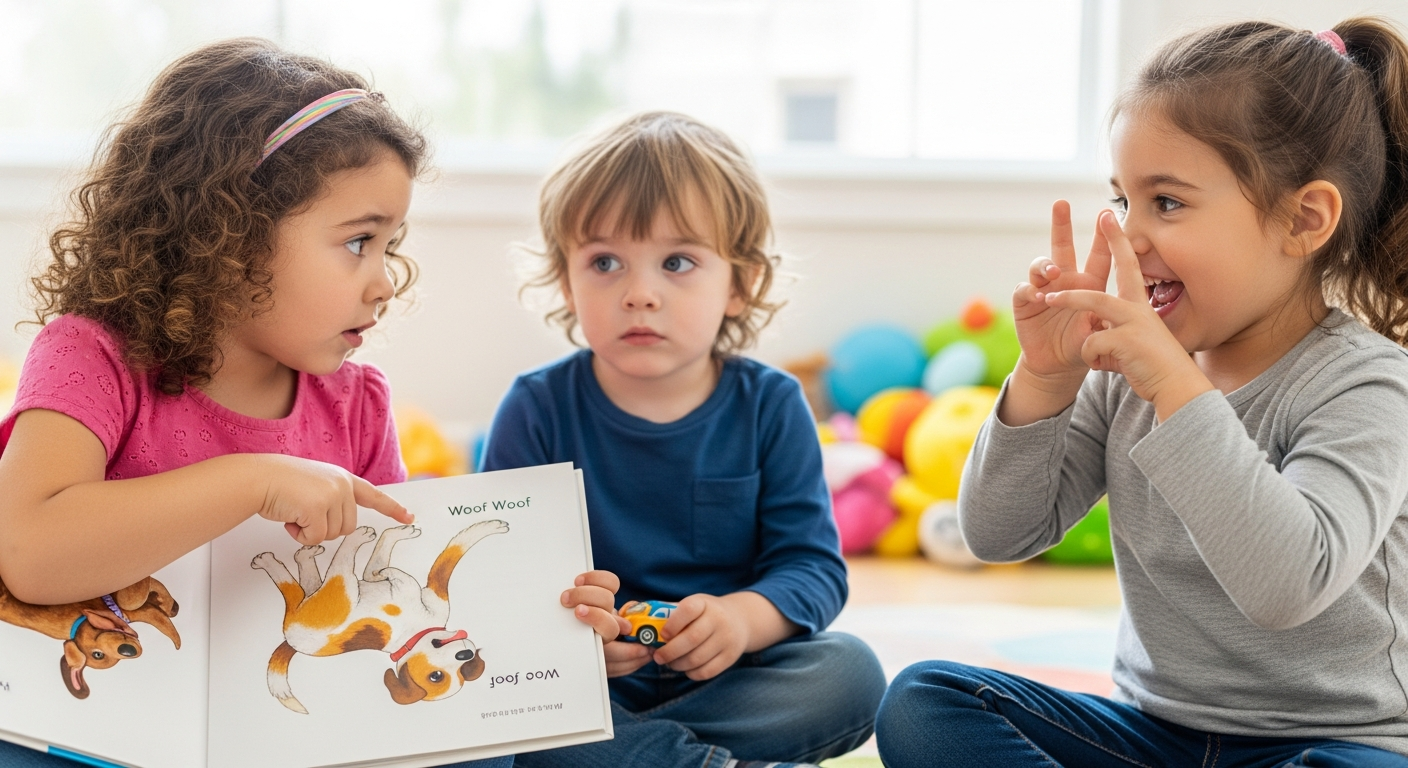
Table of Contents
- Introduction
- Understanding Speech vs. Language: What’s the Difference?
- Tracking Milestones: A Timeline of Development
- Red Flags: When to Worry About Speech Delay
- Late Talkers vs. Potential Disorders
- The Science of Play: How Speech Blubs Can Help
- Practical Ways to Boost Language at Home
- Choosing the Right Plan for Your Family
- Frequently Asked Questions
- Conclusion
Introduction
Did you know that approximately one in four children will experience some form of speech or language delay during their early development? For a parent, few things are as exhilarating as hearing that very first "mama" or "dada," yet few things are as stressful as the silence that follows when those milestones seem to be slipping by. You might find yourself at the playground, watching other toddlers chatter away, and wondering if your own child is simply a "late bloomer" or if there is a deeper reason for concern.
At Speech Blubs, we understand this anxiety intimately. Our founders grew up with speech challenges themselves, and they created the very tool they wish they had as children. We believe every child deserves the chance to speak their minds and hearts, and we are here to provide an immediate, effective, and joyful solution for families navigating the complexities of early communication.

The purpose of this guide is to help you navigate the nuances of verbal development. We will explore the differences between speech and language, outline the milestones you should expect from birth through age five, and identify the specific "red flags" that indicate it’s time to seek professional support. Most importantly, we want to empower you with practical tools and "smart screen time" strategies to foster a love for communication in your home. While every child follows their own unique timeline, understanding when to worry about speech delay can ensure your child gets the support they need to thrive.
Understanding Speech vs. Language: What’s the Difference?
Before diving into the timeline of development, it is helpful to clarify two terms that are often used interchangeably but mean very different things: speech and language.
What is Speech?
Speech refers to the physical act of producing sounds. It involves coordination between the breath, vocal cords, tongue, lips, and jaw. When we talk about a "speech delay," we are often referring to difficulties with articulation (forming specific sounds), voice (volume or pitch), or fluency (the rhythm of speech, such as stuttering). A child with a speech delay might have a vast vocabulary and understand everything you say, but their actual words might be difficult to decipher.
What is Language?
Language is much broader. It is the system of symbols—words, gestures, and writing—that we use to share information. Language is divided into two categories:
- Receptive Language: The ability to understand what others are saying. This includes following directions, identifying objects, and understanding questions.
- Expressive Language: The ability to use words, gestures, and sentences to communicate needs, thoughts, and feelings.
A child might have a language delay if they can pronounce words clearly but only use one-word utterances when they should be using sentences. Conversely, they might have a language delay if they seem unable to follow simple instructions like "put your shoes by the door."

Understanding this distinction is crucial because it helps you identify exactly where your child might be struggling. If you are unsure where your child stands, you can take our quick 3-minute preliminary screener to get a simple assessment and a free 7-day trial.
Tracking Milestones: A Timeline of Development
While it is true that children develop at different rates, there are established milestones that help pediatricians and speech-language pathologists (SLPs) track progress. Here is what typical development looks like:
Birth to 6 Months
In the first few months, communication is all about sounds and reactions. By three months, your baby should startle at loud noises and quiet down when they hear your voice. By six months, they should begin "cooing" and "gooing," making various sounds to express pleasure or displeasure. They should also start moving their eyes toward the source of sounds.
7 Months to 1 Year
This is a period of intense imitation. You should hear a lot of babbling that sounds like "tata" or "bibibi." By their first birthday, most children can say one or two simple words like "mama," "dada," or "uh-oh," even if they aren't perfectly clear. They should also begin using gestures, such as waving "bye-bye" or pointing to things they want.
1 to 2 Years
This is the "vocabulary explosion" phase. By 18 months, many children have a vocabulary of about 10 to 20 words. By age two, they should be able to point to a few body parts when asked and follow simple commands like "Roll the ball." At this stage, you should start hearing two-word phrases, such as "More juice" or "Mommy go."
2 to 3 Years
By age three, your child's speech should be understood by familiar listeners about 50% to 75% of the time. They should be using three-word sentences and have a word for almost everything in their immediate environment. This is also when they begin to understand spatial concepts like "in," "on," and "under."
3 to 5 Years
Between ages three and five, children become master storytellers. They should be able to answer "who," "what," and "where" questions and speak in sentences with four or more words. By age four, even people who do not know your child should be able to understand most of what they say.
Red Flags: When to Worry About Speech Delay
It can be difficult to know if your child is just taking their time or if there is a legitimate reason for concern. However, certain "red flags" warrant a conversation with your pediatrician or an SLP.
- By 12 Months: If your child is not babbling, not using gestures (like pointing or waving), or does not respond to their name.
- By 18 Months: If they prefer gestures over vocalizations to communicate or have significant trouble imitating sounds.
- By 24 Months (2 Years): This is a major milestone year. You should be concerned if your child can only imitate speech but doesn't produce words spontaneously, has a vocabulary of fewer than 50 words, or cannot follow simple one-step directions.
- By 3 Years: If your child is still difficult for family members to understand or cannot put three words together to form a sentence.
- At Any Age: A sudden regression in skills—where a child who was previously talking or social suddenly stops—is a sign that you should seek a professional evaluation immediately.
If you notice these signs, remember that early intervention is the most effective way to help your child catch up. You can download Speech Blubs on the App Store or Google Play to begin using our science-based tools today.
Late Talkers vs. Potential Disorders
The term "late talker" is often used to describe children between 18 and 30 months who have a good understanding of language and are developing normally in other areas (like walking and playing) but are slow to start talking.
Is My Child Just a Late Talker?
Many "late talkers" do eventually catch up to their peers by age three or four. Research suggests that if a child has strong receptive language skills (they understand what you say) and uses a lot of gestures to communicate, they are more likely to be a "late bloomer." However, even these children can benefit from extra support to reduce frustration and build confidence.
When It’s More Than Just a Delay
In some cases, a speech delay is a symptom of an underlying condition. These might include:
- Hearing Loss: Even a minor hearing impairment can make it difficult for a child to hear and imitate sounds.
- Oral-Motor Issues: Some children have difficulty coordinating the muscles in their mouth, tongue, and jaw. This is sometimes seen in children with a "short frenulum" (tongue-tie).
- Autism Spectrum Disorder (ASD): While speech delay is common in ASD, it is usually accompanied by other signs, such as a lack of interest in social play, repetitive behaviors, or difficulty with eye contact.
- Developmental Disorders: Conditions like Cerebral Palsy or Down Syndrome often include speech and language challenges as part of a broader developmental profile.
Regardless of the cause, the goal is always the same: to give your child the tools to connect with the world. Our methodology is backed by science, placing us in the top tier of speech apps worldwide by utilizing video modeling to trigger "mirror neurons" in the brain.
The Science of Play: How Speech Blubs Can Help
At Speech Blubs, we don't believe in passive screen time. We provide a screen-free alternative to mindless cartoons by creating "smart screen time" experiences that require active participation. Our unique approach is based on video modeling.
What is Video Modeling?
Children learn best by watching other children. When a child sees a peer on screen making a sound or saying a word, it activates mirror neurons in their brain, making them more likely to imitate that behavior. This peer-to-peer connection is the core of our app.
Practical Scenarios for Your Child
We’ve designed our activities to meet children where they are.
- For the Animal Lover: If your 2-year-old loves the zoo but hasn't started making animal sounds, our "Animal Kingdom" section is the perfect place to start. Watching another child say "Moo" or "Baa" makes the experience a game rather than a lesson.
- For the Child Who Struggles with Clarity: If your child has trouble with mouth placement, our "Mouth Gym" features fun exercises that encourage them to stick out their tongue, blow bubbles, and move their lips in ways that strengthen the muscles needed for clear speech.
- For the Early Learner: For a toddler just starting to label their world, the "Toy Box" section helps them connect words to their favorite objects through joyful, repetitive play.
We frame these activities as a powerful supplement to your child’s overall development and professional therapy. The goal is not to replace the parent or the therapist, but to provide a tool for family connection. To see how these methods have worked for thousands of other families, read our testimonials from parents who have seen their children's confidence grow.
Practical Ways to Boost Language at Home
While apps and therapy are vital, the most important "speech therapy" happens in the everyday moments you spend with your child. Here are some simple, effective ways to encourage language development:
- Narrate Your Day: Talk about what you are doing as you do it. "I am putting the blue socks in the basket. Now I am closing the lid. Click!" This provides a constant stream of meaningful language.
- Read Together Daily: You don't have to read every word on the page. Point to the pictures and ask questions. "Where is the doggie? There he is!"
- Offer Choices: Instead of just giving your child a snack, ask, "Do you want an apple or a banana?" This encourages them to use a word or a gesture to make a choice.
- Sing and Rhyme: Music is a fantastic tool for language. The rhythm and repetition of nursery rhymes help children predict what word comes next.
- Wait for a Response: When you ask a question, give your child at least 5 to 10 seconds to respond. Processing language takes time for a toddler, and jumping in too quickly can discourage them from trying.
Choosing the Right Plan for Your Family
We are committed to being transparent about our pricing because we want to build a lasting relationship with your family. We offer two main plans designed to fit different needs:
- Monthly Plan: For $14.99 per month, you get full access to the Speech Blubs app and all its core features.
- Yearly Plan (Best Value): Our Yearly plan is the clear choice for most families. At $59.99 per year, the cost breaks down to just $4.99 per month—a 66% savings compared to the monthly rate.
When you choose the Yearly plan, you also get exclusive, high-value benefits that are not included in the monthly option:
- A 7-day free trial to explore everything we offer risk-free.
- Access to our Reading Blubs app, which helps bridge the gap between speech and literacy.
- Early access to new updates and features.
- Priority support with a 24-hour response time.
Ready to provide your child with the best "smart screen time" available? Create your account and begin your 7-day free trial today.
Frequently Asked Questions
1. When should I be worried if my child isn't talking? While every child is different, you should generally seek a professional opinion if your child isn't babbling by 12 months, isn't using single words by 16-18 months, or isn't using two-word phrases by age two. If your child seems frustrated by their inability to communicate or if they experience a regression in skills, it's time to talk to your pediatrician.
2. Can screen time actually help with speech delay? Traditional, passive screen time (like watching cartoons) can actually hinder language development if used in excess. However, "smart screen time" like Speech Blubs is different. It is interactive, based on the scientific principle of video modeling, and encourages the child to vocalize and participate rather than just sit and watch.
3. Does Speech Blubs replace a traditional speech therapist? No. Speech Blubs is a powerful supplement to professional therapy, not a replacement. It’s a tool that parents can use at home to reinforce the skills learned in therapy sessions and to create more opportunities for practice through play.
4. What is the difference between a late talker and a child with autism? A "late talker" typically has delayed expressive language but has age-appropriate social, cognitive, and motor skills. They use gestures, make eye contact, and enjoy social interaction. A child with autism may have speech delays alongside challenges in social communication, repetitive behaviors, and sensory sensitivities. If you are unsure, an SLP or developmental pediatrician can provide a formal evaluation.
Conclusion
Understanding when to worry about speech delay is the first step in advocating for your child’s future. While it is natural to feel overwhelmed, remember that you are your child's best teacher and their strongest ally. By staying informed, tracking milestones, and providing a language-rich environment at home, you are laying the foundation for a lifetime of successful communication.
At Speech Blubs, we are honored to be a part of your journey. Our mission is to empower children to speak their minds and hearts through joyful, play-based learning. Whether your child is a late talker or needs support for a more complex delay, we are here to provide an effective and accessible solution that the whole family can enjoy.
Don’t wait and wonder—take action today. Start your 7-day free trial by downloading the app on the App Store or Google Play, or by signing up on our website. For the best value and access to all our features—including the Reading Blubs app—be sure to select our Yearly plan. Let’s start this journey of discovery and connection together.
About the author