
10 Best Learning Toys for Speech Delay Success
 Por Speech Blubs Team•5 mar 2026•15 min.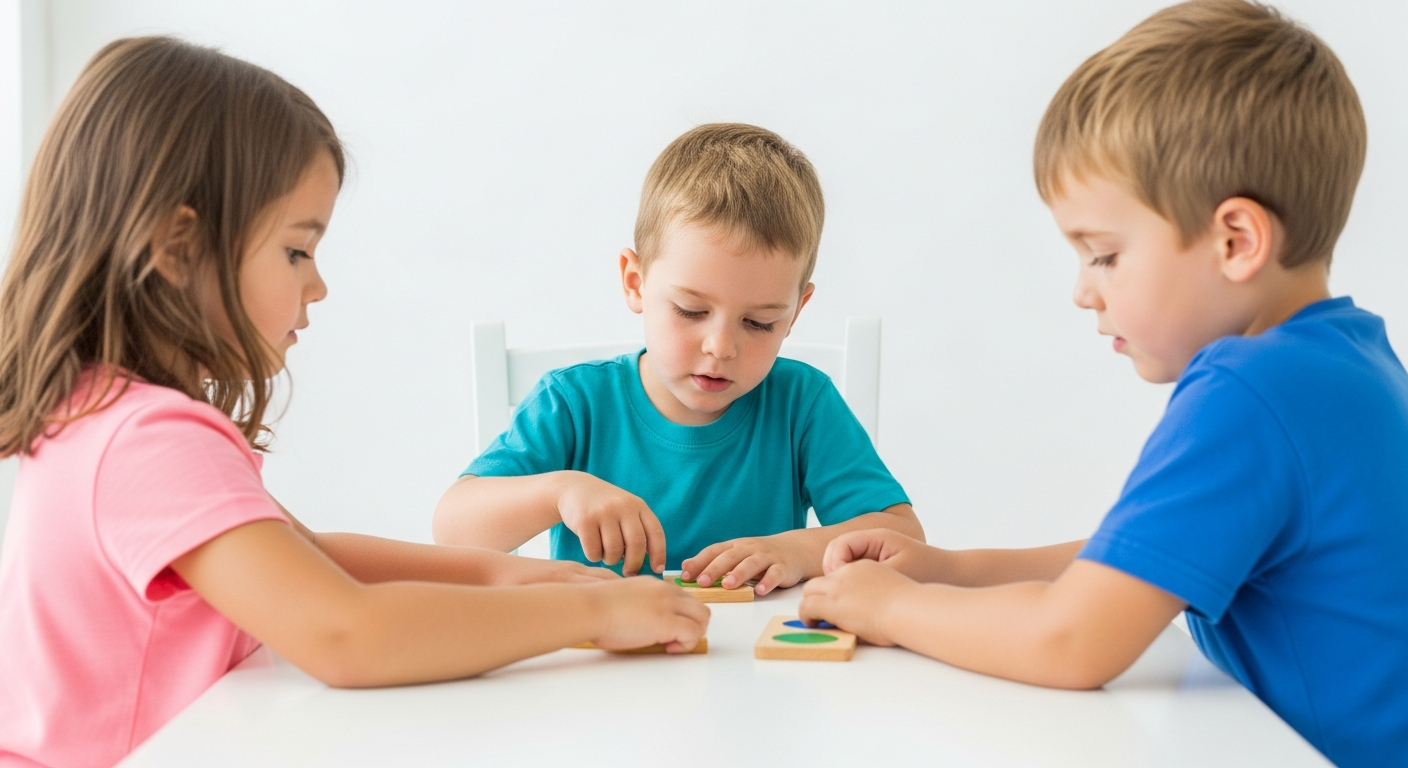
Table of Contents
- Introduction
- Why Play is the Foundation of Speech
- 1. Cause-and-Effect Toys: The First Step to Communication
- 2. Blocks and Stacking Toys: Building Vocabulary
- 3. Animal Farm Sets: Bringing Sounds to Life
- 4. Play Food and Kitchen Sets: The Magic of Pretend Play
- 5. Baby Dolls and Action Figures: Social-Emotional Language
- 6. Vehicles, Ramps, and Garages: Motion and Sound
- 7. Puzzles and Shape Sorters: Problem Solving and Logic
- 8. Drawing Boards and Art Supplies: Fine Motor and Creativity
- 9. Household Items: The "No-Cost" Learning Toys
- 10. "Smart Screen Time": Speech Blubs as a Modern Learning Tool
- How to Maximize the Value of Your Learning Tools
- Understanding the Investment: Monthly vs. Yearly Plans
- Realistic Expectations and the Power of Consistency
- Integrating Speech Blubs Into Your Routine
- Conclusion
- FAQ
Introduction
Have you ever spent hours waiting for that one magical moment—the moment your child finally looks at you and says "Mama," "Dada," or "Ball"? For parents of children with speech delays, that wait can feel like a lifetime, often filled with a mix of hope, anxiety, and a deep desire to help. While every child develops at their own pace, nearly 1 in 4 children will face challenges in communication during their early years. The good news is that you are your child's best teacher, and your home is the most powerful classroom they will ever have.

The secret to sparking those first words doesn't lie in expensive, high-tech gadgets that do the talking for the child. Instead, it lies in the simplicity of play. In this post, we will explore the best learning toys for speech delay, ranging from classic wooden blocks to innovative "smart screen time" tools. We’ll dive into why certain toys work, how to use them to elicit specific sounds, and how you can blend physical play with scientifically-backed digital tools to create a joyful, language-rich environment. Our mission at Speech Blubs is to empower children to speak their minds and hearts, and we believe that the right tools—paired with your loving interaction—can make all the difference.
Why Play is the Foundation of Speech
Before a child can say their first word, they must master several "pre-verbal" skills. These include imitation, joint attention (looking at the same thing you are), turn-taking, and understanding cause and effect. Think of these skills as the bricks that build the house of language. If the foundation isn't solid, the roof (speech) cannot stay up.
The best toys for speech delay are those that are "open-ended." This means they don't have just one way to be played with. When a toy is too "smart"—when it has dozens of buttons, flashing lights, and recorded voices—it often takes over the role of the communicator. If the toy is talking, your child doesn't have to. By choosing toys that require the child to be the "driver," we encourage them to make their own sound effects, request help, and narrate their actions.
At Speech Blubs, we understand this balance perfectly. Our founders grew up with speech problems themselves and created the tool they wished they had: a way to blend scientific principles with the joy of play. This "smart screen time" isn't a passive experience like watching cartoons; it’s an interactive journey that uses video modeling to encourage kids to mirror their peers.
1. Cause-and-Effect Toys: The First Step to Communication
For our youngest learners (birth to 18 months), speech therapy often starts with teaching them that their actions have consequences. This is the root of communication: "If I do something, I get a result."

Pop-Up Pals and Spinners
Toys where a child pushes a button or flips a switch to make a character pop up are gold for early language.
- How to use them: Hold the toy and wait. When your child looks at you or reaches for it, say "Open!" or "Pop!" as the character appears.
- Target words: "Open," "up," "more," "my turn," "surprise."
Bubbles
Is there any toy more universal than bubbles? They are a speech therapist's favorite tool because they are highly motivating.
- How to use them: Blow a few bubbles, then close the lid. Wait for your child to gesture or make a sound. You can model "Pop-pop-pop" or "More bubbles?" to encourage imitation.
- Target sounds: The "p" and "b" sounds (bilabials) are usually among the first a child masters because they can see your lips moving to make them.
2. Blocks and Stacking Toys: Building Vocabulary
Blocks are perhaps the most versatile of the best learning toys for speech delay. Whether they are wooden, soft, or interlocking, blocks provide a platform for teaching prepositions and "action" words.
The Power of "Uh-Oh"
One of the most effective play routines involves building a tall tower and then knocking it down.
- Scenario: Imagine a toddler who is a "late talker" but loves physical play. As you build the tower, you can say "Up... up... up..." with each block. When it's high enough, count "One, two, three... CRASH!" and then emphatically say "Uh-oh!" Children often find the "uh-oh" sound easy and fun to imitate because of its melodic tone.
Prepositions and Colors
Blocks allow you to model concepts like "on top," "under," and "beside." For a child who is starting to combine words, you can say, "Blue block on top" or "Put in the box." This helps them understand spatial relationships, which are crucial for following directions.
If you are unsure where your child stands in these developmental milestones, we recommend taking our 3-minute preliminary screener. It involves 9 simple questions and provides an assessment and next-steps plan to help you focus your play sessions.
3. Animal Farm Sets: Bringing Sounds to Life
Animal sounds are often the "gateway" to speech. For many children, saying "Moo" is much easier than saying "Cow." Animal sounds are fun, repetitive, and allow for a lot of expression.
The "Animal Kingdom" Connection
For a parent whose 3-year-old 'late talker' loves animals, the 'Animal Kingdom' section in Speech Blubs offers a fun, motivating way to practice 'moo' and 'baa' sounds. You can pair the app's video modeling with a physical farm set.
- The Strategy: Watch a peer in the app make a "meow" sound. Then, pick up your toy cat and do the same. This reinforces the sound through two different sensory channels—digital and physical.
- Target words: "Moo," "neigh," "oink," "eat," "sleep," "in the barn."
4. Play Food and Kitchen Sets: The Magic of Pretend Play
Around age two, children begin to engage in symbolic play—using one thing to represent another. This is a massive cognitive leap because words themselves are symbols for objects.
Real-Life Routines
A play kitchen allows children to reenact the routines they see every day. You can practice sequencing: "First we wash the apple, then we cut it, then we eat it."
- How to use them: Use "parallel talk." Instead of asking your child "What are you making?", simply narrate what they are doing: "You are stirring the soup. Mmm, it smells good. Oh, it's hot! Blow on it... f-f-f." This takes the pressure off the child to answer a question and provides a rich model of language.
5. Baby Dolls and Action Figures: Social-Emotional Language
Dolls and figures are excellent for teaching body parts and "social" language. They help children develop empathy and understand the perspective of others.
Target Vocabulary
- Body Parts: "Wash the baby's nose," "Where are the eyes?"
- Verbs: "Baby is sleeping," "Batman is jumping," "The doll is hungry."
- Social Skills: "Hi, friend," "Bye-bye," "Give a hug."
At Speech Blubs, we lean heavily into this peer-to-peer connection. Our scientific methodology is based on video modeling, where children watch other children perform these actions. Research shows that children are much more likely to imitate a peer than an adult. This "Smart Screen Time" acts as a powerful supplement to your physical doll play.
6. Vehicles, Ramps, and Garages: Motion and Sound
Cars and trucks are high-energy toys that naturally elicit "exclamatory" sounds. Sounds like "Vroom," "Beep-beep," and "Whee!" are perfect for children who are still working on vocalizing.
The "Ready, Set, Go" Routine
This is one of the most effective ways to encourage a child to use their voice.
- The Routine: Hold a car at the top of a ramp. Say "Ready... Set..." and then PAUSE. Look at your child with anticipation. Wait for them to make any sound or gesture before you say "GO!" and let the car zoom down. This teaches them that their voice has the power to start the fun.
7. Puzzles and Shape Sorters: Problem Solving and Logic
Simple wooden puzzles with knobs or shape sorters help children learn the names of common objects, shapes, and colors.
Managing Frustration
Speech delays often come with a side of frustration because the child knows what they want but can't express it.
- Scenario: If your child is struggling to fit a square into a hole, this is a "communication temptation." Don't fix it immediately. Wait for them to look at you, then model the word "Help" or "Turn." This teaches them that language is a tool to solve problems and reduce frustration.
8. Drawing Boards and Art Supplies: Fine Motor and Creativity
Crayons, sidewalk chalk, and magnetic drawing boards are wonderful for "descriptive" language. As your child scribbles, you can talk about what they are creating.
Expanding on Their Utterances
If your child draws a circle and says "Ball," you can expand on that: "Yes, a big, red ball!" This strategy, known as "recasting," takes what the child said and adds one or two more words to it, showing them how to build longer sentences.
9. Household Items: The "No-Cost" Learning Toys
You don't need a huge budget to find the best learning toys for speech delay. Often, the items in your kitchen pantry are more interesting to a toddler than anything in a toy store.
- Empty Boxes: A box can be a "car," a "house," or a "hat." It encourages symbolic play and the word "In."
- Metal Spoons and Pots: These are great for "loud" and "quiet" concepts and rhythm.
- Junk Mail: Sorting "letters" into a "mailbox" (an old shoe box) is a fantastic way to practice sequencing and prepositions.
10. "Smart Screen Time": Speech Blubs as a Modern Learning Tool
While physical toys are essential, we live in a digital age. The challenge for parents is finding quality content that isn't just "brain rot" cartoons. Speech Blubs was designed by experts to be a screen-free alternative to passive viewing. It’s a tool for family connection, meant to be used together.
The Peer-Led Approach
Our app features over 1,500 activities that use peer-led video modeling. When your child sees another child making a "fish face" or saying "Apple," their mirror neurons fire, making them much more likely to try it themselves. It’s effective, joyful, and backed by science.
To see how we’ve helped thousands of families, you can read reviews from other parents who have seen their children's confidence grow through our app.
How to Maximize the Value of Your Learning Tools
Choosing the best learning toys for speech delay is only half the battle. The other half is how you use them. Here are some expert tips to keep in mind:
1. Follow Their Lead
If you want to play with the farm but your child is fascinated by a cardboard box, play with the box! Children are much more likely to communicate when they are genuinely interested in the activity.
2. Simplify Your Language
Use the "One-Up Rule." If your child isn't talking yet, use single words ("Ball," "Go"). If they are using single words, use two-word phrases ("Big ball," "Go car"). This makes the "target" achievable for them.
3. Use "Smart" Reinforcement
When your child makes an attempt to speak, celebrate it! It doesn't have to be a perfect word. A "ba" for "ball" is a victory.
If you're ready to add a powerful tool to your child's development plan, we invite you to Create your account and begin your 7-day free trial today.
Understanding the Investment: Monthly vs. Yearly Plans
We want to be transparent about how we support your journey. While we offer a variety of ways to engage, our plans are designed to provide long-term value for your child’s progress.
- Monthly Plan: For $14.99 per month, you get full access to the Speech Blubs app. This is a great "pay-as-you-go" option for families who want to test the waters.
- Yearly Plan: This is our most popular and highest-value option. At $59.99 per year, the cost breaks down to just $4.99 per month—a 66% savings compared to the monthly plan.
Why Choose the Yearly Plan?
The Yearly plan isn't just about saving money; it’s about providing a comprehensive learning suite. When you choose the Yearly plan, you receive:
- A 7-Day Free Trial: Explore everything we offer before committing.
- Reading Blubs: Access to our companion app designed to build early literacy and phonics skills.
- Priority Support: 24-hour response time from our dedicated support team.
- Early Access: Be the first to try new updates and features.
The Monthly plan does not include the free trial, Reading Blubs, or early access features. To give your child the full suite of "smart screen time" tools, we highly recommend the Yearly option. You can Download Speech Blubs on the App Store or find Speech Blubs on Google Play to get started.
Realistic Expectations and the Power of Consistency
It’s important to remember that every child's journey is unique. We aren't here to promise that your child will be giving public speeches in a month. Speech development is a marathon, not a sprint. The goal of using the best learning toys for speech delay, including Speech Blubs, is to foster a love for communication, build foundational skills, and reduce the frustration that comes with being misunderstood.
By creating joyful family learning moments, you are building your child's confidence. Whether you are playing with physical blocks or using our video modeling exercises, the key is consistency and co-play. Your engagement is what makes these tools work.
Integrating Speech Blubs Into Your Routine
How do you fit "smart screen time" into a busy day? It doesn't have to be a long session. 10 to 15 minutes of focused, interactive play can be incredibly effective.
- Morning Routine: Use the 'Daily Routine' section of the app while your child is getting dressed to practice words like "socks," "shirt," and "shoes."
- Playtime: Use the 'Animal Kingdom' section alongside your physical farm toys.
- Quiet Time: Before bed, use the 'Bedtime' section to wind down and practice calming sounds.
Our app is a powerful supplement to professional therapy and an overall development plan. It’s about making the most of the time you have together.
Conclusion
Helping a child find their voice is one of the most rewarding challenges a parent can face. By choosing the best learning toys for speech delay—those that encourage interaction, imitation, and imagination—you are giving your child the keys to the world. From the simple joy of bubbles to the scientifically-backed video modeling of Speech Blubs, every "smart" choice you make brings them one step closer to speaking their mind and heart.
We believe that every child deserves the chance to be heard. Our tool was born from personal experience and a desire to provide a joyful solution for the millions of children who need a little extra support.
Ready to begin? We encourage you to choose our Yearly plan to unlock the full suite of features, including Reading Blubs and your 7-day free trial. It’s the best value for your family and the most comprehensive way to support your child’s growth. Download Speech Blubs on the App Store or Google Play Store today and let’s start this journey together!
FAQ
1. Can toys really help with a speech delay? Yes! Toys are the tools children use to learn about the world. Open-ended toys like blocks, dolls, and farm sets encourage imitation, problem-solving, and symbolic play, which are the essential building blocks for language development. When you play with your child, you provide the linguistic model they need to start using words.
2. Is screen time bad for a child with a speech delay? Not all screen time is created equal. Passive viewing, like watching fast-paced cartoons, doesn't require the child to interact. However, "smart screen time" like Speech Blubs is designed to be interactive. It uses peer-led video modeling to encourage children to vocalize and mirror the sounds they see, making it a productive part of a child's learning routine.
3. What is the best age to start using speech therapy toys? It's never too early! For babies, cause-and-effect toys and books are great. As children move into the toddler years (18 months+), you can introduce more complex pretend play toys and digital tools like Speech Blubs to support their growing vocabulary and social skills.
4. How long should I play with my child each day to see progress? Consistency is more important than duration. Aim for 15–20 minutes of dedicated "floor time" play and 10–15 minutes of interactive "smart screen time" daily. Focus on following your child's lead and keeping the atmosphere joyful and low-pressure.
Sobre el autor