
Effective Speech Delay Programs for Your Child’s Success
 Por Speech Blubs Team•5 mar 2026•14 min.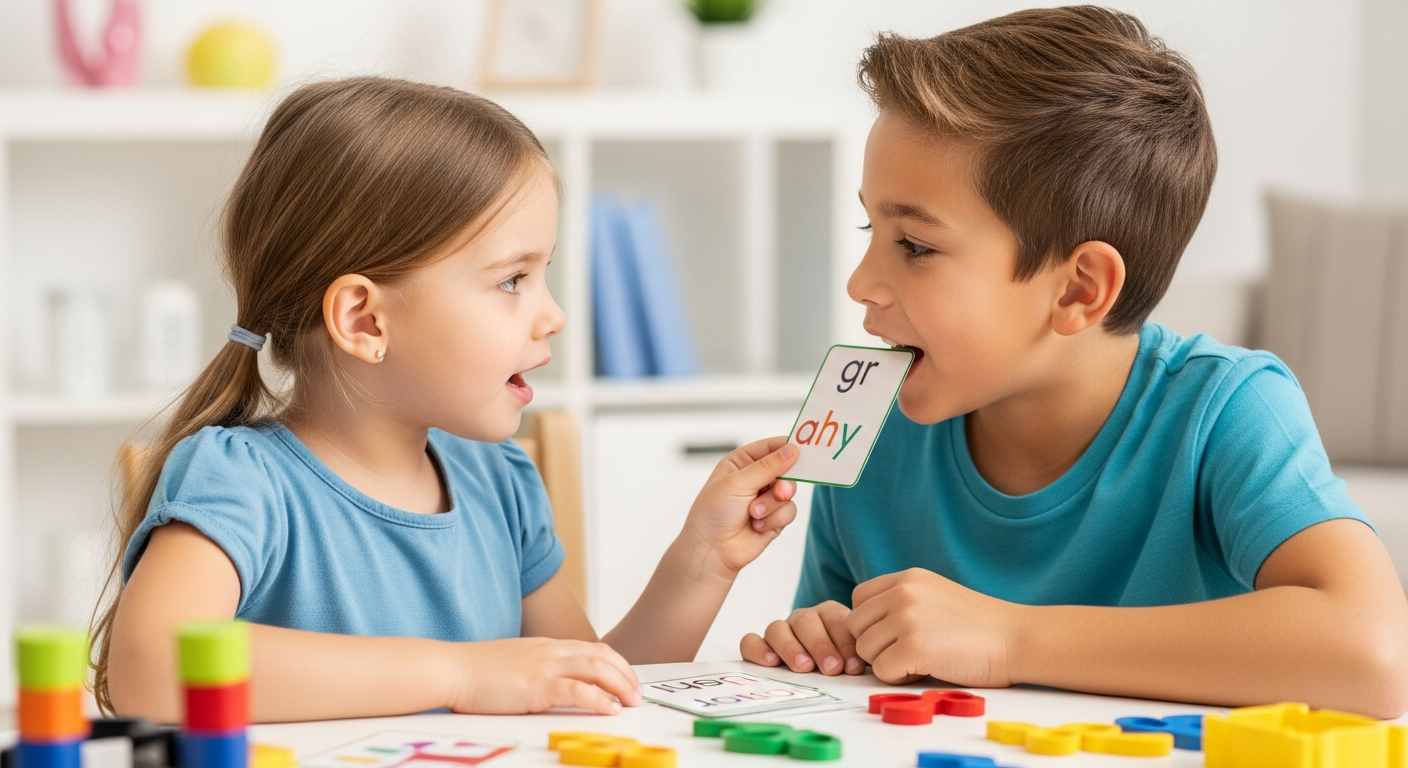
Table of Contents
- Introduction
- Understanding Speech and Language Delays
- The Different Types of Speech Delay Programs
- Why Speech Blubs is a Unique Solution
- Practical Scenarios: How Programs Work in Real Life
- Choosing the Right Plan for Your Family
- Supplementing Professional Therapy
- Tips for Parents Navigating Speech Delay Programs
- The Importance of Realistic Expectations
- Frequently Asked Questions
- Conclusion
Introduction
Have you ever found yourself watching other children at the park, noticing how they effortlessly chatter away, while your own little one relies mostly on gestures or a few repeated sounds? It is a common moment of quiet concern for many parents. In fact, research suggests that nearly 1 in 4 children will face some form of speech or language challenge during their early development. This realization often leads to a flurry of questions: Is my child just a "late talker"? Should I be worried? What kind of speech delay programs are actually effective?
The purpose of this article is to provide you with a comprehensive understanding of the landscape of speech delay programs available today. We will explore the various types of interventions—from state-funded early services to clinical therapies and innovative digital tools—and help you identify which path might be the best fit for your family’s unique needs. We’ll also dive into how we at Speech Blubs use scientific principles like video modeling to transform screen time into a powerful learning experience.

Our goal is to move beyond the "wait and see" approach. By the end of this post, you will have a clear roadmap for supporting your child’s communication journey, building their confidence, and fostering a deeper connection through the joy of speech. We believe that every child deserves the opportunity to speak their mind and heart, and the right program can make all the difference.
Understanding Speech and Language Delays
Before diving into specific programs, it is essential to understand what we mean when we talk about a speech delay. While the terms "speech" and "language" are often used interchangeably, they refer to different aspects of communication.
Speech vs. Language: What's the Difference?
Speech refers to the actual physical act of producing sounds. This includes articulation (how we form sounds), voice (using the vocal folds and breath to produce sound), and fluency (the rhythm of our speech). A child with a speech delay might struggle to make specific letter sounds or might have difficulty being understood by others.
Language, on the other hand, is a much broader system of symbols and rules. It involves "receptive language"—the ability to understand what others are saying—and "expressive language"—the ability to use words, gestures, and sentences to share thoughts and feelings. A child might have perfect articulation but still struggle with a language delay if they cannot follow simple directions or put together short sentences.
Common Signs to Look For
Every child develops at their own pace, but there are certain milestones that serve as helpful markers. If you notice your child isn't babbling by 12 months, hasn't used their first words by 18 months, or isn't putting two words together by age two, it may be time to look into speech delay programs.
Early identification is the most powerful tool in your arsenal. The sooner a child receives support, the more effectively they can build the foundational skills necessary for social and academic success later in life. If you are feeling uncertain, you can take our quick 3-minute preliminary screener to get a simple assessment and a personalized next-steps plan.

The Different Types of Speech Delay Programs
Navigating the world of therapy can feel overwhelming. Depending on your child's age, your location, and your specific goals, you might encounter several different types of programs.
1. State-Funded Early Intervention (Part C)
In the United States, every state and territory offers a publicly funded program known as Early Intervention. These services are specifically designed for infants and toddlers from birth to age three.
- How it works: If a child is found eligible after a free evaluation, a team of professionals works with the family to create an Individualized Family Service Plan (IFSP).
- The Focus: These programs are often "naturalistic," meaning therapy happens in the child’s natural environment, such as your home or daycare. The goal is to integrate learning into everyday routines like mealtime or bath time.
- Cost: These services are often provided at little to no cost to families, depending on the state’s specific rules.
2. Clinic-Based Private Therapy
Many families choose to seek out private Speech-Language Pathologists (SLPs) through hospitals, specialized clinics, or private practices.
- Individualized Attention: Private therapy allows for intensive, one-on-one sessions tailored specifically to your child’s diagnosis, whether it is an articulation disorder, apraxia of speech, or a receptive language delay.
- Specialized Techniques: Clinics may offer specific methodologies, such as tactile-kinesthetic approaches where the therapist uses touch cues on the child's face to guide speech movements, or auditory feedback tools that help a child hear their own voice more clearly.
3. School-Based Programs (Age 3+)
Once a child turns three, the responsibility for speech services typically shifts from the state’s early intervention office to the local school district. Even if your child does not attend public preschool, they may still be eligible for services through a program often called "Child Find." If eligible, the child will receive an Individualized Education Program (IEP) that outlines specific speech goals to be addressed during the school year.
4. Digital Intervention and "Smart Screen Time"
In recent years, technology has opened up new avenues for speech support. While many parents are wary of the "passive" screen time associated with cartoons, digital speech delay programs—like Speech Blubs—offer a proactive, "smart" alternative. These tools are designed to supplement professional therapy and provide families with a way to practice skills at home in a fun, engaging way.
Why Speech Blubs is a Unique Solution
We didn’t just set out to make another app; we set out to create the tool we wished we had when we were children. Speech Blubs was born from the personal experiences of our four founders, all of whom grew up with speech problems. They understood firsthand the frustration of not being able to communicate and the joy of finally finding their voice.
The Power of Video Modeling
At the heart of our methodology is something called "video modeling." Scientific research shows that children learn best by watching their peers. Our app features over 1,500 activities where children watch videos of other kids—not adults or cartoons—performing speech exercises, making animal sounds, and using new words.
This approach triggers "mirror neurons" in a child’s brain. When a child sees another child successfully making a sound, their brain reacts as if they are making the sound themselves, which builds the confidence needed to try it out loud. It’s a joyful, peer-led experience that feels like play rather than work.
"Our mission is to empower children to speak their minds and hearts. We provide a screen-free alternative to passive viewing and a powerful tool for family connection."
Fostering Family Connection
We believe that the best learning happens when parents and children play together. Unlike traditional apps that you might hand to a child to keep them quiet, Speech Blubs is designed for co-play. Whether you are practicing "lion breaths" or learning the names of different fruits, these moments create joyful family learning experiences that reduce the frustration often associated with speech delays.
To see how this has worked for thousands of other families, you can read what other parents are saying about their child's progress.
Practical Scenarios: How Programs Work in Real Life
To understand how these programs can be applied, let’s look at a few relatable scenarios.
The Animal Lover
For a parent whose 3-year-old "late talker" loves animals, the "Animal Kingdom" section of Speech Blubs offers a fun, motivating way to practice "moo" and "baa" sounds. Instead of feeling pressured to "say the word," the child is invited to imitate a peer on the screen making a funny face and a loud animal sound. This reduces the pressure and turns a therapy goal into a game.
The Active Toddler
If your child is constantly on the move, traditional "sit-down" therapy can be a challenge. Naturalistic speech delay programs focus on incorporating language into movement. An SLP might encourage you to use words like "up," "down," "stop," and "go" while your child is on the swing or slide. This helps the child associate language with physical sensations and actions, making the words more meaningful.
Building Foundational Skills
Many children struggle with the physical coordination required for speech. Programs that incorporate oral-motor exercises—like blowing bubbles or making silly faces in the mirror—help strengthen the muscles in the jaw, lips, and tongue. When a child has better control over these muscles, they are better equipped to produce clear, intelligible speech.
Choosing the Right Plan for Your Family
We are committed to being a long-term partner in your child's development. To make our "smart screen time" accessible, we offer two primary subscription options:
- Monthly Plan: For $14.99 per month, you get full access to all the speech-boosting activities within the app.
- Yearly Plan: For $59.99 per year, which breaks down to just $4.99 per month, you receive the best value for your child’s progress.
Why the Yearly Plan is the clear choice:
- 7-Day Free Trial: You can try the full experience for a week at no cost to ensure it’s the right fit for your child.
- Reading Blubs Included: You get access to our sister app, Reading Blubs, designed to bridge the gap between speech and literacy.
- Exclusive Benefits: Yearly subscribers receive early access to new updates and a guaranteed 24-hour response time from our support team.
- Consistency: Language development is a journey, not a sprint. The yearly plan ensures your child has the consistent support they need to build lasting skills.
Ready to start? Download Speech Blubs on the App Store or find us on the Google Play Store to begin your journey today.
Supplementing Professional Therapy
It is important to remember that while digital tools are incredibly effective, they are most powerful when used as a supplement to overall development and, when necessary, professional therapy.
We don't promise that your child will be giving public speeches in a month. Instead, we focus on the real, meaningful benefits of the process:
- Fostering a genuine love for communication.
- Building the confidence to try new sounds.
- Reducing the frustration that comes from not being understood.
- Developing key foundational skills in a low-pressure environment.
Our method is backed by science, placing us in the top tier of speech apps worldwide with a high MARS (Mobile App Rating Scale) score. By combining the expertise of an SLP with the daily engagement of a fun, peer-led app, you give your child the "best of both worlds."
Tips for Parents Navigating Speech Delay Programs
While choosing a program is a major step, your role as a parent remains the most significant factor in your child's success. Here are a few ways to support their progress every day:
1. Follow Their Lead
Pay attention to what your child is interested in. If they are playing with cars, talk about the cars. If they are focused on a bug on the sidewalk, talk about the bug. When you follow their lead, they are naturally more motivated to communicate because the topic is already meaningful to them.
2. Narrate Your Day
Think of yourself as a sports commentator for your child's life. "I am putting on my blue socks. Now I am tying my shoes. Let's go outside!" This constant exposure to language helps them build their receptive vocabulary and understand the connection between words and actions.
3. Face-to-Face Interaction
When you speak to your child, try to get down on their level so they can see your face and mouth. This allows them to observe how you form sounds, which is the natural version of the video modeling we use in our app.
4. Celebrate Every Win
No matter how small, every new sound, gesture, or word is a victory. Celebrating these moments builds your child's confidence and makes them want to keep trying.
The Importance of Realistic Expectations
As you explore various speech delay programs, it’s vital to maintain realistic expectations. Progress in speech and language development is rarely a straight line. You might notice "bursts" of new words followed by periods of relative quiet. This is completely normal.
The goal of any program should be to create a supportive environment where your child feels safe to take risks. Whether you are using a state-funded program, visiting a private clinic, or using Speech Blubs at home, the focus should always be on the joy of connection.
If you're ready to see how a joyful approach can change your child's communication, you can create your account and begin your 7-day free trial today.
Frequently Asked Questions
1. How do I know if my child needs a speech delay program? If your child isn't meeting standard communication milestones—such as using gestures by 12 months or combining words by 24 months—it’s a good idea to seek an evaluation. You can start by talking to your pediatrician or using a preliminary screener to gauge their current skills.
2. Is "smart screen time" really effective for speech? Yes, when the screen time is active and educational. Unlike passive viewing, our app uses video modeling to encourage children to vocalize and interact. This peer-to-peer learning is a proven scientific method that helps children learn by imitation.
3. Can I use Speech Blubs instead of a Speech-Language Pathologist? Speech Blubs is a powerful tool designed to support and supplement your child’s development. While it provides effective and joyful practice, it is not a replacement for professional therapy if your child has a diagnosed disorder. Many families find that using our app alongside professional sessions leads to faster progress and less frustration.
4. What is the best way to use the app with my child? We recommend co-playing! Sit with your child, watch the "Blubers" (the kids in the videos) together, and mirror the sounds and faces they make. This turns learning into a bonding activity and helps reinforce the skills your child is seeing on the screen.
Conclusion
Finding the right speech delay programs can feel like a daunting task, but remember that you are your child's greatest advocate. Whether you choose to pursue state-funded early intervention, private clinical therapy, or supplement your journey with digital tools, the most important step is simply getting started. Early support is the key to helping your child overcome challenges and build the confidence they need to interact with the world around them.
At Speech Blubs, we are honored to be part of that journey. Our mission to help children "speak their minds and hearts" is at the core of everything we do, from our scientifically-backed video modeling to our commitment to creating "smart screen time" that families truly enjoy. We understand the hurdles because we’ve been there ourselves, and we are here to provide an immediate, effective, and joyful solution for the 1 in 4 children who need a little extra help.
Don’t wait for the "perfect" moment to begin. You can give your child a head start today by downloading the app and starting your 7-day free trial. For the best value and access to all our premium features—including Reading Blubs and 24-hour support—be sure to select the Yearly plan.
Download Speech Blubs on the App Store or the Google Play Store today. Let's work together to help your child find their voice and share their beautiful heart with the world.
Sobre el autor