
Is Speech Delay Genetic? Understanding the Science Behind Your Child’s Voice
 Por Speech Blubs Team•5 mar 2026•14 min.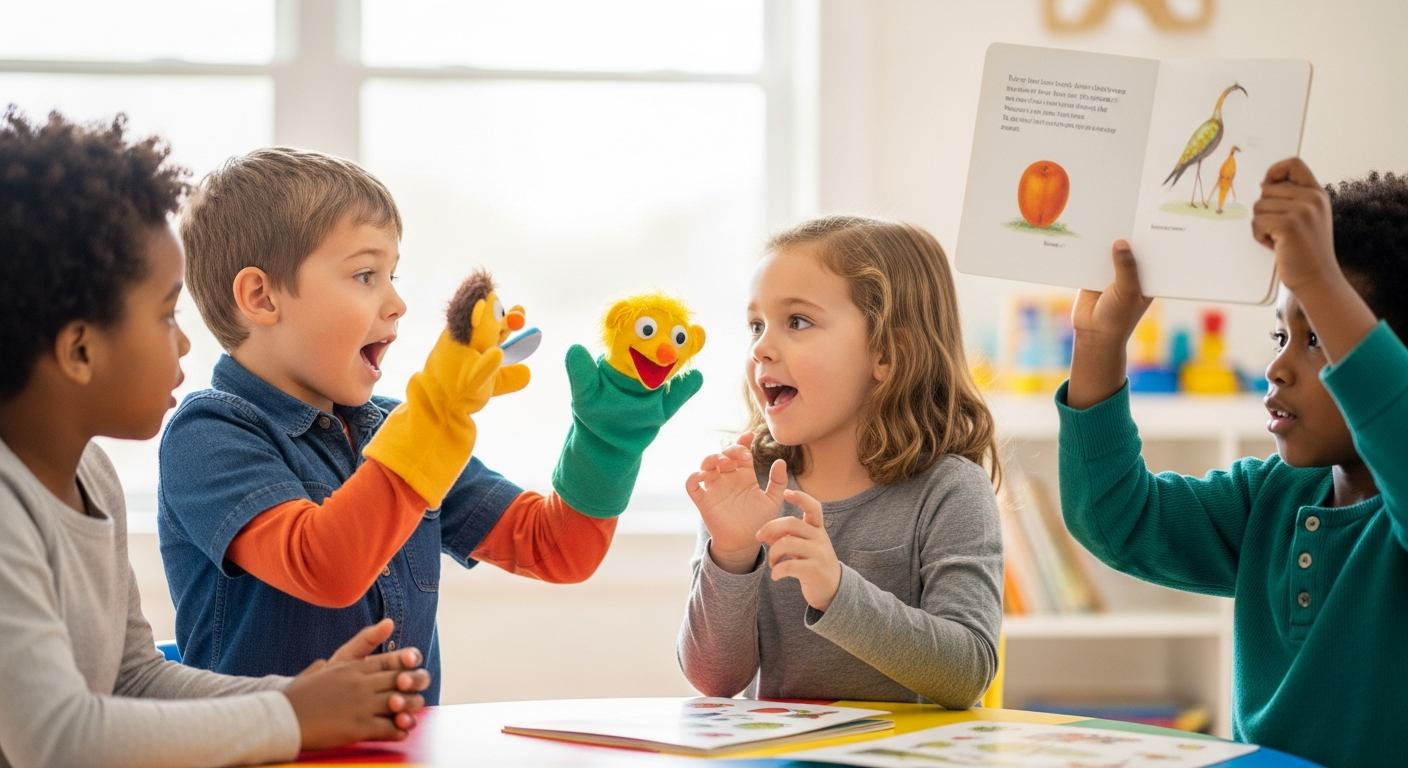
Table of Contents
- Introduction
- The Science of Inheritance: Is Speech Delay Genetic?
- Common Hereditary Speech and Language Disorders
- The Interplay Between Nature and Nurture
- Why Understanding Genetics Matters for Parents
- How Speech Blubs Supports Children with Genetic Predispositions
- Practical Steps for Parents: Navigating the Journey
- Choosing the Right Plan for Your Family
- Real Stories: Families Finding Their Voice
- Conclusion: Embracing the Process
- FAQ
Introduction
Did you know that nearly 1 in 4 children will require some form of speech or language support during their early years? If you have ever looked at your child and wondered why they aren't hitting their communication milestones as quickly as their peers, you are certainly not alone. Many parents find themselves scrolling through baby books and medical websites, asking the same fundamental question: Is speech delay genetic?
At Speech Blubs, we talk to thousands of parents every day who are navigating this exact journey. We understand the mix of concern, love, and determination you feel because our founders walked this path themselves. Growing up with speech challenges, they created the very tool they wished they had as children—a platform designed to help every child "speak their minds and hearts."

In this comprehensive guide, we are going to dive deep into the fascinating world of genetics and speech development. We will explore how much of a child's talking ability is inherited from mom and dad, which specific genes are linked to communication, and how environmental factors play a role. Most importantly, we will discuss how early intervention and "smart screen time" can empower your child to overcome these hurdles and find their unique voice. Whether you are dealing with a family history of "late talkers" or are simply looking for ways to boost your child’s confidence, understanding the biological blueprint of language is the first step toward progress.
The Science of Inheritance: Is Speech Delay Genetic?
When we think of genetics, we often think of physical traits like eye color, height, or the shape of a nose. However, scientific research has increasingly shown that our DNA also provides the instructions for more complex neurological processes, including how we perceive sounds and coordinate the muscles used for speech.
The Family Tree Connection
Significant evidence now links genetic factors to a wide variety of speech and language difficulties. Studies involving twins and large family groups have shown that if one family member has a speech or language disorder, there is a much higher probability that other members will as well. In fact, research suggests that as many as 50% to 70% of children diagnosed with a Specific Language Impairment (SLI) have at least one close family member who struggled with the same or a similar issue.
This genetic link works similarly to how a family might have a predisposition for high blood pressure or diabetes. You don't necessarily inherit a "guaranteed" disorder; rather, you inherit a susceptibility. This means that while the genetic blueprint is there, other factors—like the environment and early intervention—can significantly influence the final outcome.
Key Genes Involved in Speech
Researchers have identified several specific genes that appear to act as the "building blocks" for communication. Understanding these can help demystify why some children struggle more than others:

- FOXP2: This was the first gene identified specifically in relation to speech and language. It is often referred to as the "speech gene" because it plays a crucial role in motor planning—essentially, telling the brain how to coordinate the movements of the mouth and tongue to produce clear sounds.
- CNTNAP2: Located on chromosome 7, variants in this gene have been linked to a range of neurodevelopmental conditions and can impact a child’s performance across various linguistic measures.
- GNPTAB: Mutations in this gene have been specifically implicated in cases of familial stuttering, highlighting that even fluency has a biological component.
If you are concerned about your child's progress and want to see where they stand, we recommend taking our quick 3-minute preliminary screener. It involves 9 simple questions and provides an assessment and a next-steps plan to help you move forward with confidence.
Common Hereditary Speech and Language Disorders
When we ask if speech delay is genetic, it helps to look at the specific types of disorders that frequently run in families. Recognizing these patterns early can be a game-changer for a child’s development.
Specific Language Impairment (SLI)
SLI is a communication disorder that interferes with the development of language skills in children who otherwise have normal hearing and intelligence. It can affect how a child speaks, listens, reads, and writes. Because the genetic component is so strong in SLI, parents who remember struggling in school themselves often see similar patterns in their children.
Childhood Apraxia of Speech (CAS)
Apraxia is a motor speech disorder where the brain has trouble directing the muscles to make the precise movements required for speech. Unlike other delays, a child with CAS knows what they want to say, but the "wiring" between the brain and the mouth is interrupted. Specific mutations, particularly in the FOXP2 gene, have been identified in families with a history of CAS.
Stuttering and Fluency
While environmental stress can certainly impact stuttering, the foundational "glitch" in speech fluency often has a genetic root. If a parent or uncle stutters, a child is more likely to experience similar challenges. Recent studies have identified rare genetic changes that help explain why some children find it harder to maintain a smooth flow of speech.
Speech-Sound Disorders
These involve difficulties in producing specific letter sounds or phonological patterns. If a child consistently swaps "w" for "r" or struggles with complex consonant blends beyond a certain age, it may be part of an inherited phonological processing issue.
The Interplay Between Nature and Nurture
While DNA provides the blueprint, the environment provides the materials to build the house. It is rarely a case of "only genetics" or "only environment." Instead, speech development is a complex dance between the two.
Environmental Risk Factors
Even if a child has a genetic predisposition for speech delay, several environmental factors can influence the severity of the delay:
- Lack of Stimulation: Children learn to talk by being talked to. A language-rich environment—one where parents read, sing, and engage in constant conversation—can often help a child "buffer" against genetic risks.
- Hearing Issues: Chronic ear infections or undiagnosed hearing loss during the critical windows of development can significantly set a child back, regardless of their genetic potential.
- Passive Screen Time: We often distinguish between "passive" and "smart" screen time. Passive viewing, like mindlessly watching cartoons, doesn't require a child to interact or practice sounds. This is why we created Speech Blubs as a "smart" alternative that encourages active participation.
Medical and Developmental Factors
Sometimes, speech delay is a symptom of a broader medical condition. Premature birth, low birth weight, or conditions like Down Syndrome and Fragile X Syndrome have clear genetic causes and often include speech delay as a primary feature. In these cases, the speech delay is part of a larger developmental picture that requires a holistic approach to therapy and support.
Why Understanding Genetics Matters for Parents
Knowing that a speech delay might be genetic shouldn't be a source of guilt—in fact, it should be a source of empowerment.
Avoid the "Blame Game"
Many parents feel a sense of responsibility if they "passed on" a speech struggle. At Speech Blubs, we want you to know that this is nobody's fault. You didn't choose your DNA, and neither did your child. Instead of focusing on the cause, focus on the solution. By recognizing the genetic link, you are actually giving your child an advantage through early detection.
Being Proactive, Not Reactive
If you know that speech issues run in your family, you can start monitoring your child’s milestones earlier. You don't have to wait for them to "fall behind" before you act. Early intervention is the most effective way to support a child's brain while it is still highly "plastic" and capable of rapid change.
"Our mission is to empower children to speak their minds and hearts. By blending scientific principles with play, we provide a joyful solution for the 1 in 4 children who need speech support."
How Speech Blubs Supports Children with Genetic Predispositions
Traditional speech therapy is wonderful, but it often happens only once a week for 30 minutes. What happens the rest of the time? This is where Speech Blubs comes in as a powerful supplement to your child's overall development plan.
The Power of Video Modeling
Our app is built on a scientifically proven methodology called video modeling. In our experience—and according to extensive research—children learn best by watching and imitating their peers.
In Speech Blubs, your child won't see a cartoon character; they will see real children making real sounds. When a child sees a peer saying "Apple," their mirror neurons fire, making it much more likely they will try to imitate that sound themselves. This peer-to-peer connection is especially effective for children with genetic speech-sound disorders or apraxia, as it provides a clear, visual roadmap for how to move their mouth.
From Passive Viewing to Smart Screen Time
We know that parents are often worried about screen time. That’s why we designed Speech Blubs to be the opposite of a passive cartoon. It is an interactive, joyful experience that requires the child to engage. Whether they are practicing "moo" sounds in the "Animal Kingdom" section or learning new words in "Early Sounds," they are actively building communication skills.
For a parent whose 2-year-old is a "late talker" and loves fire trucks, the "Beep Beep" section of the app provides a motivating way to practice those initial sounds while playing with something they love. This turns "work" into "play," reducing frustration for both the child and the parent.
Building Confidence and Reducing Frustration
When a child struggles to communicate due to genetic factors, they often become frustrated. This can lead to behavioral issues. By providing a low-pressure, fun way to practice at home, Speech Blubs helps build the foundational skills that lead to confidence. Every small win—every new sound or word—is a step toward that joyful moment when they can finally tell you how they feel.
Practical Steps for Parents: Navigating the Journey
If you suspect your child’s speech delay might have a genetic component, here is a practical roadmap to help you navigate the next steps:
- Consult Your Pediatrician: Start by sharing your concerns and your family history. Be specific about any relatives who had speech delays, stuttering, or learning disabilities.
- Get a Hearing Test: Always rule out physical barriers first. Even a minor hearing loss can mimic the signs of a genetic speech delay.
- Use the Screener: Use our preliminary screener to get a baseline understanding of your child's needs.
- Incorporate "Smart Screen Time": Start using tools like Speech Blubs for 10-15 minutes a day. Remember to co-play! Sit with your child, mirror the sounds the children on the screen are making, and celebrate every attempt they make.
- Seek Professional Therapy: If the delay persists, a Speech-Language Pathologist (SLP) is an invaluable resource. Apps like Speech Blubs are designed to work alongside professional therapy, providing a way to practice the skills learned in sessions at home.
Choosing the Right Plan for Your Family
We are committed to making effective speech support accessible to every family. To get the most out of Speech Blubs and ensure your child has the best resources at their fingertips, we offer two primary subscription options.
The Yearly Plan: Our Best Value
The Yearly Plan is the clear favorite for families committed to long-term progress. At $59.99 per year, it breaks down to just $4.99 per month—a savings of 66% compared to the monthly option.
When you choose the Yearly Plan, you receive:
- A 7-day free trial to explore all the features.
- The extra Reading Blubs app, helping your child bridge the gap between speaking and reading.
- Early access to new updates and features.
- 24-hour support response time from our dedicated team.
The Monthly Plan
For families who prefer a short-term commitment, we offer a Monthly Plan at $14.99 per month. Please note that the monthly plan does not include the 7-day free trial, the Reading Blubs app, or the priority support features.
Ready to start? You can download Speech Blubs on the App Store or get it on Google Play today.
Real Stories: Families Finding Their Voice
We have seen thousands of success stories where children, despite a strong family history of speech delay, have made incredible strides. One parent shared that her son, who has a genetic predisposition for apraxia, barely spoke a word until age three. After three months of using Speech Blubs alongside his weekly therapy, he began imitating the children in the app and eventually started saying "I love you" to his parents.
You can read more about these heartwarming journeys on our testimonials page. These stories remind us that while genetics might set the stage, the story isn't over. With the right support, every child has the potential to thrive.
Conclusion: Embracing the Process
Is speech delay genetic? The answer is often yes, but it is only one part of your child's story. Genetic predispositions are simply a signal to start early and provide extra support. By understanding the role of DNA, you can remove the weight of guilt and replace it with a proactive plan.
At Speech Blubs, we believe in the power of joyful learning. We aren't here to promise overnight miracles; we are here to provide a scientifically backed, fun, and engaging tool that helps your child build the foundational skills they need. Our goal is to foster a love for communication, reduce the daily frustration that comes with speech delays, and create moments of connection for your whole family.
Don’t wait for your child to "grow out of it." Every day is an opportunity for a new sound, a new word, and a new bit of confidence. Ready to take the first step?
Start your 7-day free trial today by signing up on our website or by downloading the app on the Apple App Store or Google Play Store. We highly recommend choosing the Yearly Plan to unlock the full suite of features, including Reading Blubs and priority support, for the best possible value. Let’s help your child speak their mind and heart, together.
FAQ
1. If I had a speech delay as a child, will my baby definitely have one too? Not necessarily. While having a parent with a history of speech delay increases the statistical likelihood (predisposition), it is not a guarantee. Genetics is only one piece of the puzzle, and environmental factors, such as early stimulation and "smart screen time," can significantly influence your child’s development.
2. Can genetic testing diagnose the exact cause of my child's speech delay? In some cases, yes. Genetic testing can identify mutations in genes like FOXP2 or reveal syndromes like Fragile X or 22q11.2 deletion. However, many speech delays are "multifactorial," meaning they result from a complex mix of many different genes and environmental factors that cannot always be narrowed down to a single DNA change.
3. Is there a "speech gene" that I can be tested for? The FOXP2 gene is the most famous gene associated with speech, but it is not the only one. Scientists have identified hundreds of genes that play a role in how we develop communication skills. Rather than looking for one single gene, doctors often look at the whole clinical picture, including motor skills and family history.
4. Can Speech Blubs help if my child’s speech delay is caused by a genetic condition like Down Syndrome? Yes! While Speech Blubs is not a "cure" for genetic conditions, it is a powerful supplemental tool. Children with Down Syndrome or other genetic conditions often benefit greatly from the video modeling and peer-to-peer imitation used in the app, as it provides clear visual cues and a fun, repetitive way to practice sounds at their own pace.
Sobre el autor