
Recognizing and Supporting Speech Delay in Infants
 Por Speech Blubs Team•23 mar 2026•14 min.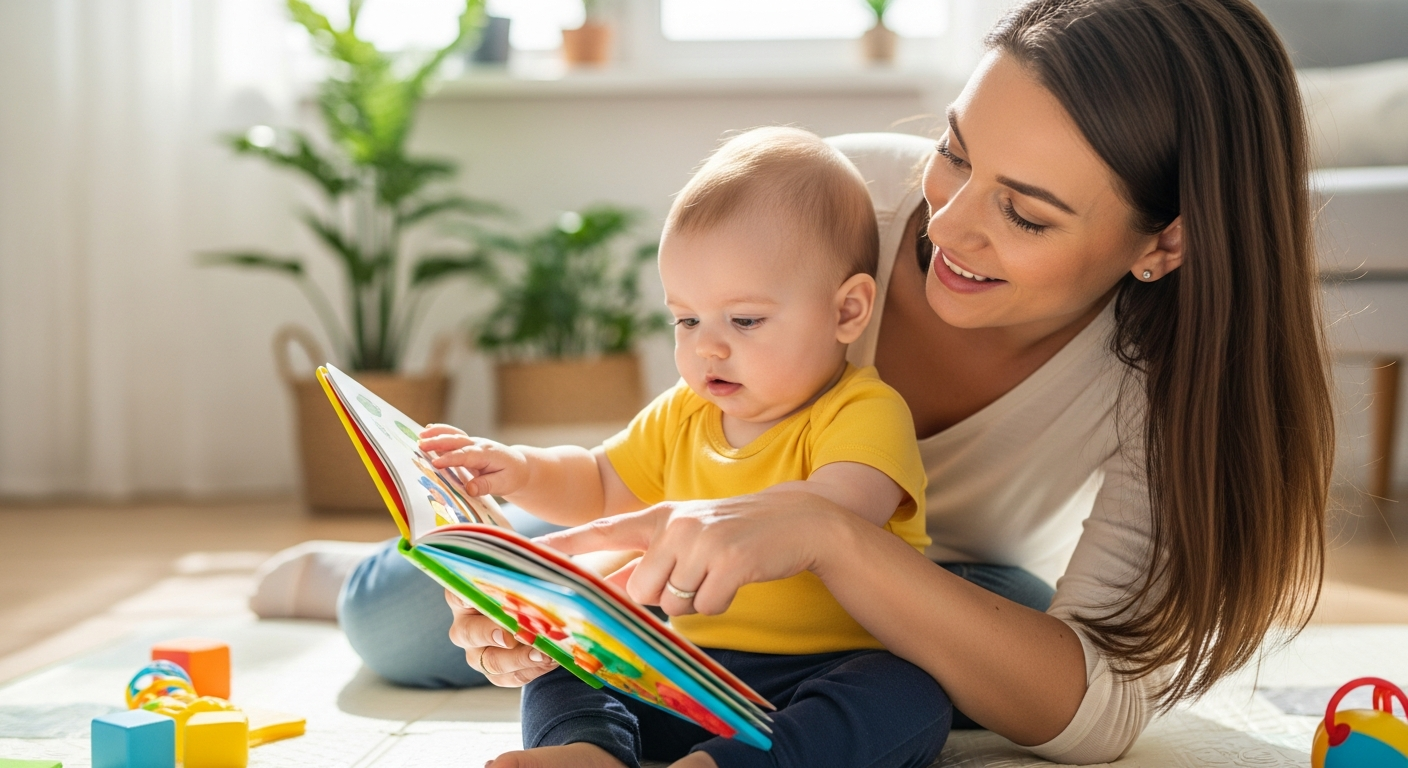
Table of Contents
- Introduction
- Understanding the Difference: Speech vs. Language
- Typical Speech and Language Milestones
- Red Flags: When Should You Be Concerned?
- Common Causes of Speech Delay in Infants
- The Speech Blubs Methodology: Science Meets Play
- Practical Scenarios: Supporting Your Child with Speech Blubs
- How to Boost Communication at Home
- Choosing the Right Plan for Your Family
- FAQs About Speech Delay in Infants
- Conclusion
Introduction
Have you ever found yourself sitting on the living room floor, surrounded by colorful blocks and picture books, waiting with bated breath for your little one to say their first "Mama" or "Dada," only to be met with a quiet smile or a simple gesture? If so, you are certainly not alone. The journey of watching a child find their voice is one of the most anticipated milestones of early parenthood, yet for many families, that journey takes a slower, more quiet path. Statistics suggest that as many as 1 in 4 children will need some form of speech support during their early development. While every child grows at their own pace, understanding the nuances of speech development is the first step in empowering your child to eventually speak their mind and heart.
At Speech Blubs, we believe that communication is a fundamental human right. Our company was born from the personal experiences of our founders, who all grew up with speech challenges themselves. They created the very tool they wished they had as children—a bridge between silence and expression that blends scientific principles with the pure joy of play. This blog post aims to provide you with a comprehensive understanding of speech delay in infants, covering everything from typical milestones and red flags to the science-backed strategies we use to spark communication. By the end of this article, you will have a clear roadmap for supporting your child’s unique developmental journey and a better understanding of how "smart screen time" can be a powerful ally in your home.

Understanding the Difference: Speech vs. Language
Before we dive into the specific signs of a delay, it is essential to clarify two terms that are often used interchangeably but mean very different things in the world of child development: speech and language.
What is Speech?
Speech refers to the physical act of producing sounds. It involves the coordination of the breath, vocal cords, tongue, lips, and jaw. When we talk about a "speech delay," we are often referring to difficulties with articulation (forming clear sounds) or voice quality. For example, a child might have a speech delay if they struggle to coordinate their mouth muscles to say the "p" sound in "pop," even if they know exactly what the word means.
What is Language?
Language is much broader. It is the entire system we use to give and receive information. It includes:
- Receptive Language: The ability to understand what others are saying (e.g., following a command like "Give me the ball").
- Expressive Language: The ability to communicate thoughts, needs, and feelings through words, gestures, or signs.
- Social Language (Pragmatics): The "unwritten rules" of communication, such as making eye contact, taking turns in a conversation, and using language appropriately in different social settings.
A child might have a language delay if they can pronounce words perfectly but only use two words at a time when their peers are using full sentences. Conversely, a child with a speech delay might have a rich vocabulary and understand everything you say, but their spoken words are difficult for others to understand. At Speech Blubs, we focus on bridging both of these areas, ensuring that children have the tools to both find the right words and the physical ability to say them.
Typical Speech and Language Milestones
Knowing what is "normal" can help ease parental anxiety and provide a baseline for when to seek help. While the range for "typical" development is broad, there are key markers that most infants reach within specific windows.

Birth to 6 Months: The Foundation
In these early months, communication is all about sound and reaction. Infants begin by "cooing" (making vowel sounds like "ooo" and "aaa") and soon progress to laughing and squealing. By six months, most babies are starting to "babble," which involves adding consonant sounds to those vowels (like "ba-ba" or "da-da"). They should also begin to turn their heads toward sounds and respond to the tone of your voice.
6 to 12 Months: Intentionality
This is a transformative period. Babbling becomes more complex and starts to sound like "jargon"—a string of sounds that mimic the rhythm of real speech. By their first birthday, many babies will say their first intentional word, such as "Mama," "Dada," or "No." They also begin using gestures, like pointing to a toy they want or waving "bye-bye."
12 to 24 Months: The Vocabulary Explosion
Between the ages of one and two, children typically go from saying single words to combining them into two-word phrases (e.g., "More juice" or "Doggy bark"). Their receptive language grows significantly; they can follow simple one-step directions without gestures and point to various body parts when asked.
2 to 3 Years: Building Sentences
By age three, a child’s vocabulary often expands to several hundred words. They start using three-word sentences and ask "Who," "What," and "Where" questions. Importantly, by age three, about 75% of a child's speech should be intelligible to strangers, even if they still make some articulation errors.
Red Flags: When Should You Be Concerned?
While we always encourage parents to trust their intuition, there are specific "red flags" that warrant a conversation with your pediatrician or a speech-language pathologist (SLP). Early intervention is the gold standard for supporting children with a speech delay in infants.
Contact a professional if your child:
- By 12 Months: Does not respond to their name, does not use gestures (like pointing or waving), or does not babble with variety.
- By 15 Months: Does not follow simple directions or has stopped using sounds they previously made (regression).
- By 18 Months: Prefers gestures over vocalizations to communicate or has a vocabulary of fewer than 3 to 5 words.
- By 24 Months: Cannot follow simple two-step commands or says fewer than 50 words.
- At Any Age: Displays a sudden loss of speech or social skills, or if you feel their hearing might be impaired.
If you are currently feeling unsure about where your child stands, we offer a quick 3-minute preliminary screener that involves 9 simple questions. This tool provides an immediate assessment and a next-steps plan to help you navigate your concerns with confidence.
Common Causes of Speech Delay in Infants
A speech delay is rarely the result of a single factor. Often, it is a combination of biological and environmental influences. Understanding the "why" can help tailor the right support for your child.
1. Oral-Motor Issues
Many children with speech delays have difficulty coordinating the muscles in their mouth. This is known as an oral-motor problem. It happens when the brain has trouble sending the right signals to the lips, tongue, and jaw. In some cases, this can be related to conditions like apraxia or dysarthria, or even physical factors like a "tongue-tie" (a short frenulum) that limits movement.
2. Hearing Impairment
Speech is an imitative skill; if a child cannot hear sounds clearly, they cannot reproduce them. Hearing loss can be permanent or temporary, often caused by chronic ear infections or fluid behind the eardrum. Even a mild, fluctuating hearing loss during the critical first two years of life can lead to significant delays.
3. Developmental and Neurological Disorders
Sometimes, a speech delay is a symptom of a broader developmental condition. For example, speech and communication challenges are often early indicators of Autism Spectrum Disorder (ASD). Children with ASD may struggle with the social aspects of language, such as joint attention (following someone else's gaze) or using speech for social interaction rather than just requesting items.
4. Environmental Factors
While less common as a primary cause, a lack of "language-rich" stimulation can contribute to slower development. Children who are not frequently spoken to, read to, or engaged in "back-and-forth" interaction may not have the environmental cues they need to spark their own vocalizations.
The Speech Blubs Methodology: Science Meets Play
At Speech Blubs, we don't just provide "screen time"—we provide "smart screen time." Our approach is built on the scientific principle of Video Modeling. But what exactly does that mean?
Research into mirror neurons suggests that children learn best by watching their peers. When a child sees another child on a screen performing an action or making a sound, the mirror neurons in their brain fire as if they were doing it themselves. This creates a powerful drive for imitation. Unlike traditional cartoons, which are passive and often over-stimulating, our app features real children (our "Blubers") demonstrating speech sounds, words, and social cues.
This peer-to-peer interaction reduces the pressure often felt during formal therapy sessions. It makes learning feel like a "playdate" rather than a lesson. Our methodology is designed to:
- Foster a Love for Communication: By making sounds fun, we reduce the frustration often associated with speech delays.
- Build Confidence: Success in small steps—like imitating a "moo" sound—builds the confidence needed for more complex words.
- Create Family Learning Moments: We encourage parents to play alongside their children, turning the app into a tool for connection rather than a digital babysitter.
Our method is backed by science and has earned us a high rating on the MARS scale, placing us among the top-tier speech apps globally. We are proud to offer a tool that is both clinically informed and joyfully executed.
Practical Scenarios: Supporting Your Child with Speech Blubs
To give you a better idea of how this looks in practice, let’s explore how the app can be integrated into your daily life based on common developmental challenges.
Scenario A: The "Animal Sound" Breakthrough
Imagine a parent whose 18-month-old isn't yet using words but loves the family dog. In the "Animal Kingdom" section of the Speech Blubs app, the child sees a peer making a "woof-woof" sound while wearing a fun digital dog filter. Because the "Bluber" on screen is a child and not a cartoon, your toddler feels a natural urge to imitate. You can sit with them, echoing the "woof" sound and pointing to your actual dog. This bridges the gap between the digital activity and real-world communication.
Scenario B: Expanding Vocabulary for the "Late Talker"
For a 2-year-old who uses single words but struggles to combine them, our "Yummy Time" section is a great resource. While looking at different foods, the app encourages the child to say "Apple" or "More juice." You can take this a step further during actual snack time by using the same phrases. This repetition across different contexts helps solidify the language in the child's brain.
Scenario C: Developing Early Social Skills
If your child is struggling with foundational social skills like waving "hello" or "bye-bye," our "Early Sounds" and "First Words" sections provide clear, visual models of these gestures. Watching another child wave and smile provides a relatable and non-threatening way for your infant to learn these essential non-verbal cues.
Many parents have shared their success stories with us. You can read our testimonials to see how other families have navigated similar challenges and found success using our platform as a supplement to their daily routines.
How to Boost Communication at Home
While Speech Blubs is a powerful tool, it works best when paired with a language-rich environment. Here are some simple, effective strategies you can use every day:
- Narrate Your Day: Talk about everything you are doing. "I'm picking up the blue cup. Now I'm pouring the water. It’s cold!" This constant exposure to vocabulary helps your child make connections between objects and words.
- Read Early and Often: It is never too early to start reading. Choose board books with bright pictures. Don't worry about reading every word on the page; simply talk about what you see. "Look at the big yellow sun!"
- Follow Their Lead: If your child points at a bird, stop and talk about the bird. "Yes, a bird! The bird is flying high." Following their interest makes language more meaningful to them.
- Sing Songs and Rhymes: The rhythm and repetition of songs like "The Wheels on the Bus" or "Itsy Bitsy Spider" are excellent for developing phonological awareness.
- The "Wait" Technique: Sometimes, as parents, we are too quick to anticipate our child's needs. Try waiting a few extra seconds before giving them their milk or a toy. This "expectant pause" gives them the space and motivation to try and communicate their need, whether through a sound or a gesture.
Choosing the Right Plan for Your Family
We are committed to being transparent about our pricing so that you can make the best decision for your family's needs and budget. We offer two primary plans:
- Monthly Plan: $14.99 per month. This is a great option if you want to try the app for a short period. However, please note that the monthly plan does not include a free trial, the Reading Blubs app, or early access to updates.
- Yearly Plan: $59.99 per year. This is our clear best-value option, breaking down to just $4.99 per month—a 66% savings compared to the monthly rate.
The Yearly Plan includes exclusive, high-value features:
- A 7-Day Free Trial: You can explore the full range of activities and see how your child responds before committing.
- Reading Blubs App: Access to our companion app designed to foster early literacy and reading skills.
- Priority Support: 24-hour support response time.
- Early Access: Be the first to use new updates and sections as we continue to grow and evolve.
We highly recommend the Yearly plan to ensure your child has consistent, long-term access to the tools they need to thrive.
FAQs About Speech Delay in Infants
1. Does a speech delay mean my child has an intellectual disability?
Not necessarily. While a speech delay can sometimes be associated with intellectual or developmental disabilities, many children with speech delays have typical or even advanced cognitive abilities. A delay often simply means the "output" system (speech) is lagging behind the "input" system (understanding).
2. Can learning two languages cause a speech delay?
This is a common myth. Research shows that bilingualism does not cause speech or language delays. While a bilingual child might "mix" languages or go through a brief "silent period" as they process two systems, they typically reach major milestones at the same age as monolingual children.
3. How much screen time is okay for an infant with a speech delay?
The American Academy of Pediatrics recommends focusing on social interaction. However, not all screen time is equal. Passive viewing (like watching cartoons) is very different from "smart screen time" that encourages imitation and interaction. When used as a supplement to play and under adult supervision, Speech Blubs can be a valuable part of a child's developmental plan.
4. When will I see results from using Speech Blubs?
Every child is unique, so we avoid overpromising guaranteed outcomes. However, many parents report seeing increased confidence, more frequent vocalizations, and a greater interest in communication within the first few weeks of consistent use. The goal is to foster a love for learning and reduce the frustration of not being understood.
Conclusion
Navigating a speech delay in infants can feel like a daunting journey, filled with questions and "what-ifs." But remember, you are your child's best advocate and most important teacher. By staying informed, watching for milestones, and providing a supportive, language-rich environment, you are giving your child the greatest gift possible: the ability to express themselves.
At Speech Blubs, we are honored to be a part of your family's story. Whether your child is just starting to babble or is working on their first sentences, our goal is to make every step of that journey a joyful one. We invite you to join our community of over 5 million parents who are using our science-based tools to help their children flourish.
Ready to see how your child can benefit from our unique video modeling approach? You can download Speech Blubs on the App Store or get it on Google Play today. To get the best value, including a 7-day free trial and access to the Reading Blubs app, we encourage you to create your account on our website and select the Yearly plan. Let’s work together to give your child the voice they deserve.
Sobre el autor