
Recognizing Signs of Speech Delay in Toddlers
 Por Speech Blubs Team•23 mar 2026•14 min.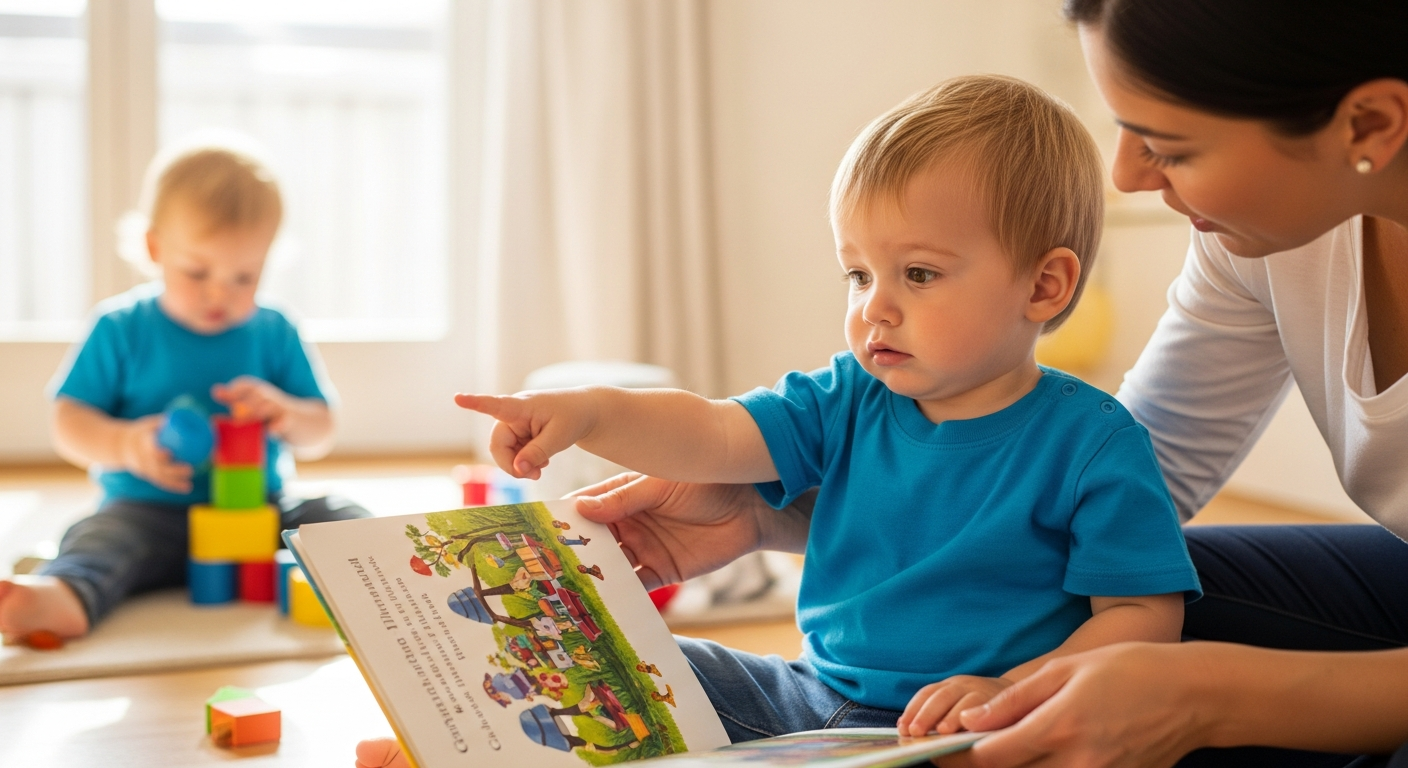
Table of Contents
- Introduction
- Understanding the Difference Between Speech and Language
- Major Signs of Speech Delay in Toddlers by Age
- Common Causes of Speech and Language Delays
- The Power of Video Modeling: How Peer Imitation Works
- Practical Strategies for Supporting Your Toddler at Home
- When to Seek Professional Help
- Understanding the Value of Speech Blubs
- Realistic Expectations and the Joy of Progress
- Creating a Communication-Rich Environment
- Conclusion
- Frequently Asked Questions
Introduction
Did you know that approximately 1 in 4 children will require some form of speech support during their early developmental years? It is a startling statistic for many parents, yet it highlights just how common communication challenges really are. As parents, we often find ourselves scrolling through photos of friends' children or watching toddlers at the park, secretly comparing our child’s progress to theirs. We hold our breath for that first "Mama" or "Dada," and when the words seem to trickle in slower than expected, it is natural to feel a sense of worry.
The purpose of this blog post is to provide you with a comprehensive, empathetic, and science-backed look at the common signs of speech delay in toddlers. We want to help you understand the difference between typical "late talking" and a delay that might benefit from intervention. We will cover the developmental milestones for various ages, explore the common causes behind these delays, and provide practical, joyful ways you can support your child’s communication journey at home.

At Speech Blubs, our mission is to empower every child to "speak their minds and hearts." Our founders grew up with speech challenges themselves and created the very tool they wished they had—a way to turn screen time into a productive, "smart" learning experience. By the end of this article, you will feel more confident in recognizing the signs of speech delay in toddlers and empowered to take the next steps for your family’s unique path.
Understanding the Difference Between Speech and Language
Before we dive into the specific signs, it is helpful to clarify two terms that are often used interchangeably but mean very different things in the world of child development: speech and language.
What is Speech?
Speech refers to the actual act of making sounds and forming words. It involves coordination between the lips, tongue, jaw, and breath. If a child has a speech delay, they might be attempting to communicate complex ideas but struggle to produce the physical sounds correctly, making them difficult to understand. This is often related to articulation or motor skills.
What is Language?
Language is a broader system of communication. It involves how we give and get information—understanding what is said to us (receptive language) and using words, gestures, or signs to express our thoughts (expressive language). A child with a language delay might be able to pronounce words perfectly but only use a very limited number of them, or they might struggle to follow simple directions.
Often, these two areas overlap. Recognizing which area your child is struggling in can help you and your pediatrician or speech-language pathologist (SLP) create a more targeted plan for support. If you are feeling uncertain about where your child stands, you can take our quick 3-minute preliminary screener to receive a simple assessment and a free 7-day trial.
Major Signs of Speech Delay in Toddlers by Age
While every child develops at their own unique pace, there are general windows of time where we expect to see certain communication "milestones." If your child consistently misses these windows, it may be time to look closer at their development.

Signs to Watch for by 12 Months
By the time a baby reaches their first birthday, they should be highly social communicators, even if they aren't using many "real" words yet.
- Lack of Pointing or Waving: Gestures are the foundation of speech. If a 12-month-old isn't pointing at things they want or waving "bye-bye," it could indicate a delay in social communication.
- No Response to Their Name: A child should recognize and turn toward their name being called by this age.
- Absence of Babbling: You should hear a variety of consonant-vowel combinations like "ba-ba" or "da-da."
Signs to Watch for by 18 Months
This is often the age when parents begin to notice more significant gaps compared to peers.
- Preferring Gestures Over Words: While gestures are great, an 18-month-old should be transitioning toward using vocalizations to get their point across.
- Difficulty Imitating Sounds: If you make a "beep-beep" sound with a toy car and your child cannot or will not try to mimic that sound, it may be a sign of a motor or auditory processing delay.
- A Very Limited Vocabulary: Most children at this age have at least 6 to 10 consistent words.
Signs to Watch for by 24 Months (2 Years)
Two years old is a major milestone for language "explosions."
- No Two-Word Phrases: A child should be able to combine two words together, such as "More juice" or "Doggy run."
- Difficulty Following Simple Directions: They should be able to understand basic requests like "Get your shoes" without needing a gesture to accompany the command.
- Only Imitating Speech: If a child only repeats what you say (echolalia) rather than producing words spontaneously to communicate a need, it is a sign to watch.
Signs to Watch for by 3 Years
By age three, the focus shifts toward how much of their speech is "intelligible" or understandable to others.
- Unclear Speech to Strangers: While parents can often "translate" for their toddlers, a stranger should be able to understand about 75% of what a three-year-old says.
- Frustration During Communication: If a child frequently gets angry or gives up because they cannot be understood, it indicates a gap between their desire to speak and their ability to do so.
Key Takeaway: Early intervention is the most effective way to support a child with a speech delay. Monitoring these milestones isn't about "passing a test," but about ensuring your child has the tools they need to connect with the world.
Common Causes of Speech and Language Delays
Understanding the "why" can often remove the weight of guilt that many parents carry. In many cases, a speech delay is not caused by anything a parent did or didn't do, but rather by physical or developmental factors.
Oral-Motor and Structural Issues
Sometimes, the delay is purely physical. This can include:
- Tongue-tie (Ankyloglossia): A short fold beneath the tongue that limits its range of motion, making certain sounds hard to produce.
- Cleft Palate or Lip: Structural differences in the mouth that affect air flow and sound formation.
- Oral-Motor Coordination: Some children have difficulty coordinating the brain's signals to the muscles in the face, tongue, and jaw.
Hearing Impairments
Speech development is heavily reliant on hearing. If a child has chronic ear infections or undiagnosed hearing loss, they aren't receiving the clear "input" they need to produce "output." Even temporary fluid in the ear can make sounds seem muffled, like trying to learn a language while underwater.
Neurodevelopmental Factors
Conditions such as Autism Spectrum Disorder (ASD) or general developmental delays can impact communication. In these cases, speech delay is often accompanied by other signs, such as difficulty with eye contact, repetitive behaviors, or sensory sensitivities.
Environmental Factors
In our digital age, the type of stimulation a child receives matters. Passive screen time—like sitting in front of a cartoon for hours—is "one-way" communication. The child isn't required to respond or interact. At Speech Blubs, we advocate for "smart screen time," which is active and encourages the child to vocalize back to the screen. Our method is backed by research and focuses on video modeling, which leverages the brain’s mirror neurons.
The Power of Video Modeling: How Peer Imitation Works
One of the most effective ways to address the signs of speech delay in toddlers is through a scientific concept called video modeling. Humans are social learners, and children, in particular, are hardwired to imitate their peers.
When a toddler watches another child perform a task—like making a "moo" sound or saying the word "apple"—the mirror neurons in their brain fire as if they are doing it themselves. This creates a bridge between watching and doing.
At Speech Blubs, we use this methodology by featuring videos of real children (our "Blubbers") demonstrating sounds and words. For a parent whose 3-year-old "late talker" loves animals, the "Animal Kingdom" section of our app offers a fun, motivating way to practice "moo" and "baa" sounds by watching other kids do it first. This isn't just entertainment; it’s a purposeful tool designed to build confidence and foundational skills. You can see how other families have used this method by reading our parent testimonials.
Practical Strategies for Supporting Your Toddler at Home
While professional therapy is invaluable, the most significant progress often happens in the "in-between" moments of your daily routine. Here are some ways to foster a love for communication:
1. Narrate Your Day
Think of yourself as a sports commentator for your life. As you fold laundry, say, "I am folding the blue shirt. Now I am folding the red socks." This constant stream of simple, clear language helps your child map words to actions.
2. Read With, Not To, Your Child
Instead of just reading the text on the page, point to the pictures. Ask, "Where is the duck?" or "What does the cow say?" Use board books with textures to engage more of their senses.
3. Use "Wait Time"
This is one of the hardest things for parents to do! When you ask your child a question or expect a response, count to ten in your head before speaking again. Toddlers with speech delays often need extra time to process the information and formulate a physical response.
4. Encourage "Smart Screen Time"
If you choose to use digital tools, make sure they are interactive. We designed Speech Blubs to be a "screen-free alternative" to passive viewing. It requires the child to engage, imitate, and interact with the content. We invite you to download Speech Blubs on the App Store or get it on Google Play to see the difference for yourself.
When to Seek Professional Help
If you have read through the milestones and feel that your child is falling behind, the next step is a formal evaluation.
Start With Your Pediatrician
Your doctor can perform a preliminary check of your child’s physical health, including their ears and mouth. They can then provide a referral to an SLP.
The Role of the Speech-Language Pathologist
An SLP will conduct a thorough evaluation of your child's receptive and expressive language, articulation, and oral-motor skills. They don't just "fix" speech; they provide you, the parent, with a roadmap. They might suggest weekly therapy sessions, which can be supplemented at home with tools like Speech Blubs.
Remember, seeking help isn't a sign of failure—it’s a sign of proactive parenting. The goal is to reduce frustration for your child and build their confidence so they can eventually "speak their minds and hearts."
Understanding the Value of Speech Blubs
We believe that every family should have access to high-quality, effective speech support tools. To help you get started, we offer transparent pricing and a variety of options to suit your needs.
Pricing Plans
- Monthly Plan: $14.99 per month. This is a great way to test the waters and see how your child responds to the video modeling exercises.
- Yearly Plan: $59.99 per year. This is our most popular option and offers the best overall value, breaking down to just $4.99 per month.
Why the Yearly Plan is the Best Choice
When you choose the Yearly plan, you aren't just saving 66% over the monthly cost; you are also gaining access to exclusive features designed to accelerate your child's progress:
- 7-Day Free Trial: You can explore the entire app with your child risk-free for a full week.
- Reading Blubs App: You get full access to our secondary app, Reading Blubs, which helps transition speech skills into early literacy.
- Priority Support: Enjoy a 24-hour support response time and early access to all our latest updates.
The Monthly plan does not include the free trial or the Reading Blubs app, which is why we highly recommend the Yearly plan for families committed to seeing long-term growth. To begin your journey, you can create your account and start your trial today.
Realistic Expectations and the Joy of Progress
It is important to remember that speech development is a marathon, not a sprint. We never suggest that a child will be giving public speeches in a month. Instead, we celebrate the "small wins":
- The first time they use a gesture to ask for a snack.
- The first time they try to imitate a "b" sound.
- The reduction in tantrums because they can finally communicate a basic need.
These moments are the building blocks of confidence. Our app is designed to be a powerful supplement to your child's overall development plan and professional therapy. By blending scientific principles with the joy of play, we create "smart screen time" experiences that foster a love for communication and create joyful family learning moments. For more information on who we are and what we stand for, feel free to visit our homepage.
Creating a Communication-Rich Environment
Beyond apps and therapy, the environment you create at home is the "soil" in which your child’s language grows.
Minimize Background Noise
Toddlers with speech delays often have trouble filtering out "noise." If the TV is always on in the background, it can be harder for them to focus on the nuances of your voice. Try to have periods of quiet play throughout the day.
Follow Your Child's Lead
If your child is fascinated by a ladybug on the sidewalk, stop and talk about the ladybug. When a child is naturally interested in something, their brain is more "open" to learning the words associated with it.
Use Songs and Rhymes
The rhythmic nature of songs like "The Wheels on the Bus" or "Itsy Bitsy Spider" makes language predictable. Predictability is a toddler's best friend. They can begin to anticipate the words and eventually try to fill in the gaps when you pause.
Conclusion
Recognizing the signs of speech delay in toddlers is the first step toward unlocking your child’s potential. Whether your child is just a "late talker" who needs a little nudge or requires more structured support, know that you are not alone on this journey. By staying informed, seeking professional guidance when needed, and incorporating joyful, evidence-based tools into your daily life, you are giving your child the greatest gift possible: the ability to express themselves.
At Speech Blubs, we are honored to be a part of your family's story. Our unique approach of teaching complex communication skills through peer-to-peer video modeling has helped thousands of children find their voices. We provide a screen-free alternative to passive viewing and a powerful tool for family connection.
Are you ready to see your child's communication skills flourish? Download the Speech Blubs app now or sign up on our website to start your 7-day free trial. We highly recommend selecting the Yearly plan to get the best value, including early access to updates and our Reading Blubs app. Let’s work together to help your little one speak their mind and heart.
Frequently Asked Questions
1. Is it true that boys talk later than girls? While some studies suggest that girls may reach certain language milestones slightly earlier than boys on average, the difference is usually measured in weeks or months, not years. A significant delay in a boy should not be dismissed simply because of his gender. The milestones for speech delay apply to all children regardless of sex.
2. Can a child "outgrow" a speech delay without help? Some children are "late bloomers" who eventually catch up on their own. However, there is no way to know for sure which children will catch up and which will continue to struggle. Because early intervention is so critical and effective, it is always better to seek an evaluation than to "wait and see."
3. Does using a pacifier cause speech delay? Overuse of a pacifier, especially after the age of 12 to 18 months, can potentially impact speech. It limits the time a child spends practicing sounds and can, in some cases, affect the development of the mouth muscles. It is generally recommended to limit pacifier use to sleep times as your child enters toddlerhood.
4. How much time should my child spend on Speech Blubs each day? We recommend short, frequent bursts of "smart screen time" rather than long sessions. About 10 to 15 minutes a day of co-playing with the app is often enough to see the benefits of video modeling without overstimulating your child. Consistency is more important than duration!
Sobre el autor