
Speech Delay Preschool for 5 Year Olds: A Parent's Guide
 Por Speech Blubs Team•5 mar 2026•15 min.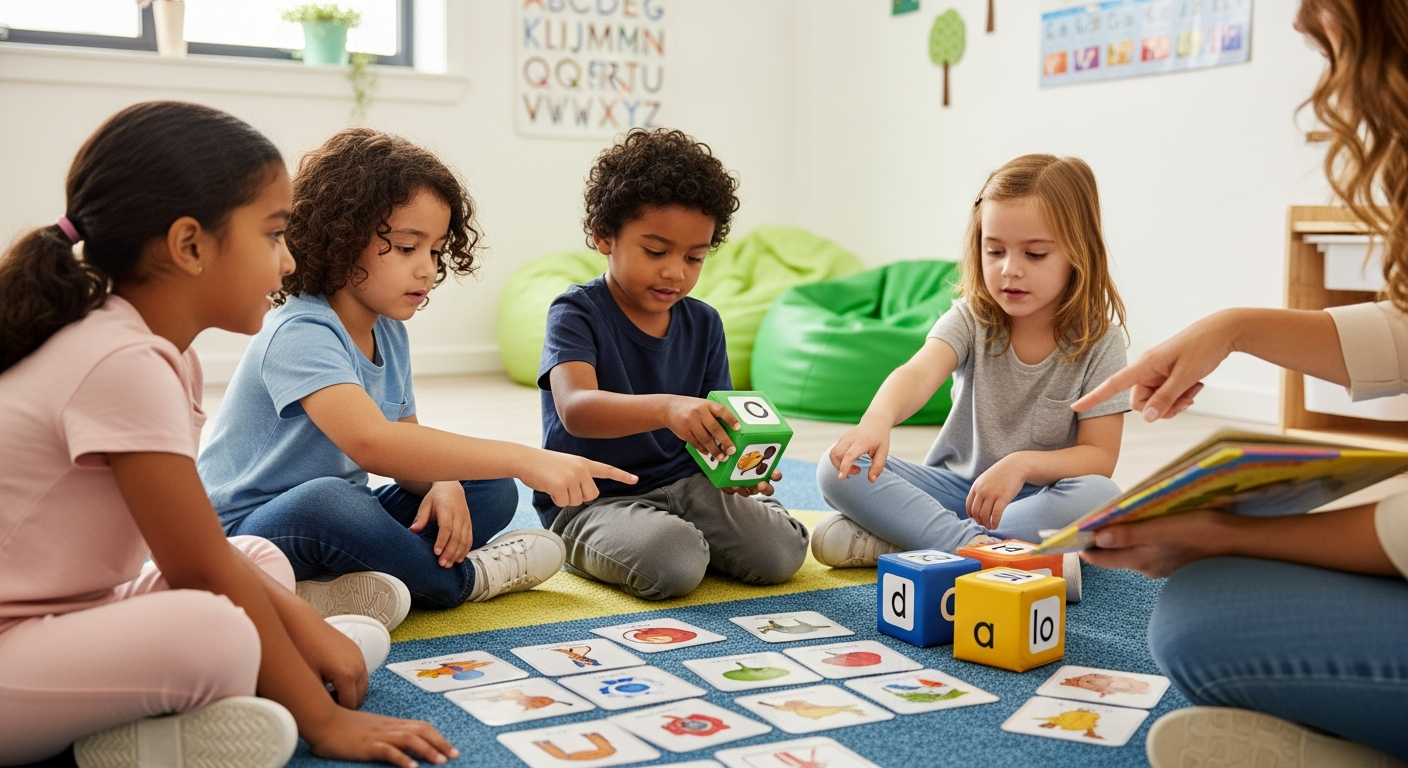
Table of Contents
- Introduction
- Understanding Speech Milestones for 5-Year-Olds
- Identifying the Signs of Speech Delay in Preschoolers
- Common Causes of Speech Delay at Age Five
- How the Preschool Environment Supports Speech Development
- Speech Blubs: A Science-Based Tool for "Smart Screen Time"
- Practical Activities to Encourage Speech at Home
- Building Trust: Success Stories and Research
- When to Seek Professional Help
- Conclusion
- FAQ
Introduction
Imagine your child is standing at the threshold of a major milestone: the first day of kindergarten. They have their backpack ready, their shoes tied, and a heart full of curiosity. But while other children are chatting away about their new teachers or the playground, your 5-year-old struggles to find the words to express their excitement. Perhaps they use short, fragmented phrases, or maybe their speech is still difficult for others to understand. As a parent, you might feel a pang of worry, wondering if they will be able to make friends or keep up with their lessons.
This experience is more common than you might think. Statistics suggest that roughly one in four children will face some form of speech or language challenge during their early years. At Speech Blubs, we understand this journey intimately. Our founders grew up with speech problems themselves, and they created the very tool they wished they’d had as children. Our mission is to empower every child to speak their minds and hearts, turning what can be a source of frustration into a journey of joyful connection.

In this guide, we will explore the nuances of speech delay in 5-year-olds, how the preschool environment can support their growth, and the practical steps you can take at home to foster communication. We’ll also look at the science behind our approach and how "smart screen time" can be a powerful ally in your child’s development. By the end of this article, you’ll have a clearer roadmap for supporting your child’s transition into school and beyond, fueled by the understanding that with the right support, your child can thrive.
Understanding Speech Milestones for 5-Year-Olds
By the time a child reaches age five, their communication skills undergo a significant transformation. They are moving away from simple labeling and moving toward complex storytelling. Understanding these milestones is the first step in recognizing if your child might need a little extra support.
The Shift to Complex Communication
At age five, most children are expected to follow rules when playing games and can answer relatively complex questions about a story they just heard. Their vocabulary has usually expanded to over 2,000 words, allowing them to describe their day in detail. They should be able to tell a multi-event story—whether it’s something that actually happened at preschool or a tale they’ve completely made up.
Socially, 5-year-olds are becoming masters of "back-and-forth" conversation. They should be able to sustain a dialogue for more than three exchanges, showing that they can not only listen but also respond appropriately to what the other person is saying. This is a critical skill for building friendships and navigating the social dynamics of a classroom.
Cognitive and Academic Foundations
Speech is not just about the sounds we make; it’s intrinsically linked to cognitive development. A 5-year-old should be able to:
- Count to 10 or higher.
- Name several colors and shapes.
- Recognize some letters and numbers when pointed out.
- Use words related to time, such as "yesterday," "today," or "tomorrow."
- Understand and use simple rhymes.
If your child is struggling with these specific markers, it might not just be a matter of "late talking." It could indicate a delay in how they process and organize language. If you are feeling uncertain about where your child stands, we recommend taking our quick 3-minute preliminary screener. It consists of 9 simple questions and provides you with an assessment and a next-steps plan to give you peace of mind.

Identifying the Signs of Speech Delay in Preschoolers
While every child develops at their own pace, there are specific "red flags" that suggest a 5-year-old may be experiencing a speech delay that requires intervention. Recognizing these early can prevent a "snowball effect" where the child falls further behind socially and academically.
Communication Red Flags
One of the most significant indicators is the intelligibility of their speech. By age five, a child’s speech should be almost entirely understood by strangers, even if they still struggle with a few complex sounds like "r," "l," or "th." If you find yourself constantly "translating" for your child when they speak to others, it may be time to consult a professional.
Other signs include:
- Difficulty following multi-step directions: At this age, a child should be able to follow a command like, "Go to your room, get your shoes, and bring them to the front door."
- Limited sentence structure: If your child is still using only two or three-word phrases rather than complete, grammatically correct sentences, this is a notable delay.
- Lack of social engagement: 5-year-olds are naturally social. If your child avoids eye contact, doesn't show interest in playing with peers, or struggles to use gestures to supplement their speech, it could point toward a broader developmental challenge, such as Autism Spectrum Disorder (ASD).
The Impact of Untreated Delays
It is important to understand that speech delays rarely exist in a vacuum. Preschool children with untreated delays are at a higher risk for learning disabilities later in life. This often manifests as poor reading and spelling skills once they reach grade school. Because so much of our early education is based on verbal instruction, a child who cannot process or produce language effectively may experience significant frustration, leading to behavioral issues or a lack of confidence. Our goal at Speech Blubs is to intervene early to foster a love for communication and reduce this frustration before it impacts their self-esteem.
Common Causes of Speech Delay at Age Five
Understanding the "why" behind a speech delay can help you tailor the support your child receives. There is no single cause, but rather a range of possibilities that a pediatrician or speech-language pathologist (SLP) will investigate.
Hearing Impairment and Auditory Processing
You cannot say what you cannot hear. Even subtle hearing loss—sometimes caused by chronic ear infections or fluid in the ear—can significantly disrupt speech development. Some children also experience Auditory Processing Disorder (APD), where the ears hear perfectly fine, but the brain struggles to interpret and make sense of the sounds. This can make a busy preschool classroom feel like a wall of noise, making it impossible for the child to pick out the teacher’s instructions.
Oral-Motor Challenges
Some children have the desire and the language in their heads, but their muscles won't cooperate. Conditions like Apraxia of speech occur when the brain has trouble coordinating the complex movements of the lips, tongue, and jaw. Another condition, Dysarthria, involves actual weakness in these muscles. These children often benefit from targeted exercises that help "train" the mouth to form the necessary shapes for clear speech.
Developmental and Intellectual Factors
Speech delay can also be a facet of a broader developmental profile. For children with Autism Spectrum Disorder, the challenge is often social-pragmatic—understanding the "unspoken rules" of communication. For others, an intellectual disability may mean that they are reaching all milestones, including speech, at a slower rate than their peers. In these cases, speech support is a vital component of a comprehensive development plan.
How the Preschool Environment Supports Speech Development
Many parents worry that sending a child with a speech delay to preschool will be overwhelming. However, a high-quality, inclusive preschool environment is often one of the best "therapies" available.
The Power of Peer Modeling
Children learn best from other children. In a preschool setting, your child is constantly exposed to models of appropriate speech and language as they play. When they see a friend say, "Can I have the blue truck, please?" they are receiving a natural lesson in sentence structure and social interaction.
Consider a scenario where a child with a speech delay wants a snack. At home, you might know that a certain grunt or gesture means they want crackers. But at school, the teacher or a peer might not understand. This "communicative frustration" actually serves as a powerful motivator. It pushes the child to find new ways to express themselves, whether through a new word, a picture card, or a better-formed gesture. This is a key learning moment that is hard to replicate in a one-on-one adult environment.
Choosing the Right Program
When looking for a preschool, prioritize programs that emphasize "inclusion." This means your child will be in a regular classroom with peers of all ability levels. You want to look for:
- Teachers who are trained in supporting diverse learners.
- A curriculum that uses visual aids (like picture schedules) to support verbal instructions.
- A focus on play-based learning, which provides natural opportunities for conversation.
Don't be afraid to ask potential schools how they track developmental milestones or how they communicate with parents about progress. A strong partnership between home and school is essential for success.
Speech Blubs: A Science-Based Tool for "Smart Screen Time"
In today's world, screens are everywhere, and many parents feel guilty about "screen time." However, not all screen time is created equal. At Speech Blubs, we’ve developed a "smart screen time" experience that is the antithesis of passive cartoon watching. Our approach is built on a powerful scientific principle: Video Modeling.
The Science of Video Modeling
Research shows that children are highly motivated by watching their peers. Our app features thousands of videos of real children—not cartoons—performing speech exercises. When your child sees another child their age making a "round mouth" to say "Ooo," it triggers their mirror neurons. This makes them much more likely to imitate the sound themselves.
This methodology is at the heart of our app and is one of the reasons we are rated so highly on the MARS scale for educational quality. You can learn more about the research behind our method to see how we blend science with play.
Practical Scenario: Mastering the "S" Sound
Let's look at a practical example. Imagine a 5-year-old named Leo who struggles with the "S" sound, often replacing it with a "Th" (a common lisp). In a traditional therapy setting, Leo might feel pressured or self-conscious. But when Leo opens the "Early Words" or "Silly Sounds" section of Speech Blubs, he sees a fun peer wearing a digital "snake" filter. The peer makes a clear "Sssss" sound. Leo is encouraged to imitate, and when he does, the app rewards him with an engaging animation.
This takes the "work" out of speech practice and turns it into a joyful family learning moment. It's not about a replacement for professional therapy; it's a powerful supplement that builds confidence and reduces the frustration Leo feels when he isn't understood.
Transparency in Value and Pricing
We believe in providing an effective and accessible solution for the 1 in 4 children who need speech support. To best support your child's long-term progress, we offer two main subscription paths:
- Monthly Plan: For $14.99 per month, you get full access to the Speech Blubs app and its vast library of activities.
- Yearly Plan (Best Value): For $59.99 per year, which breaks down to just $4.99 per month.
We strongly recommend the Yearly Plan because it is designed to grow with your child. When you choose the Yearly option, you also receive:
- A 7-day free trial to ensure the app is a perfect fit for your family.
- Access to our Reading Blubs app, which helps bridge the gap between speech and literacy—a crucial step for 5-year-olds.
- Early access to new updates and a 24-hour support response time from our dedicated team.
To get started, you can download Speech Blubs on the App Store or find us on Google Play. If you prefer to set up everything on your computer first, you can visit our Web Account Creation page.
Practical Activities to Encourage Speech at Home
While apps and preschool are great, you are your child's first and most important teacher. Integrating simple, language-rich activities into your daily routine can make a massive difference.
1. Reading with a Twist
Don't just read the words on the page. For a 5-year-old, use "dialogic reading." This means asking open-ended questions like, "What do you think will happen next?" or "Why do you think the bear is sad?" This encourages them to use their imagination and practice narrative skills.
2. The "I Spy" Game
This classic game is perfect for building vocabulary and descriptive language. Instead of just saying "I spy something blue," try "I spy something blue that we use to drink water." This forces the child to process multiple attributes and then use those same attributes when it’s their turn to pick an object.
3. Kitchen Conversations
Involve your child in cooking. Ask them to give you "the large wooden spoon" or to "pour the milk carefully." Discussing textures (sticky, crunchy, smooth) and smells provides a rich sensory-language experience.
4. Singing and Rhyming
Rhyming is a foundational skill for reading. Singing songs with repetitive lyrics helps children recognize the patterns and sounds of language. If you're looking for inspiration, the "Sing-Along" section in our app is a great place to start!
Building Trust: Success Stories and Research
We know that parents want what is best for their children, and trust is earned. Our method isn't just a fun game; it's a tool used by over 5 million families worldwide. Parents frequently share how their children went from being frustrated and silent to being confident "chatterboxes." You can read some of these heart-warming stories on our testimonials page.
Furthermore, our commitment to "screen-free alternatives" within the app—such as printable activities and face-to-face interaction prompts—ensures that the learning doesn't stop when the screen turns off. We are dedicated to providing a joyful solution that fosters deep family connection.
When to Seek Professional Help
While home activities and apps are incredibly beneficial, they are not a replacement for a professional medical evaluation. If your child is five years old and showing several of the red flags we discussed, we encourage you to:
- Consult your Pediatrician: They can rule out physical issues like hearing loss or tongue-tie.
- See a Speech-Language Pathologist (SLP): An SLP can provide a formal diagnosis and a targeted therapy plan.
- Contact Early Intervention Services: Depending on your location, there may be state-funded programs to help your child get the support they need before they enter the primary school system.
Remember, the goal is not "perfection." The goal is to give your child the tools they need to be heard, understood, and confident in their own voice.
Conclusion
Navigating a speech delay in a 5-year-old can feel like a daunting journey, but you don't have to walk it alone. Whether your child is a "late talker" or facing more complex challenges, the combination of a supportive preschool environment, dedicated home practice, and "smart" tools like Speech Blubs can change the trajectory of their development.
By focusing on the process—fostering a love for communication and building confidence—you are creating joyful learning moments that will last a lifetime. We are here to help your child speak their mind and heart, one word at a time.
Ready to take the next step? Don't wait for "the right time." Start your 7-day free trial today by creating your account. For the best value and access to our full suite of features—including the Reading Blubs app—be sure to select the Yearly Plan. Let’s unlock your child’s potential together.
FAQ
1. Is 5 years old too late to start speech therapy?
Absolutely not! While early intervention (before age 3) is ideal, the brain remains highly adaptable at age five. In fact, 5-year-olds often make rapid progress because they are more cognitively mature and can follow the more complex instructions used in therapy. Starting now ensures they have the best possible foundation for the academic demands of kindergarten and first grade.
2. Can preschool alone "fix" a speech delay?
Preschool is a fantastic environment for social-emotional growth and language modeling, but it is rarely a "fix" on its own for a true speech delay. Most children require a combination of peer interaction (preschool), professional guidance (SLP), and consistent reinforcement at home (activities and apps like Speech Blubs) to overcome significant delays.
3. How does Speech Blubs help a 5-year-old specifically?
For a 5-year-old, Speech Blubs focuses on more than just single words. We offer sections on complex sentences, storytelling, and social-pragmatic skills. Our video modeling approach helps them see how other "big kids" produce difficult sounds and navigate social situations, which builds the confidence they need to participate in classroom discussions.
4. Should I wait until my child starts kindergarten to see if they "grow out of it"?
The "wait and see" approach is generally discouraged by experts. If a child hasn't "grown out of" a speech delay by age five, they are unlikely to do so without targeted support. Waiting until kindergarten can lead to unnecessary academic struggles and social frustration. It is always better to provide support now and "graduate" from therapy early than to play catch-up later.
Sobre el autor