
Spotting the Early Signs of Delayed Speech in Toddlers
 Por Speech Blubs Team•23 mar 2026•15 min.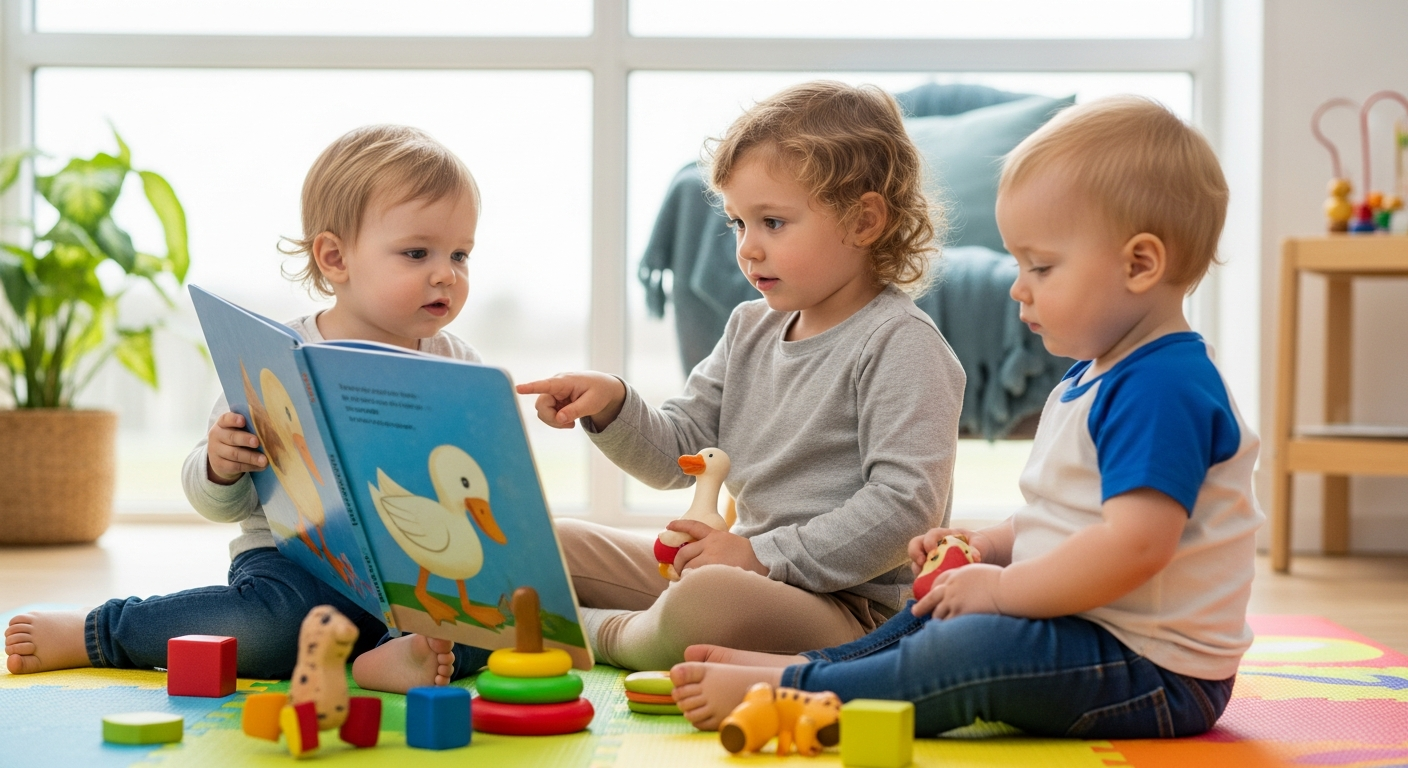
Table of Contents
- Introduction
- Understanding the Difference: Speech vs. Language
- Common Signs of Delayed Speech by Age
- Why Do Speech Delays Happen?
- Speech Delay vs. Autism: Knowing the Difference
- Practical Scenarios: Turning Daily Life into Learning
- How to Support Speech Development at Home
- The Speech Blubs Yearly Plan: The Best Path Forward
- What to Expect: Realistic Goals
- Frequently Asked Questions
- Conclusion
Introduction
Wait. Did they just say “Mama”? Or was it just a random “ma-ma-ma” sound? Every parent knows that breathless moment of anticipation, leaning in closer to catch the very first syllable of their child’s voice. We wait for those first words like they are the most important secrets in the world. But for many families, that wait starts to feel long. The silence at the dinner table becomes heavy, and the playground chatter of other toddlers can trigger a nagging sense of worry. You might find yourself scrolling through social media, comparing your little one’s quiet focus to another child’s constant babbling, wondering if your child is just a "late talker" or if there is something more going on.
If you are feeling this way, please know you are not alone. Statistics show that roughly 1 in 4 children require some form of speech support during their early development. At Speech Blubs, we understand this journey intimately because our founders lived it. We all grew up with speech challenges ourselves, and we created the tool we wished we had as kids—a way to turn the frustration of silence into the joy of communication. Our mission is to empower every child to speak their minds and hearts, moving away from passive "zombie" screen time like cartoons and toward "smart screen time" that actually builds foundational skills.

In this post, we will take a deep dive into the common signs of delayed speech, how to distinguish between speech and language, the underlying causes of delays, and practical steps you can take today to support your child’s growth. We will also explore how our unique video modeling methodology can help bridge the gap. By the end of this article, you will have a clearer understanding of your child’s development and a roadmap for creating joyful learning moments at home.
Understanding the Difference: Speech vs. Language
Before we look at the specific signs of delayed speech, it is vital to clarify what we actually mean when we talk about communication. Many parents use the terms "speech" and "language" interchangeably, but in the world of child development, they represent two very different—though related—skill sets.
What is Speech?
Speech refers to the physical act of producing sounds. It involves the coordination of the breath, the vocal cords, the tongue, the lips, and the jaw. When we talk about a speech delay, we are often talking about:
- Articulation: How sounds are formed (e.g., a child struggling to make the "r" or "th" sound).
- Voice: How we use our vocal folds and breath to make sounds (e.g., if a voice is very raspy or too loud/quiet).
- Fluency: The rhythm and flow of speech (e.g., stuttering or hesitations).
What is Language?
Language is much broader. It is the entire system of giving and receiving information. It’s about understanding and being understood. Language is divided into two categories:
- Receptive Language: This is what your child understands. Can they follow a simple instruction like "Get your shoes"? Do they point to the ball when you ask, "Where is the ball?"
- Expressive Language: This is how your child communicates their needs and ideas. It includes words, but it also includes gestures, facial expressions, and eventually, sentences.
A child might have a speech delay (they are hard to understand) but have excellent language skills (they know lots of words and follow directions perfectly). Conversely, a child might have a language delay where they can pronounce words clearly but only know a handful of them. Recognizing which area your child is struggling in is the first step toward getting the right support. To get a better sense of where your child stands, you can take our quick 3-minute preliminary screener, which involves 9 simple questions to help provide an initial assessment.

Common Signs of Delayed Speech by Age
While every child develops at their own pace, there are certain milestones that experts look for. If your child isn't hitting these markers, it doesn't necessarily mean there's a permanent problem, but it is a signal to pay closer attention.
The First Year: 0 to 12 Months
Communication starts long before the first word. In the first year, we look for "pre-linguistic" skills.
- By 6-9 Months: Your baby should be babbling. This includes strings of consonant-vowel sounds like "ba-ba-ba" or "da-da-da." If a baby is unusually quiet or doesn't respond to sounds, this is a red flag.
- By 12 Months: This is the age of gestures. A child should be waving "bye-bye," pointing at things they want, and responding to their name. A major sign of delayed speech at this age is a lack of pointing or a lack of eye contact when you are speaking to them.
The Toddler Years: 12 to 24 Months
This is often when parents notice the most significant differences between their child and their peers.
- By 15 Months: Most children have at least one or two consistent words (even if they aren't perfectly pronounced).
- By 18 Months: At this stage, we want to see a child using at least 10 to 20 words. A significant sign of a delay is if a child prefers to use gestures (pulling your hand toward the fridge) rather than attempting to use a sound or word to get what they want.
- By 24 Months: The "word spurt" usually happens here. A 2-year-old should be starting to put two words together, like "more juice" or "Mommy go." If your child is only imitating what you say rather than speaking spontaneously, or if they have a vocabulary of fewer than 50 words, it’s worth investigating further.
The Preschool Years: 2 to 4 Years
At this age, the focus shifts from "how many words" to "how clear is the speech."
- By Age 3: A child should be understood by familiar caregivers about 75% of the time. They should be using short sentences and asking "why" or "what" questions.
- By Age 4: Even strangers should be able to understand most of what your child says. If your child is still struggling to be understood by people outside the immediate family, or if they seem frustrated when trying to explain their day, these are signs of delayed speech that may require professional intervention.
Key Takeaway: Early identification is not about labeling your child; it is about giving them the tools they need to reduce frustration. When a child can't communicate their needs, they often resort to "acting out" or tantrums. Helping them find their voice is the best way to foster a joyful family environment.
Why Do Speech Delays Happen?
Understanding the "why" can help demystify the process and remove any unnecessary guilt parents might feel. It is important to remember: you did not cause your child’s speech delay.
- Oral-Motor Issues: Many children have difficulty coordinating the muscles of the mouth. This is known as an oral-motor delay. The brain may know what it wants to say, but the lips, tongue, and jaw don't "sync up" correctly. This can also sometimes be linked to feeding issues.
- Hearing Problems: This is one of the most common—and treatable—causes. Even a temporary hearing loss due to chronic ear infections can cause a child to miss out on the subtle sounds of language, leading to a delay. We always recommend a hearing check as a first step.
- Developmental Disorders: Sometimes, a speech delay is a symptom of a broader developmental picture, such as Autism Spectrum Disorder (ASD) or a global developmental delay. In these cases, speech therapy is a vital part of a comprehensive support plan.
- Environmental Factors: While less common as a primary cause, a lack of verbal interaction can slow down development. This is why we advocate for "co-play" and active engagement rather than leaving a child alone with a television.
Our scientific methodology is designed to address these challenges by using peer-led video modeling. When children see other children making sounds, it triggers "mirror neurons" in their brains, making them more likely to imitate the behavior. It’s a natural, playful way to bridge the gap between "seeing" and "saying."
Speech Delay vs. Autism: Knowing the Difference
One of the most frequent questions we receive is whether a speech delay is a sign of autism. While many children with autism have speech delays, not every child with a speech delay is autistic.
The primary difference lies in social engagement. A child with a "simple" speech delay will usually still try to communicate with you. They will point, use facial expressions, pull you toward what they want, and enjoy social games like peek-a-boo. They are frustrated that they can't speak, but they are still "connected."
A child whose delay may be related to autism often shows different patterns:
- They may not respond to their name consistently.
- They may avoid eye contact.
- They might use your hand like a "tool" to get something without looking at you.
- They might repeat phrases from a favorite show (echolalia) rather than using words to communicate a need.
If you are unsure, it is always best to consult a professional. However, regardless of the cause, the goal remains the same: helping your child find their unique way to express themselves. Our testimonials from parents show that children with a wide range of needs have found success and confidence through our playful approach.
Practical Scenarios: Turning Daily Life into Learning
We know that "therapy" can sound intimidating. But for a toddler, the best therapy is play. At Speech Blubs, we believe in making every moment count. Here is how you can use our app’s features to tackle real-world challenges.
Scenario 1: The Animal Lover
Imagine a 3-year-old named Leo who loves his toy farm but isn't yet using words. His parents are worried about the signs of delayed speech they’ve noticed. In the "Animal Kingdom" section of our app, Leo can watch a video of a peer making a "Moo" sound. Because he is seeing another child do it—not a cartoon character—his brain is primed to copy. His parents can sit with him, making the sounds together, turning a "practice session" into a joyful game of barnyard pretend.
Scenario 2: The Frustrated Communicator
Sarah is 2 and a half. She knows what she wants, but when she tries to ask for a "snack," it comes out as an unintelligible sound. She often ends up in tears. By using the "Early Sounds" section, Sarah can practice the basic building blocks of speech in a low-pressure environment. Her parents use the app for 10-15 minutes a day, focusing on the "smart screen time" aspect where they mimic the kids on the screen together. This builds Sarah's confidence and reduces the frequency of her "communication meltdowns."
To start your own journey of playful learning, you can download Speech Blubs on the App Store or get it for your Android device on the Google Play Store.
How to Support Speech Development at Home
While professional speech-language pathologists (SLPs) are incredible partners, you are your child's first and most important teacher. Here are some strategies we recommend to encourage your child’s development:
- Narrate Your Day: Talk about everything you are doing. "I'm pouring the milk. The milk is cold! Now I'm stirring the cereal." This surrounds your child with the rhythm and vocabulary of language without putting pressure on them to respond.
- Read With (Not To) Your Child: Don't just read the words on the page. Point to the pictures and ask questions. "Where is the blue truck?" or "Look at the silly monkey!" Give them plenty of time to respond—sometimes toddlers need 5 to 10 seconds of silence to process a question and formulate a response.
- Follow Their Lead: If your child is interested in a specific toy, talk about that toy. Language learning is much more effective when it is centered on something the child already finds exciting.
- Use "Smart Screen Time": Replace passive viewing with interactive tools. Unlike cartoons, which can sometimes lead to passive "trance-like" states, our app encourages active participation. We use the video modeling method to keep children engaged and motivated to speak.
The Speech Blubs Yearly Plan: The Best Path Forward
We are committed to being a long-term partner in your child's development. While we offer a monthly subscription, we strongly recommend our Yearly Plan for families who are serious about seeing progress and building a daily habit of learning.
Why Choose the Yearly Plan?
- Superior Value: At just $59.99 per year, the cost breaks down to only $4.99 per month. This is a massive 66% savings compared to the monthly price of $14.99.
- 7-Day Free Trial: You can explore everything we have to offer for a full week before you are charged. This gives you plenty of time to see if our peer-modeling approach resonates with your child.
- Reading Blubs Included: The yearly plan gives you exclusive access to our Reading Blubs app, which helps transition speech skills into early literacy.
- Priority Support: Yearly members get early access to new content updates and a guaranteed 24-hour response time from our support team.
The Monthly plan, while flexible, does not include the free trial, the Reading Blubs app, or priority support. To get the full suite of tools designed to help your child overcome the signs of delayed speech, the Yearly plan is the clear choice. You can create your account and start your 7-day free trial today to see the difference for yourself.
What to Expect: Realistic Goals
It is important to set realistic expectations. Every child’s brain is wired differently, and progress is rarely a straight line. You might see a "burst" of three new words in one week, followed by a month of no new words. This is normal!
Our goal isn't to turn every child into a public speaker overnight. Our goal is to:
- Reduce Frustration: By giving your child alternative ways to express themselves.
- Build Confidence: By celebrating every small win—every sound, every point, every attempt.
- Create Joyful Connections: By turning speech practice into a bonding activity between you and your child.
- Foster a Love for Communication: So that your child wants to share their world with you.
Speech Blubs is a powerful supplement to your child’s development and, where necessary, professional therapy. It is a tool that puts the power of learning back into the hands of the family.
Frequently Asked Questions
1. Does using an app like Speech Blubs cause more speech delays because of screen time?
Not at all! There is a huge difference between passive screen time (watching a cartoon) and "smart screen time." Our app is designed based on scientific principles of video modeling and active participation. It requires the child to listen, watch, and respond. Furthermore, we always encourage "co-play," where the parent interacts with the child while using the app, making it a social experience rather than an isolated one.
2. My child is 2 and only has 10 words. Is it too late to start?
It is never too late, but earlier is always better! The brain is most "plastic" (changeable) in the first five years of life. Starting now, whether through our app or professional consultation, gives your child the best chance to catch up to their peers before they start school.
3. Will baby sign language delay my child’s speech?
This is a common myth. Research actually suggests the opposite! Using signs gives a child a way to communicate before their oral-motor skills are fully developed. This reduces frustration and actually builds the cognitive pathways for language, often leading to earlier spoken words.
4. How do I know if the app is working for my child?
Look for small changes first. Is your child making more eye contact? Are they attempting to imitate sounds more often? Do they seem more excited to communicate? These are all foundational signs of progress. You can also track their development through our in-app reporting tools.
Conclusion
Recognizing the signs of delayed speech in your child can be an emotional experience, but it is also an empowering one. By paying attention to these early markers, you are already taking the most important step in your child's journey toward communication. Whether your child is a "late talker" who just needs a little nudge or requires more structured support, the key is to remain encouraging, patient, and proactive.
At Speech Blubs, we are here to support you every step of the way. Our mission to help children "speak their minds and hearts" is personal to us, and we have poured that passion into every video and activity in our app. We invite you to join our community of over 5 million parents who have discovered the joy of "smart screen time."
Don't wait for the silence to become a habit. Download Speech Blubs on the App Store or Google Play today and begin your journey. Remember to choose the Yearly Plan to take advantage of the 7-day free trial, the bonus Reading Blubs app, and the best long-term value for your family. Let’s work together to help your child find their voice and share their beautiful world with you.
Sobre el autor