
Top Reasons for Delayed Speech in 2 Year Old Toddlers
 Por Speech Blubs Team•5 mar 2026•14 min.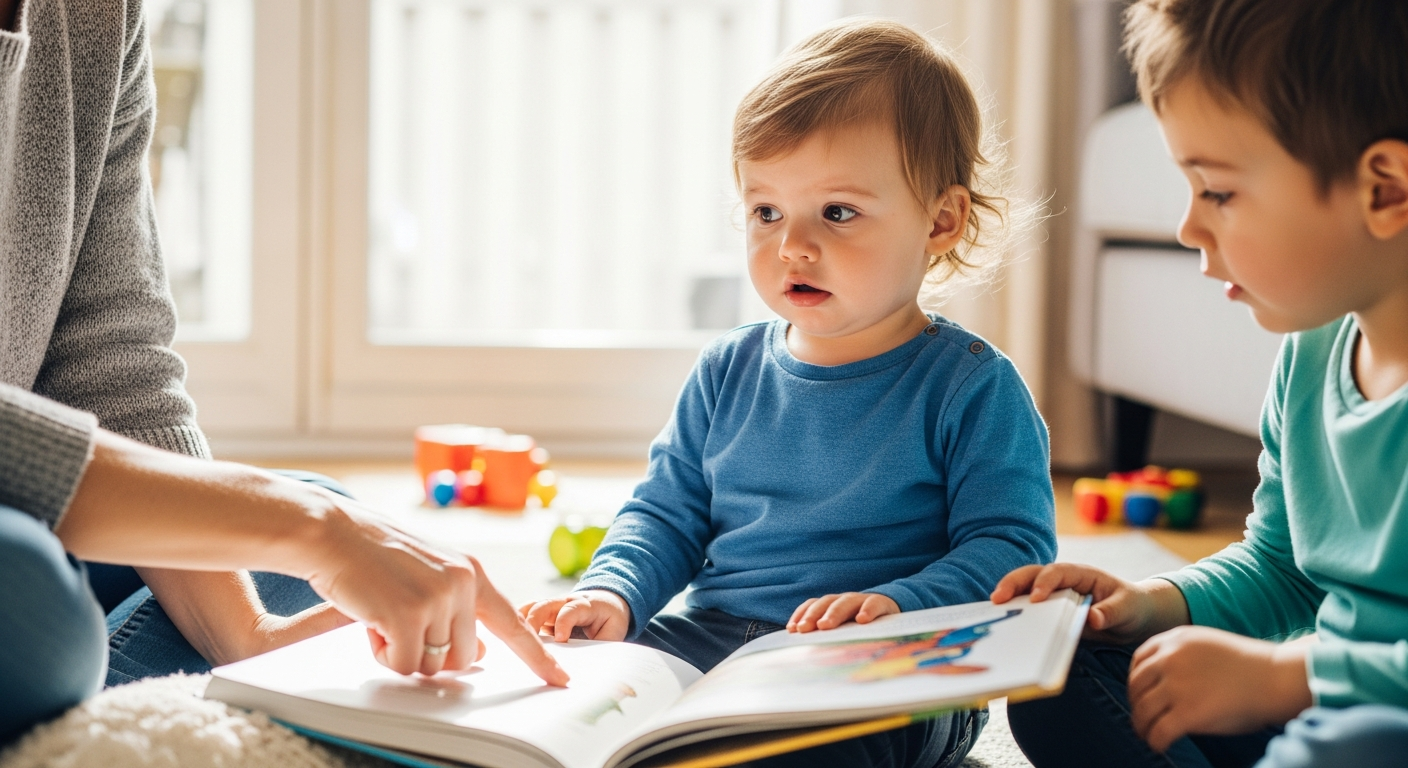
Table of Contents
- Introduction
- Understanding the Difference: Speech vs. Language
- Common Reasons for Delayed Speech in 2 Year Old Children
- Milestones: What Should a 2-Year-Old Be Doing?
- The Power of Early Intervention
- How to Help Your Toddler at Home
- Why Speech Blubs is a Trusted Tool for Parents
- Real Stories, Real Progress
- Conclusion
- FAQ: Frequently Asked Questions
Introduction
It is a quiet afternoon, and you are watching your two-year-old play with their favorite set of blocks. They skillfully stack a blue square on top of a red one, beaming with pride. But when you ask, "What color is that, sweetie?" they simply point and grunt. While their cousin of the same age is already chatting about "big trucks" and "yellow suns," your little one seems to rely mostly on gestures and a few isolated words like "mama" or "up." If this scenario feels familiar, you are certainly not alone. In fact, approximately one in five children will experience some form of speech or language delay during their early development.
At Speech Blubs, we understand the quiet anxiety that bubbles up when you start comparing milestones. Our mission is to empower children to "speak their minds and hearts," a goal born from the personal experiences of our founders who grew up with speech challenges themselves. We know that every "late talker" has a world of thoughts inside them just waiting to be shared.

In this article, we will take a deep dive into the common reasons for delayed speech in 2 year old toddlers, the crucial difference between speech and language, and how you can support your child’s communication journey. We’ll explore medical, physical, and developmental factors while providing practical strategies to foster a joyful learning environment at home. Our goal isn't just to provide answers, but to offer a path forward—one rooted in "smart screen time," scientific methodology, and the power of family connection.
Understanding the Difference: Speech vs. Language
Before we look at the specific reasons for a delay, it is helpful to understand exactly what we are measuring. Many parents use the terms "speech" and "language" interchangeably, but in the world of child development, they represent two different sets of skills that often overlap.
What is Speech?
Speech is the physical act of producing sounds. It involves coordination between the breath, the vocal cords, the tongue, the lips, and the jaw. When we talk about a "speech delay," we are often referring to "articulation"—how clearly a child forms their words. A child with a speech delay might know exactly what they want to say but struggle to physically coordinate their mouth to make the right sounds, making them difficult for others to understand.
What is Language?
Language is much broader. It is the system we use to give and receive information. It includes:
- Receptive Language: How well a child understands what is being said to them (e.g., following the instruction to "put the cup on the table").
- Expressive Language: How a child uses words, gestures, and sentences to share their thoughts and needs.
A child might have excellent speech (clear pronunciation) but a language delay (only using single words when they should be using phrases). Conversely, they might have a language delay because they don't yet understand the "rules" of communication. Understanding which area your child is struggling with is the first step toward finding the right support.

Common Reasons for Delayed Speech in 2 Year Old Children
When a toddler isn't meeting milestones, there is rarely just one single cause. Development is a complex puzzle. Here are some of the most frequent reasons why a two-year-old might be behind in their verbal skills.
1. Hearing Impairment and Chronic Ear Infections
This is often the first thing a pediatrician or speech-language pathologist (SLP) will check. If a child cannot hear clearly, they cannot imitate sounds correctly. Even a mild hearing loss can make speech sound muffled, like listening to someone talk underwater.
Chronic ear infections (otitis media) are a very common culprit. When fluid builds up behind the eardrum, it creates a temporary hearing loss. If this happens repeatedly during the critical "window" of language acquisition (between 12 and 24 months), the child misses out on the nuances of phonics and word structure. If your child has had multiple ear infections and isn't talking much, it’s worth asking your doctor about a referral to an audiologist.
2. Oral-Motor Issues and Apraxia
Sometimes, the brain has trouble sending the right signals to the muscles used for speaking. This is known as an oral-motor problem. A specific and more complex version of this is Childhood Apraxia of Speech (CAS).
In children with CAS, the muscles are physically strong, but the "coordination" is missing. It’s like a faulty connection between the brain’s "control center" and the "speech tools" (tongue, lips, and jaw). These children often understand everything said to them (strong receptive language) but struggle immensely to produce the sounds they want. For a child who loves animals, practicing simple sounds like "moo" or "baa" can be frustrating if they can't get their lips to close. In the Speech Blubs app, we use video modeling to help these children see exactly how other kids move their mouths, making the imitation process much more intuitive.
3. Structural Physical Impairments
In some cases, the reason is purely physical.
- Tongue-tie (Short Frenulum): This is when the fold of skin beneath the tongue is too short or thick, restricting the tongue's range of motion. While many children with tongue-ties speak perfectly fine, for some, it can interfere with sounds that require lifting the tongue (like "l" or "t").
- Cleft Palate or Lip: An opening in the roof of the mouth or the lip can make it difficult to create the air pressure needed for certain speech sounds, leading to a nasal quality or delayed articulation.
4. Autism Spectrum Disorder (ASD)
Speech and language delays are often one of the first signs parents notice that lead to an ASD diagnosis. However, it is important to remember that a speech delay does not automatically mean a child has autism.
When ASD is the cause, the delay is usually accompanied by other communication challenges, such as:
- A lack of pointing or gesturing to show interest.
- Difficulty with eye contact.
- Repeating phrases from TV shows (echolalia) rather than using spontaneous speech.
- Preferring to play alone or "tuning out" others.
If you are concerned about these specific behaviors, we recommend taking our quick 3-minute preliminary screener. It consists of 9 simple questions and provides you with an assessment and a next-steps plan to discuss with your doctor.
5. Global Developmental Delay
Sometimes, a speech delay is part of a larger picture where a child is meeting milestones a bit later across the board—including motor skills (walking, jumping) and cognitive skills (problem-solving). This is often referred to as a global developmental delay. In these cases, speech therapy is usually part of a broader intervention plan that includes occupational or physical therapy.
6. Environmental Factors and "Passive" Screen Time
While "digital age" clichés are common, there is some truth to the idea that the type of stimulation matters. Research suggests that passive screen time—where a child simply sits and watches cartoons—does not help with language development. In fact, it can sometimes replace the face-to-face interaction that toddlers need to learn.
This is why we created Speech Blubs as a "smart screen time" alternative. Instead of passive viewing, our app encourages active participation. By watching other children (peers) speak, your child is triggered by "mirror neurons" in the brain, which naturally encourage them to imitate what they see.
Milestones: What Should a 2-Year-Old Be Doing?
Every child is an individual, but there are general benchmarks that help us identify when a "late talker" might need a little extra boost. By age two, most toddlers are hitting the following marks:
- Vocabulary: They typically have a "bank" of 50 to 100 words.
- Phrases: They are starting to put two words together (e.g., "More milk," "Doggy bark," "Mama go").
- Following Directions: They can follow a simple, one-step command without needing a gesture (e.g., "Go get your shoes").
- Intelligibility: You (the primary caregiver) should be able to understand about 50% of what they say, even if it sounds like "toddler talk" to strangers.
- Pointing: They point to body parts or pictures in a book when named.
If your child isn't quite there yet, don't panic. The goal is progress, not perfection. However, if they aren't using any words or aren't responding to their name, it is important to seek professional advice sooner rather than later.
The Power of Early Intervention
If you suspect a delay, the most important thing you can do is act. "Wait and see" is older advice that is increasingly being replaced by "act early." The brain of a two-year-old is incredibly plastic, meaning it is primed for learning and making new neural connections.
Early intervention doesn't mean "drilling" your child with flashcards. It means providing them with the right environment and tools to unlock their natural desire to communicate. Our scientific methodology is based on video modeling, which has been shown to be highly effective for children with various speech challenges. When a child sees a peer—someone who looks and sounds like them—successfully making a sound, their confidence grows.
Consider a toddler who is a "late talker" but absolutely loves animals. In a traditional setting, they might feel pressured to perform. But within the "Animal Kingdom" section of our app, they see a child their age making a "meow" sound while wearing fun digital cat ears. This turns therapy into play, reducing frustration and building the foundational skills needed for more complex communication.
How to Help Your Toddler at Home
While professional speech therapy is invaluable, you are your child's first and most important teacher. You can turn everyday moments into language-building opportunities.
Narrate Your Day
Think of yourself as a sports commentator for your child's life. "I am pouring the milk. The milk is cold! Now I am stirring your oatmeal." This constant stream of simple, clear language helps your child map words to actions and objects.
Read with Interaction
Don't just read the words on the page. Point to the pictures and ask questions. "Where is the blue bird? There it is!" Even if they don't answer verbally, they are building their receptive language. Choose books with repetitive phrases that allow your child to "fill in the blanks."
Use "Smart Screen Time"
We know that parents need a break sometimes, and screens are a part of modern life. However, there is a middle ground between "no screens" and "unlimited cartoons." Speech Blubs provides a joyful solution that bridges this gap. By engaging in co-play—where you sit with your child and use the app together—you turn a digital tool into a powerful family connection.
You can download Speech Blubs on the App Store or find us on the Google Play Store to start incorporating these play-based exercises into your daily routine.
Why Speech Blubs is a Trusted Tool for Parents
We believe that speech support should be accessible, effective, and, above all, fun. We’ve seen firsthand how the right approach can transform a child’s frustration into the joy of being understood. Our app is used by over 5 million families and is highly rated for its ability to engage even the most "reluctant" talkers.
The Yearly Plan: The Best Value for Your Family
We want to be transparent about how you can best access our resources. While we offer a monthly subscription, the Yearly Plan is designed to provide the most comprehensive support for your child’s development.
- Monthly Plan: $14.99 per month.
- Yearly Plan: $59.99 per year (which breaks down to just $4.99/month).
By choosing the Yearly Plan, you save 66% and gain access to exclusive, high-value features that are not included in the monthly option:
- A 7-Day Free Trial: Test the app with your child to see the engagement firsthand before committing.
- Reading Blubs App: Access to our companion app designed to build early literacy and reading skills.
- Priority Support: 24-hour response time from our team.
- Early Access: Be the first to try our new updates and features.
Ready to see if we’re the right fit? Create your account and begin your 7-day free trial today.
Real Stories, Real Progress
We don't just rely on science; we rely on the experiences of parents like you. Many of our users have shared how their children went from silent frustration to babbling and, eventually, full sentences. While we don't guarantee instant results, we focus on fostering a love for communication and building the confidence your child needs to try.
One parent shared that their 2-year-old, who previously only grunted for juice, started attempting the "j" sound after watching the "Yummy Time" section of the app. These small wins are the building blocks of communication. You can read more about these journeys on our testimonials page.
Conclusion
Finding the reasons for delayed speech in 2 year old toddlers is the first step toward helping them find their voice. Whether the cause is a physical hurdle like ear infections, a developmental difference like Apraxia, or simply the need for a more engaging learning environment, there is so much you can do to help.
Remember, your child's delay is not your fault. What matters is the love, attention, and support you provide now. By combining your daily interactions with professional guidance and "smart screen time" tools, you can help your child build the skills they need to tell you what they are thinking and feeling.
We invite you to join our community and start this journey today. The best value for your family is our Yearly Plan, which includes a 7-day free trial, the Reading Blubs app, and early access to all our latest tools for just $4.99 a month (billed annually at $59.99).
Download Speech Blubs on the App Store or Google Play to begin. Let’s help your little one speak their mind and heart, one joyful sound at a time.
FAQ: Frequently Asked Questions
1. Is it normal for a 2-year-old to not be talking yet?
While every child develops at their own pace, most 2-year-olds should have a vocabulary of at least 50 words and be starting to combine them into two-word phrases. If your child is using fewer than 10 words or isn't attempting to imitate sounds, it is a good idea to consult your pediatrician or take a preliminary screener to determine if further evaluation is needed.
2. Can too much screen time cause a speech delay?
It’s not necessarily about the amount of time, but the quality of the content. "Passive" screen time (watching cartoons alone) doesn't provide the interactive feedback kids need to learn language. However, "smart screen time," like using Speech Blubs with a parent, can actually encourage speech through video modeling and peer-to-peer imitation.
3. Will my child "outgrow" a speech delay?
Some children are "late bloomers" and will catch up on their own, but it is impossible to know which children will need extra help without an assessment. Early intervention is the most effective way to ensure that a delay doesn't lead to future academic or social challenges. It is always better to provide support early than to "wait and see."
4. How does the Speech Blubs app actually help?
Speech Blubs uses a scientifically-proven method called video modeling. Children are naturally inclined to imitate other children. By watching peers make sounds and words in a fun, gamified environment, your child's "mirror neurons" are activated, which helps them practice the mouth movements and sounds necessary for speech. It turns learning into a joyful, low-pressure activity.
Sobre el autor