
Understanding Speech Delay in a 2 Year Old: Expert Tips
 Por Speech Blubs Team•5 mar 2026•18 min.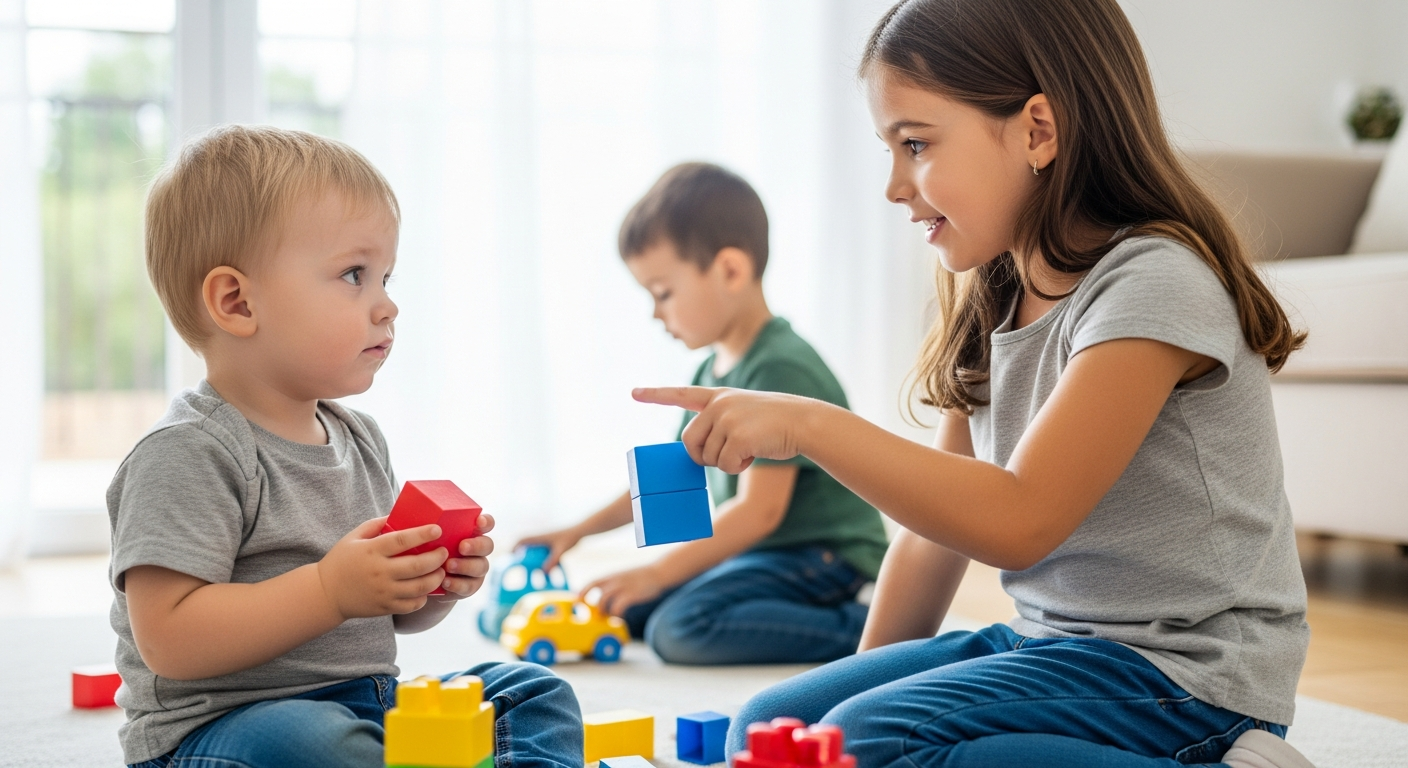
Table of Contents
- Introduction
- Defining Speech vs. Language: The Crucial Difference
- What is Speech Delay in a 2 Year Old? Signs to Watch For
- Typical Communication Milestones: A Timeline
- Common Causes of Speech and Language Delays
- The Path to Assessment and Diagnosis
- How to Support Speech Development at Home
- Practical Scenario: Using Speech Blubs with a Late Talker
- The Science Behind Our Method
- Choosing the Right Plan for Your Family
- Realistic Expectations and the Power of Play
- Conclusion
- FAQs About Speech Delay in 2 Year Olds
Introduction
Imagine you are sitting on the living room floor, building a tower of colorful blocks with your toddler. You look at them and say, "Can you say blue?" They smile back, perhaps point at the block, but remain silent. Or maybe they let out a small "ba" and go back to playing. For many parents, these moments are filled with a mix of joy and a quiet, nagging question: "Should they be saying more by now?"
Communication is the heartbeat of our connection with our children. It is how they tell us they are hungry, how they share their excitement over a passing dog, and eventually, how they tell us they love us. When those verbal milestones seem to be lagging, it is natural to feel a sense of worry. You might find yourself scrolling through social media, comparing your child to a neighbor’s toddler who is already speaking in full sentences, and wondering exactly what is speech delay in 2 year old children and if your little one fits the description.

At Speech Blubs, we understand this journey because we’ve lived it. Our founders grew up with speech challenges themselves and created the very tool they wished they had as children. We know that every child’s path is unique, but we also know that 1 in 4 children will need some form of speech support. Our mission is to empower children to "speak their minds and hearts" by transforming screen time into a joyful, educational experience.
In this comprehensive post, we will explore the nuances of speech development, identify the red flags to watch for in a two-year-old, discuss the common underlying causes of delays, and provide practical strategies you can use at home. Our goal is to move from a place of uncertainty to a place of empowered action, fostering a love for communication while building your child’s confidence.
Defining Speech vs. Language: The Crucial Difference
Before we dive into the specific signs of a delay, it is vital to understand that "speech" and "language" are not the same thing, although we often use the terms interchangeably. Distinguishing between the two is the first step in understanding your child’s specific needs.
What is Speech?
Speech is the physical act of producing sounds. It involves the coordination of the breath, the vocal cords, the tongue, the lips, and the jaw. When we talk about speech, we are focusing on:
- Articulation: How we form specific letter sounds (like the "p" in "apple").
- Voice: Using the vocal folds and breath to produce sound.
- Fluency: The rhythm of our speaking (the absence of stutters or hesitations).
If a child has a speech delay, they might know exactly what they want to say, but the words come out garbled or difficult for others to understand.
What is Language?
Language is much broader. it is the system of symbols—words, gestures, and signs—that we use to share meaning. It is divided into two parts:
- Receptive Language: This is what your child understands. Can they follow a simple instruction like "Give me the ball"? Do they understand the names of common objects?
- Expressive Language: This is how your child shares their thoughts. It includes the vocabulary they use, how they put words together into phrases, and even the gestures they use to communicate.
A child with a language delay might be able to pronounce words perfectly, but they may only have a handful of words in their vocabulary or struggle to put two words together to form a basic request.

Understanding this distinction helps specialists pinpoint where a child needs help. Some children struggle with the physical "output" (speech), while others struggle with the "processing and building" of communication (language). Often, these two areas overlap.
What is Speech Delay in a 2 Year Old? Signs to Watch For
By the age of two, most children are undergoing a "language explosion." They are rapidly adding new words to their repertoire and beginning to realize that words are powerful tools for getting what they want. However, if you are asking yourself "what is speech delay in 2 year old," there are specific markers that professionals look for.
The 50-Word Milestone
While every child develops at their own pace, a general benchmark for a two-year-old is a vocabulary of at least 50 words. These don’t have to be perfectly articulated—if your child says "nana" for banana or "wawa" for water consistently, those count as words. If your child is using fewer than 50 words, it may be a sign of a delay.
Combining Words
A hallmark of 2-year-old development is the transition from single words to two-word phrases. You should start to hear "telegraphic speech," such as "Mommy go," "More juice," or "Doggy big." If your child is only using isolated words and hasn’t yet begun to string them together, it’s worth noting.
The 50% Intelligibility Rule
As a parent, you are likely the world’s leading expert on your child’s "secret language." You know that a specific grunt followed by a point toward the fridge means they want milk. However, for a two-year-old, the general rule is that unfamiliar listeners (like a distant relative or a doctor) should be able to understand about 50% of what the child says. If almost no one outside of your immediate household can understand your child, a speech assessment might be beneficial.
Behavioral Red Flags
Sometimes, speech and language delays manifest as behavior. If a child cannot express their needs, they often resort to tantrums, biting, or pulling your hand toward objects. While "the terrible twos" involve some natural frustration, an excessive amount of communication-related frustration can be a sign that the child is struggling to bridge the gap between their thoughts and their words.
If you are feeling uncertain about your child's progress, we recommend taking a proactive step. You can take our quick 3-minute preliminary screener which consists of 9 simple questions to help you understand your child’s current communication level and provide you with a next-steps plan.
Typical Communication Milestones: A Timeline
To better understand where your child stands, it helps to look at the progression leading up to the second birthday. Communication starts long before the first word is uttered.
12 to 18 Months
By their first birthday, most babies are using basic gestures like waving "bye-bye" and pointing to things they want. They might say "mama" or "dada" specifically to their parents. Between 12 and 18 months, they should start imitating sounds and may have a small handful of recognizable words. They should also be able to follow one-step directions, like "Sit down."
18 to 24 Months
This is a period of rapid growth. Toddlers usually begin to enjoy simple "pretend" play, like feeding a doll or "talking" on a toy phone. Their vocabulary should be growing by about one new word per week. They should be able to point to body parts when asked ("Where is your nose?") and point to pictures in a book when you name them.
At 24 Months
By the time they blow out two candles, most toddlers:
- Use simple two-word phrases.
- Can follow a command without a gesture (e.g., "Put the cup on the table").
- Can identify common objects and pictures.
- Begin to use pronouns like "mine."
If your child is missing several of these markers, it does not necessarily mean there is a permanent problem, but it does indicate that they might benefit from a little extra support to "catch up." We have seen thousands of families find success by incorporating focused, playful practice into their daily routines. You can read some of their stories on our testimonials page.
Common Causes of Speech and Language Delays
When a parent hears that their child has a delay, the first question is almost always: "Why?" It is important to remember that in many cases, a speech delay is not caused by anything a parent did or didn't do. There are various physical and developmental factors that can influence how a child learns to talk.
Oral-Motor Issues
Some children have difficulty coordinating the muscles in their mouth, tongue, and jaw. This is often referred to as an oral-motor problem.
- Apraxia of Speech: This is a neurological condition where the brain struggles to plan the movements required for speech. The child knows what they want to say, but the "message" from the brain to the mouth gets scrambled.
- Dysarthria: This involves weakness in the muscles used for speech, often making the child’s voice sound breathy or their words sound slurred.
Physical Impairments
Sometimes the cause is structural.
- Short Frenulum (Tongue-tie): A fold of tissue beneath the tongue that is too short can limit tongue movement, making it hard to produce certain sounds.
- Cleft Palate: An opening in the roof of the mouth can interfere with the ability to create the air pressure needed for many speech sounds.
Hearing Loss and Ear Infections
This is one of the most common—and often treatable—causes of speech delay. If a child cannot hear clearly, they cannot imitate the sounds they are supposed to be learning. Chronic ear infections (Otitis Media) can cause fluid to build up behind the eardrum. Imagine trying to learn a new language while underwater; that is what it feels like for a child with fluid in their ears. Even temporary hearing loss during critical learning months can set a child back.
Developmental and Neurological Conditions
In some cases, a speech delay is a symptom of a broader developmental condition.
- Autism Spectrum Disorder (ASD): Challenges with social communication are a hallmark of ASD. A child may have a delay in speaking or may use language in unusual ways, such as repeating phrases from TV shows (echolalia).
- Intellectual Disability: If a child has a general delay in cognitive development, their speech and language will likely follow that same slower trajectory.
The "Late Talker"
Some children are simply "late bloomers." They understand everything said to them, have great motor skills, and interact well socially, but they just aren't talking much yet. Many of these children eventually catch up, but because we cannot predict which child will "catch up" on their own and which one needs help, early intervention is always the safest and most effective path.
The Path to Assessment and Diagnosis
If you have concerns about your child's development, the best time to act is now. Early intervention is scientifically proven to be more effective than the "wait and see" approach.
The first step is a visit to your pediatrician. They will likely perform a general developmental screening and ask you questions about your child's milestones. From there, they may refer you to two key specialists:
- An Audiologist: It is standard practice to check a child's hearing whenever there is a speech concern. This rules out any underlying hearing loss or fluid issues.
- A Speech-Language Pathologist (SLP): This is the expert who will conduct a thorough evaluation of your child's communication skills.
During an SLP evaluation, the therapist will look at:
- Receptive Language: How well does the child understand instructions?
- Expressive Language: How are they communicating their needs (words, signs, gestures)?
- Articulation: Are they producing sounds correctly for their age?
- Oral-Motor Function: How are the muscles of the mouth working?
If your child qualifies for services, they may receive speech therapy through a private clinic or a government-funded early intervention program. We believe that professional therapy is invaluable, and we designed Speech Blubs to be a powerful supplement to that professional support, providing a way for parents to continue the "work" of therapy through play at home.
How to Support Speech Development at Home
Parents are a child's first and most important teachers. You don't need a degree in speech pathology to create a language-rich environment. Here are some simple, effective strategies you can start today.
Narrate Your Life
Talk through everything you are doing. "Now I am putting on your red socks. One sock, two socks! Now we are putting on your shoes." This provides a constant stream of language that is directly connected to what the child is seeing and doing.
Follow Their Lead
If your child is interested in a bug on the ground, stop and talk about the bug. Don't try to force them to look at a book if they are fascinated by the bug. By following their interest, you are ensuring that they are engaged and motivated to communicate.
Read and Sing
Books with repetitive text and songs with hand motions (like "The Itsy Bitsy Spider") are excellent for speech development. The rhythm and melody of songs make the words easier for the brain to process and remember.
Use "Smart Screen Time"
Not all screen time is created equal. Watching passive cartoons doesn't require a child to interact or speak. At Speech Blubs, we provide a "smart" alternative. Our approach is based on video modeling, a scientifically proven method where children learn by watching their peers.
When a child sees another child on the screen making a "moo" sound or saying "apple," their mirror neurons fire, making them much more likely to imitate the sound themselves. It transforms the screen from a passive distraction into a joyful, interactive learning tool. You can download Speech Blubs on the App Store or Google Play to see this methodology in action.
Practical Scenario: Using Speech Blubs with a Late Talker
Let’s look at a relatable scenario. Imagine a parent named Sarah whose 2-year-old son, Leo, is a "late talker." Leo loves animals but currently only points and grunts when he wants to see the family cat or a dog in a book. Sarah feels frustrated because she wants to help him find his voice but doesn't know where to start.
Sarah decides to try the "Animal Kingdom" section in the Speech Blubs app. Instead of just showing Leo a cartoon cow, the app shows a video of another child—Leo's peer—wearing a fun digital cow filter and saying "Mooo!"
Because Leo is seeing another child do it, he is captivated. He watches the "video model" a few times, and Sarah encourages him by saying, "Look, he's a cow! Mooo!" Eventually, Leo tries it himself. It’s a small sound, but it’s a victory. This is how we build the foundation of communication: through joy, peer connection, and zero pressure. To start your own journey like Sarah and Leo, you can create your account and begin your 7-day free trial today.
The Science Behind Our Method
We are committed to providing an effective and joyful solution, and that commitment is backed by science. Our methodology relies on several key principles:
- Video Modeling: Children are naturally drawn to other children. Research shows that peer-led modeling is one of the most effective ways to trigger imitation in early learners.
- Mirror Neurons: When we observe someone performing an action, the same neurons fire in our brain as if we were doing the action ourselves. Our app leverages this to help children "practice" sounds internally before they say them out loud.
- High MARS Scale Rating: We pride ourselves on the quality of our educational content, which has earned us high ratings on the Mobile App Rating Scale (MARS), placing us in the top tier of speech apps globally. You can learn more about the evidence supporting our approach on our research page.
Choosing the Right Plan for Your Family
We want to be transparent about how you can access our tools. We offer two main paths to help your child start their communication journey.
The Monthly Plan
Our Monthly plan is $14.99 per month. It provides full access to the Speech Blubs app and all its engaging activities. This is a great option if you want to try the app on a short-term basis.
The Yearly Plan: The Best Value
For families committed to long-term progress, our Yearly plan is the clear winner. It costs $59.99 per year, which breaks down to just $4.99 per month—a savings of 66% compared to the monthly rate.
More importantly, the Yearly plan includes exclusive features that you won't get with the monthly option:
- A 7-Day Free Trial: You can explore everything the app has to offer before committing.
- Reading Blubs: You get access to our companion app, Reading Blubs, which helps transition speech skills into early literacy skills.
- Early Access & Priority Support: Be the first to see our new updates and enjoy a 24-hour support response time.
We recommend the Yearly plan to ensure your child has the consistent, daily practice needed to build lasting confidence. You can sign up for the yearly plan and start your free trial here.
Realistic Expectations and the Power of Play
It is important to remember that every child's progress is their own. We do not suggest that using an app—or even attending therapy—will result in a child giving public speeches overnight. The goal of early intervention and "smart screen time" is to:
- Foster a love for communication: We want children to want to talk.
- Build confidence: Reducing the frustration of not being understood.
- Develop foundational skills: Building the muscle memory and cognitive links needed for language.
- Create joyful family moments: Learning should be a time for connection between you and your child.
The most effective learning happens when a child is playing and when an adult is there to support and co-play with them. Use Speech Blubs as a tool to spark conversation between you and your little one.
Conclusion
Understanding what is speech delay in 2 year old children is the first step toward unlocking your child's potential. While it can be a period filled with questions, remember that you are your child’s best advocate. By noticing the signs, seeking professional guidance, and incorporating engaging, scientifically-backed activities into your day, you are giving your child the greatest gift possible: the ability to express their mind and their heart.
We are here to support you every step of the way. Our app was born from a desire to make speech therapy accessible, fun, and effective for every family. Don't wait to see if they will "just grow out of it"—take a proactive step today and turn screen time into an opportunity for growth.
Ready to get started? We invite you to download Speech Blubs on Google Play or the Apple App Store today. Start your 7-day free trial and join the thousands of families who have discovered the joy of seeing their children find their voices. For the best value and access to Reading Blubs, be sure to select our Yearly plan.
FAQs About Speech Delay in 2 Year Olds
1. How many words should my 2-year-old be saying?
While development varies, the general milestone for a two-year-old is a vocabulary of at least 50 words. They should also be beginning to combine these words into two-word phrases, such as "more milk" or "big dog." If your child has significantly fewer words or isn't combining them yet, it may be a sign of a delay.
2. Can ear infections really cause a speech delay?
Yes. Chronic ear infections can cause fluid to build up behind the eardrum, which muffles sound. If a child cannot hear clearly during the critical months when they are learning to produce sounds, their speech and language development can be significantly delayed. This is why a hearing test is usually the first step in a speech evaluation.
3. What is the difference between a "late talker" and a speech delay?
A "late talker" is a child between 18 and 30 months who has a limited spoken vocabulary but otherwise appears to have normal development in understanding (receptive language), motor skills, and social interaction. A speech delay is a broader term that can include issues with articulation, language processing, or underlying neurological conditions. Because it's hard to distinguish the two without an expert, early intervention is recommended for both.
4. Is screen time bad for a child with a speech delay?
Passive screen time, like watching cartoons or "unboxing" videos, does not encourage communication and can sometimes take away from time spent interacting with caregivers. However, "smart screen time" that is interactive and based on educational principles—like the video modeling used in Speech Blubs—can actually be a powerful tool to encourage imitation and speech practice when used alongside adult interaction.
Sobre el autor